MK-2206 Dihydrochloride (MK-2206) Synergizes with GLUT1 Blockade to Trigger Apoptosis
Copy code to add this image to your page
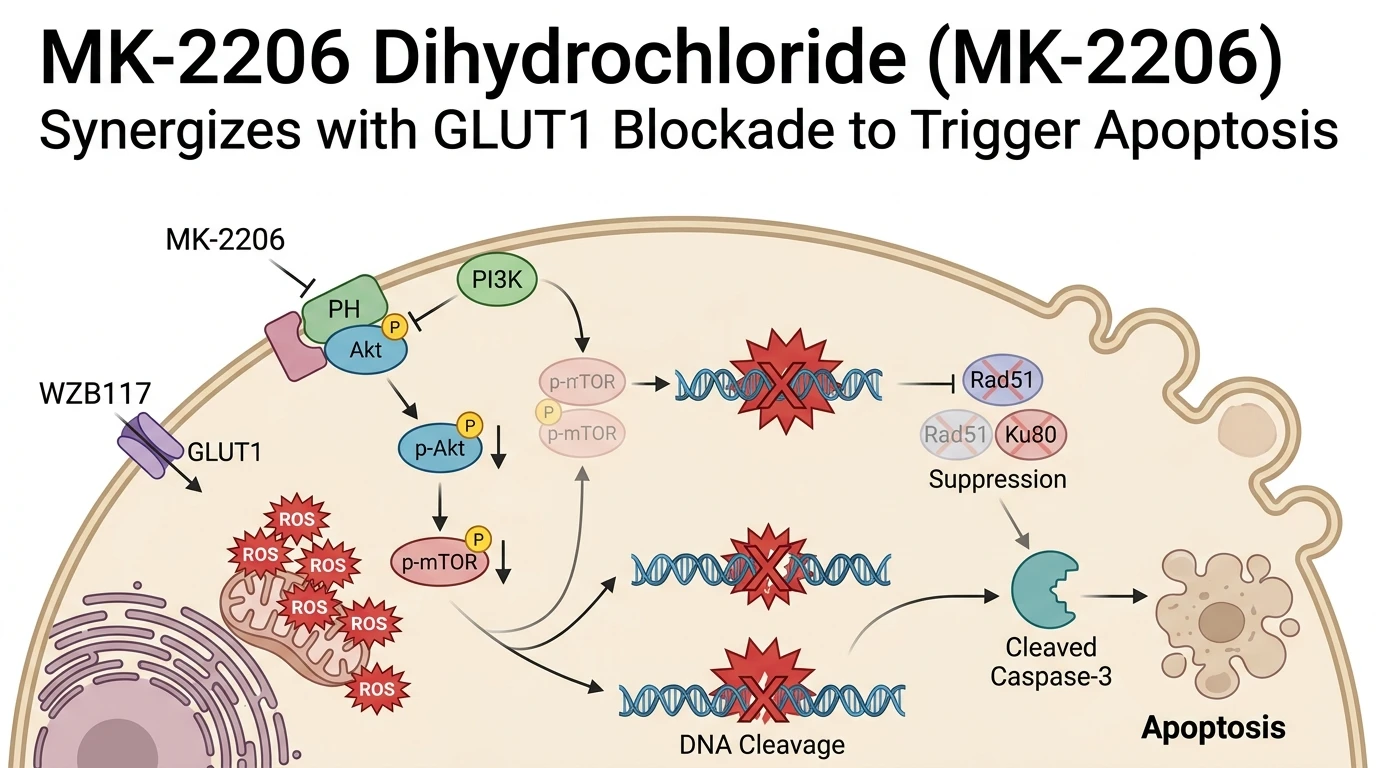
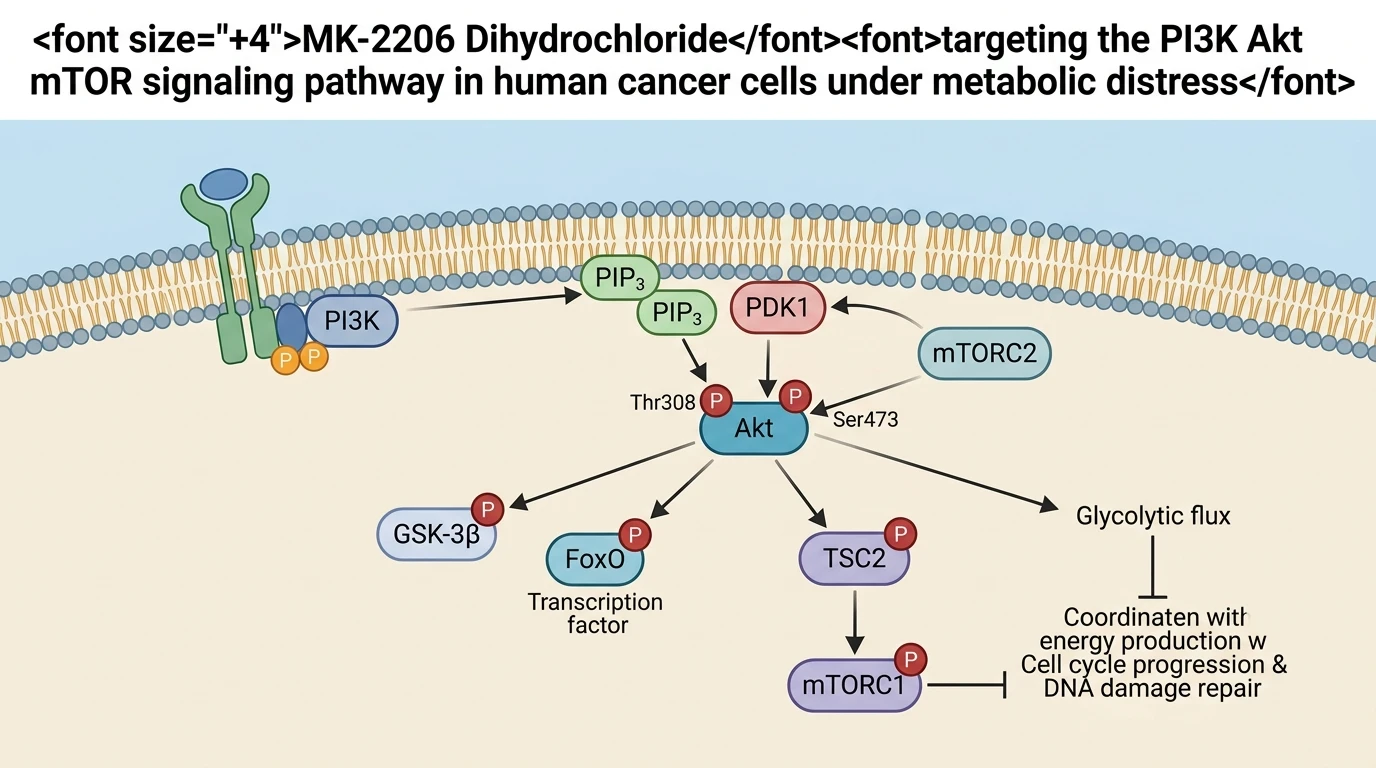
Targeting serine/threonine protein kinase Akt (Protein Kinase B) remains a central therapeutic strategy in oncology due to its critical role in promoting cell survival and metabolic adaptation. MK-2206 Dihydrochloride functions as an allosteric Akt inhibitor, binding to a pleckstrin homology domain-adjacent site to stabilize an inactive kinase conformation. Unlike ATP-competitive inhibitors, this allosteric mode of action prevents membrane translocation and subsequent phosphorylation at Thr308 and Ser473. Hyperactivation of Akt frequently drives resistance to conventional endocrine and cytotoxic therapies. Therefore, strategic allosteric inhibition of Akt offers a precise mechanism to reset baseline signal transduction in dysregulated cancer phenotypes.
Malignant cells frequently adapt through elevated glycolytic throughput, relying heavily on glucose transporter 1 (GLUT1) for sustained energetic supply. Co-targeting glucose uptake alongside Akt signaling presents a vulnerable node in tumor metabolism. In recent experimental investigations, the allosteric inhibitor MK-2206 was evaluated alongside WZB117, a selective GLUT1 inhibitor. When administered in combination across estrogen receptor-positive MCF-7 cells and triple-negative MDA-MB-231 breast cancer cells, the dual treatment produced profound synergistic cytotoxicity. Long-term colony formation assays confirmed a sustained reduction in clonogenic survival compared to single-agent treatments. This anti-clonogenic activity demonstrates that concurrent disruption of glucose entry and Akt-mediated survival signals severely limits cellular fitness in vitro.
The co-treatment regimen drives malignant cells into programmed cell death cascades. Flow cytometric analysis revealed a sharp elevation in Annexin V-positive cell populations following concurrent exposure to both compounds. At the molecular level, immunoblots demonstrated robust cleavage of poly(ADP-ribose) polymerase (PARP) and pro-caspase-3. Downstream Akt/mTOR phosphorylation markers showed pronounced suppression within hours of exposure. Single-agent treatment reduced baseline p-Akt levels, but the addition of WZB117 sustained complete attenuation of Akt-driven mTOR substrate phosphorylation. These phenotypic changes reflect a shift from cellular stasis to committed apoptotic death under combined metabolic and kinase stress.
In addition to signal transduction arrest, dual inhibition of Akt and GLUT1 disrupts intracellular redox balance. Experimental measurements showed a rapid increase in intracellular reactive oxygen species (ROS) levels following drug administration. Elevated oxidative stress directly correlated with severe double-strand DNA break accumulation. Phosphorylation of histone H2AX at Ser139 (gamma-H2AX) increased significantly in co-treated cells, signaling widespread genomic instability. Furthermore, phosphorylation of checkpoint kinases Chk1 at Ser345 and Chk2 at Thr68 confirmed activation of the classic DNA damage response pathway. These observations demonstrate that metabolic perturbation directly translates into double-strand DNA damage within these cell lines.
Beyond inducing DNA damage, the combination of MK-2206 Dihydrochloride and WZB117 actively compromises cellular repair machinery. Quantitative protein analyses revealed significant downregulation of Rad51, a key recombinase in homologous recombination, alongside reduced levels of Ku80, a vital component of non-homologous end joining. By simultaneously downregulating both major double-strand break repair pathways, the dual regimen prevents effective genomic repair. Unrepaired DNA breaks accumulate, reinforcing the apoptotic signaling cascade initiated by Akt suppression. Consequently, this rational combination strategy highlights a compelling biochemical link between glycolytic flux, Akt signaling, and genomic integrity maintenance in breast cancer therapy.
Pharmacological Synergy and Mechanistic Convergence in Glycolysis-Inhibited Cells
Copy code to add this image to your page
MK-2206 Dihydrochloride operates as an allosteric inhibitor of Akt, disrupting survival signaling across breast cancer subtypes. Combining this compound with the GLUT1 inhibitor WZB117 shuts down the Akt/mTOR signaling cascade, increases intracellular reactive oxygen species, and causes severe DNA double-strand breaks. Marked by increased gamma-H2AX and p-Chk1/p-Chk2, this dual metabolic-kinase inhibition downregulates essential homologous recombination and non-homologous end-joining repair proteins Rad51 and Ku80. Consequently, this target combination promotes caspase-3 and PARP cleavage, executing apoptosis in both ER-positive and triple-negative breast cancer cell models under defined experimental conditions.
Dual Blockade Triggers Apoptosis and Downregulates Akt Phosphorylation
Simultaneous inhibition of GLUT1 and Akt disrupts cellular homeostatic networks in breast carcinoma models. In tested MCF-7 and MDA-MB-231 cultures, combined application of WZB117 and MK-2206 suppressed cell viability more effectively than either monotherapy. Phosphorylation of Akt at Ser473 decreased rapidly. Downstream effector signaling through mTOR ceased under sustained treatment conditions. Annexin V staining confirmed a clear shift toward early and late apoptotic states. Cleaved PARP fragments accumulated within twenty-four hours of treatment. Caspase-3 cleavage accompanied this response, indicating active execution of programmed cell death. These observations highlight how metabolic restriction sensitizes tumor cells to allosteric kinase inhibition.
Accumulation of Reactive Oxygen Species and Impaired Double-Strand DNA Repair
Concurrent treatment with MK-2206 Dihydrochloride and WZB117 induces acute oxidative stress in vitro. Intracellular reactive oxygen species spiked dramatically following drug exposure. This oxidative burst coincided with severe genomic injury. Fluorometric tracking demonstrated elevated gamma-H2AX foci formation throughout the nuclear matrix. Checkpoint kinases Chk1 and Chk2 underwent rapid activating phosphorylation. Crucially, protein levels of Rad51 and Ku80 dropped significantly in treated groups. Depletion of these core repair factors crippled both homologous recombination and non-homologous end joining pathways. Double-strand breaks persisted without resolution. Unrepaired genomic lesions ultimately forced irreversible cell death across both ER-positive and triple-negative breast cancer lines.