FAO Inhibitors
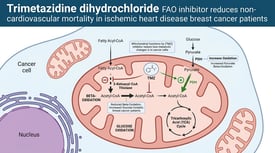
Fatty acid oxidation (FAO) inhibitors are a class of metabolic modulators that shift cellular energy production from the oxidation of fatty acids to the oxidation of glucose. In the heart, fatty acids are the primary fuel source; however, their oxidation requires more oxygen per mole of ATP produced compared to glucose oxidation. Under conditions of ischemia or heart failure, this reliance on fatty acids can become maladaptive, leading to the accumulation of toxic lipid intermediates and increased oxygen demand. The mechanism of action for FAO inhibitors involves targeting key enzymes in the fatty acid breakdown pathway, such as carnitine palmitoyltransferase 1 (CPT1), which facilitates the entry of long-chain fatty acids into the mitochondria, or 3-ketoacyl-CoA thiolase (3-KAT), the final enzyme in the beta-oxidation cycle. By inhibiting these enzymes, the 'Randle cycle' is modulated, forcing the cell to increase glucose uptake and oxidation, which improves cardiac efficiency and reduces lactic acid production. These inhibitors are primarily used for the treatment of chronic stable angina and are being investigated for heart failure and certain types of cancer.
In oncology, many tumors exhibit a high rate of FAO to support survival and resistance to therapy, making FAO inhibitors a potential strategy to sensitize cancer cells to treatment. Current research progress includes the widespread clinical use of drugs like ranolazine and trimetazidine. Ranolazine is an FDA-approved anti-anginal agent that partially inhibits FAO, although its primary effect is also linked to the inhibition of the late sodium current. Trimetazidine, used extensively in Europe and Asia, is a more direct 3-KAT inhibitor. Other compounds, like the CPT1 inhibitor etomoxir, showed early promise but were limited by hepatotoxicity in clinical trials. Inhibitors are classified based on their specific enzyme target (e.g., CPT1 vs.
3-KAT) and their chemical structure. Notable challenges in this field include the risk of systemic metabolic interference, as FAO is essential for energy production in the liver and skeletal muscle during fasting. To overcome this, researchers are focusing on isoform-specific inhibitors, such as those selective for CPT1B (the muscle/heart isoform) over CPT1A (the liver isoform). Combination therapy strategies often involve pairing FAO inhibitors with beta-blockers or nitrates to provide synergistic benefits in managing myocardial ischemia. As the field of metabolic rewiring continues to expand, FAO inhibitors remain a critical tool for treating diseases characterized by metabolic inflexibility. Future research is directed toward identifying biomarkers that can predict which patients will benefit most from metabolic modulation and developing safer, more potent inhibitors for both cardiovascular and oncological indications.