MRP Inhibitors
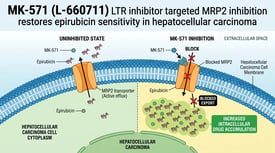
Multidrug Resistance Protein (MRP) inhibitors target a family of ATP-binding cassette (ABC) transporters, specifically the MRP subfamily (ABCC family), which are responsible for the efflux of a wide range of endogenous and exogenous substrates, including many anticancer drugs. The most well-studied members include MRP1 (ABCC1), MRP2 (ABCC2), MRP3 (ABCC3), MRP4 (ABCC4), and MRP5 (ABCC5). These transporters utilize ATP hydrolysis to actively pump substrates out of cells, often against a concentration gradient. The main signaling pathway is not a classical 'signaling cascade' but rather a direct efflux mechanism that reduces intracellular drug concentrations. MRPs are typically localized to the plasma membrane, but MRP2 is notably found on the canalicular membrane of hepatocytes and the apical membrane of renal tubular cells, playing a role in drug excretion. Their substrates are often anionic conjugates (e.g., glutathione, glucuronide, sulfate conjugates) but also include unconjugated compounds. By actively removing drugs, MRPs contribute significantly to pharmacokinetic variability and, crucially, to multidrug resistance (MDR) in cancer and other diseases. Diseases or conditions associated with MRP activity are primarily drug resistance in cancer chemotherapy, but also include drug disposition and toxicity in various organs. In cancer, overexpression of MRPs, particularly MRP1 and MRP2, is a major mechanism by which tumor cells develop resistance to a broad spectrum of chemotherapeutic agents, including anthracyclines, vinca alkaloids, and etoposide. This efflux reduces the effective intracellular concentration of the drug, rendering treatment ineffective. Beyond cancer, MRPs play roles in the efflux of endogenous toxins and xenobiotics, influencing drug-drug interactions and organ-specific drug toxicity. For example, MRP2 is critical for biliary excretion of drugs, and its inhibition can lead to cholestasis or altered drug metabolism.
MRP4 and MRP5 are involved in the transport of nucleoside analogs, impacting the efficacy of antiviral drugs (e.g., HIV treatments) and the disposition of endogenous signaling molecules like cyclic nucleotides. Therefore, inhibiting MRPs can potentially overcome drug resistance, but also carries risks of altered drug pharmacokinetics and increased toxicity. Current research progress on MRP inhibitors is focused on developing compounds that can reverse MDR in cancer without causing unacceptable toxicity. Early generations of MRP inhibitors, such as probenecid and sulfinpyrazone, were often non-selective and had limited efficacy or significant side effects. More specific and potent inhibitors have been developed, but none have yet reached widespread clinical approval for reversing MDR in cancer. For example, some flavonoids (e.g., quercetin) and natural compounds have shown preclinical activity against MRPs. Small molecule inhibitors like MK-571 (a leukotriene receptor antagonist that also inhibits MRP1) have been used as research tools but are not clinically viable as MDR modulators due to lack of specificity and potency. The challenge lies in finding compounds that are potent enough to inhibit MRPs in tumor cells at concentrations that do not cause systemic toxicity by inhibiting MRPs in normal tissues (e.g., liver, kidney, brain), where they play crucial protective roles. Current strategies often involve combination therapies, where an MRP inhibitor is co-administered with a chemotherapeutic agent, but this approach has been hampered by pharmacokinetic interactions and toxicity issues. Research is ongoing to develop more selective inhibitors or to utilize nanotechnology for targeted delivery of inhibitors to tumor cells. Common classifications of MRP inhibitors include: (1) first-generation inhibitors (e.g., probenecid) which are often non-selective and have low potency; (2) second-generation inhibitors (e.g., MK-571) with improved potency but still lacking sufficient specificity; and (3) third-generation inhibitors, which aim for higher potency and selectivity, often derived from structural modifications of existing drugs or natural products. Inhibitors can also be classified by their specificity for individual MRP isoforms (e.g., MRP1 vs.
MRP2 vs. MRP4), which is critical for minimizing off-target effects. Another classification can be based on their mechanism of inhibition: competitive inhibitors that bind to the substrate-binding site, or non-competitive inhibitors that bind to an allosteric site. Furthermore, some compounds act as 'modulators' rather than direct inhibitors, altering MRP function indirectly. Other relevant general knowledge includes the significant pharmacokinetic challenges associated with MRP inhibition. Inhibiting MRPs systemically can lead to increased plasma concentrations of co-administered drugs and endogenous compounds, potentially causing severe toxicity. This necessitates careful dose adjustments and monitoring. Resistance to MRP inhibitors themselves can also develop, often through compensatory upregulation of other efflux transporters or mutations in the MRP genes. Research tools include cell lines overexpressing specific MRPs, fluorescent substrates for efflux assays, and specific antibodies. Combination therapy is the primary strategy, aiming to restore the efficacy of conventional chemotherapy. However, the clinical translation of MRP inhibitors has been largely unsuccessful due to the narrow therapeutic window and complex drug-drug interactions. Future directions include developing highly tumor-selective inhibitors, perhaps through prodrug strategies or targeted delivery systems, or exploring combination with immunotherapies to overcome resistance mechanisms in cancer.