GLUT Inhibitors
Glucose transporters (GLUTs), encoded by the SLC2 gene family, are essential membrane proteins that facilitate the bidirectional transport of glucose across plasma membranes following a concentration gradient. Among the 14 known isoforms, GLUT1 through GLUT4 are the most extensively characterized. In healthy physiological states, these transporters maintain systemic glucose homeostasis, with GLUT1 providing basal uptake, GLUT2 acting as a glucose sensor in the liver and pancreas, GLUT3 serving high-demand neurons, and GLUT4 mediating insulin-responsive uptake in muscle and adipose tissues. However, in the context of oncology, many malignant cells undergo a metabolic reprogramming known as the Warburg effect, characterized by an up-regulation of GLUT1 and GLUT3 to sustain high glycolytic flux even in aerobic conditions. This overexpression supports rapid proliferation, biomass synthesis, and survival under hypoxic conditions, making GLUT inhibitors an attractive therapeutic strategy. The development of GLUT inhibitors has progressed from non-specific natural products like phloretin and quercetin to highly selective synthetic small molecules.
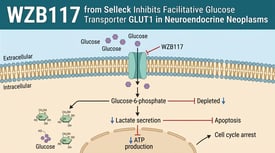
Early research focused on compounds like WZB117, which demonstrated the ability to inhibit GLUT1, lead to ATP depletion, and induce apoptosis in various cancer cell lines. More recently, BAY-876 has emerged as a highly potent and selective GLUT1 inhibitor, showing significant efficacy in preclinical models of triple-negative breast cancer and other glycolytic tumors. Beyond GLUT1, researchers are exploring GLUT3 inhibitors for brain tumors and GLUT4 inhibitors for specific metabolic contexts. Despite the promise, several challenges persist. A primary concern is the potential for systemic toxicity, particularly hypoglycemia or impaired glucose delivery to the brain and red blood cells, which rely heavily on GLUT1. Furthermore, the redundancy of glucose transport mechanisms in some tissues may lead to resistance.
Current research is therefore focused on identifying specific therapeutic windows and developing combination strategies. For instance, combining GLUT inhibitors with metformin or conventional chemotherapy has shown synergistic effects by simultaneously targeting multiple metabolic vulnerabilities. In clinical settings, while many GLUT inhibitors remain in the preclinical or early phase I stages, their role as both therapeutic agents and diagnostic tools—often linked with 18F-FDG PET imaging to monitor metabolic response—continues to expand. Furthermore, the exploration of GLUT inhibitors in treating autoimmune diseases and certain viral infections is an emerging area of interest. The classification of these inhibitors typically follows their isoform selectivity (e.g., GLUT1-selective vs. pan-GLUT) and their mechanism of inhibition (competitive vs.
non-competitive). As the field matures, the integration of structural biology and computational modeling is expected to yield next-generation inhibitors with improved pharmacokinetic profiles and reduced off-target effects, potentially establishing GLUT inhibition as a cornerstone of metabolic-targeted cancer therapy.