WZB117 from Selleck Inhibits Facilitative Glucose Transporter GLUT1 in Neuroendocrine Neoplasms
Copy code to add this image to your page
Metabolic adaptation in neoplastic transformation frequently relies on heightened glycolytic flux to fuel rapid bioenergetic and biosynthetic demands. Cancer cells upregulate transmembrane hexose transport to sustain elevated rates of glycolysis, a phenomenon mediated by the facilitative glucose transporter (GLUT) family of membrane proteins. Among these uniporters, GLUT1—encoded by the SLC2A1 gene—acts as a primary rate-limiting mediator of basal glucose uptake across diverse solid malignancies. Elevated GLUT1 density on the plasma membrane correlates directly with accelerated glucose uptake, increased lactate production, aggressive tumor growth, and resistance to conventional cytotoxic therapies. Consequently, pharmacological targeted inhibition of GLUT1 represents a compelling strategy to selectively starve glycolytic tumor populations without disrupting basal physiological tissue homeostasis.
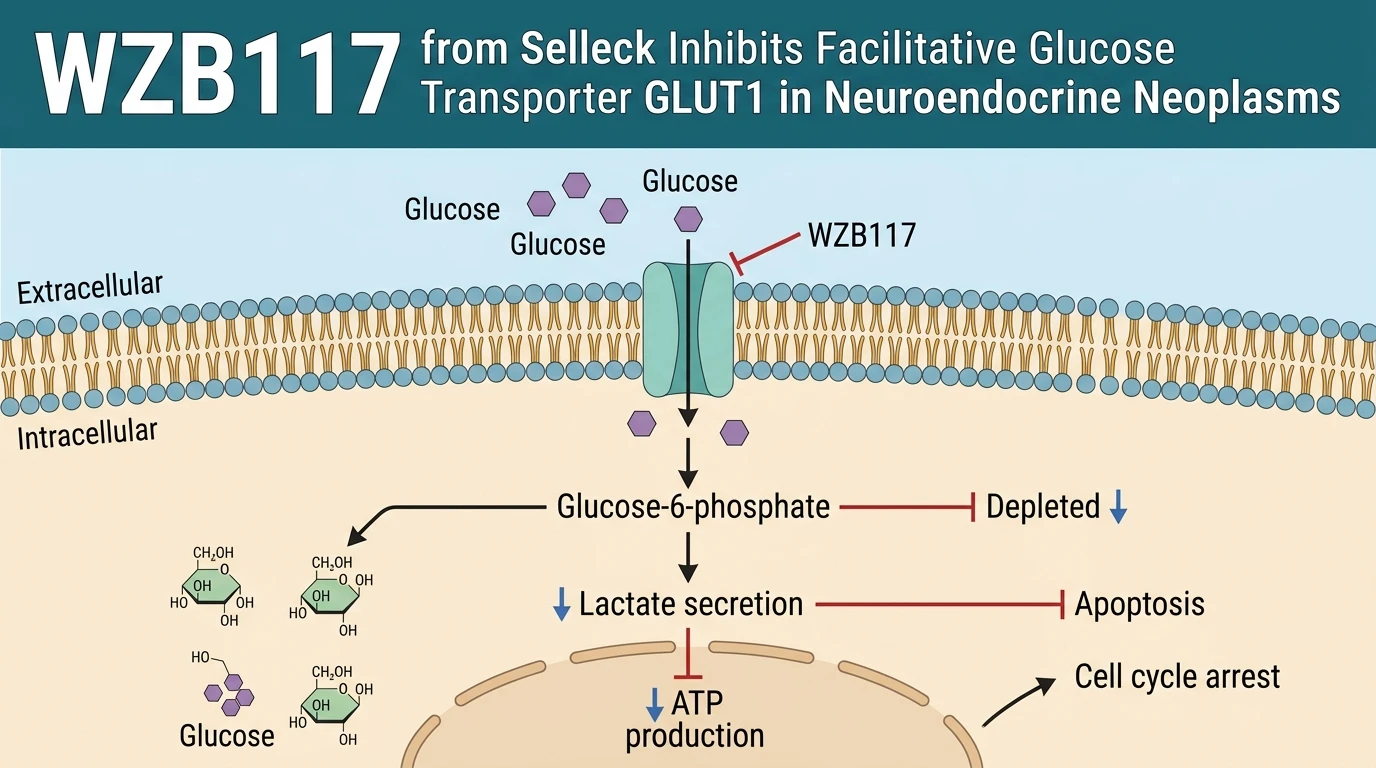
Small-molecule intervention directed at GLUT1 functionality offers a precise mechanism for arresting cellular hexose import. The synthetic compound WZB117 functions as a potent small-molecule inhibitor of facilitative glucose transporters, displaying marked selectivity toward the GLUT1 isoform. Chemically engineered to block transmembrane substrate translocation, WZB117 binds to the transporter to prevent the conformational transitions required for glucose internal transport. High-purity preparations of WZB117 from Selleck provide researchers with a standardized tool for dissecting transporter kinetics, bioenergetic stress response cascades, and metabolic dependencies across varied neoplastic models.
In neuroendocrine tumor (NET) models, where metabolic options can dictate therapeutic response, GLUT1 blockade demonstrates profound biological activity. Quantitative transport assays conducted across a panel of neuroendocrine cell lines—including Bon-1, QPG-1, GLC-2, and GLC-36—reveal that WZB117 exerts robust suppression of cellular glucose uptake. Exposure to a concentration of 50 µM WZB117 achieves at least an 80% reduction in radiolabeled D-glucose uptake across tested cell populations. This quantitative depletion of intracellular glucose halts downstream glycolytic processing, precipitating a swift drop in cytosolic ATP concentrations and an elevation of cellular AMP levels.
Experimental evaluation demonstrates distinct lineage-dependent sensitivity profiles among neuroendocrine cell lines. While the majority of tested NET cell lines require moderate to elevated inhibitor concentrations (50–100 µM) to reach profound cell death thresholds, the GLC-36 model exhibits heightened susceptibility. In GLC-36 cultures, measurable inhibition of proliferation and induction of metabolic stress manifest at concentrations as low as 5 µM. This differential sensitivity suggests varying degrees of baseline metabolic flexibility, metabolic enzyme expression, or compensatory mitochondrial reserve capacity across distinct neuroendocrine subtypes.
At the cellular phenotype level, WZB117-mediated inhibition of facilitative glucose transport converts acute bioenergetic deprivation into robust anti-proliferative and cytotoxic outcomes. In vitro administration suppresses cellular growth in a strict concentration-dependent manner. Prolonged incubation at effective inhibitory doses (50–100 µM) transitions cells from cell cycle arrest into programmed cell death pathways, characterized by classic apoptotic morphological markers including membrane blebbing, cellular shrinkage, and nuclear fragmentation. These findings underscore GLUT1-mediated transport as a functional vulnerability in neuroendocrine neoplasms, establishing WZB117 as a critical research tool for investigating metabolic targeted therapies.
Target Engagement and Glycolytic Suppression in Neuroendocrine Cells
Copy code to add this image to your page
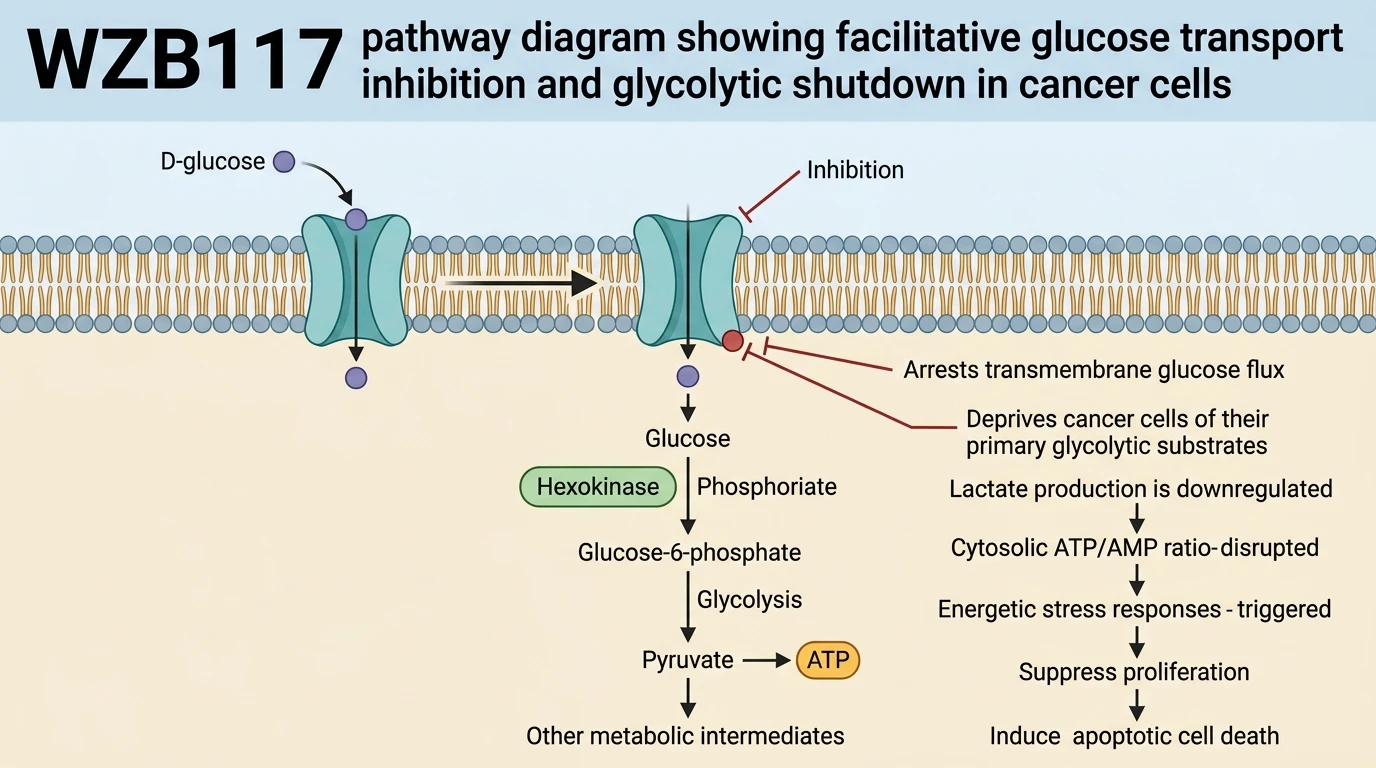
WZB117 functions as a small-molecule inhibitor of facilitative glucose transporter 1 (GLUT1), blocking transmembrane glucose transport into hypermetabolic tumor cells. In neuroendocrine tumor models, WZB117 suppresses cellular glucose uptake by over 80% at 50 µM. This acute blockade starves cells of hexose substrates, suppressing glycolytic flux, depleting intracellular ATP pools, and inducing metabolic stress. Consequently, WZB117 causes dose-dependent proliferation arrest and triggers apoptotic cell death at 50–100 µM concentrations, with heightened sensitivity observed in specific lineages such as GLC-36 at 5 µM.
Potent Concentration-Dependent Suppression of Transmembrane Glucose Uptake
Facilitative glucose transport serves as the foundational metabolic node for glycolytic tumor cells. In neuroendocrine tumor models, treatment with WZB117 caused a rapid reduction in cytosolic D-glucose accumulation. At 50 µM, hexose transport dropped by more than 80% across Bon-1, QPG-1, and GLC-2 lineages. The rate of transport reduction correlated directly with intracellular ATP depletion. Deprived of exogenous hexose, cells failed to sustain basal glycolytic flux. Pyruvate production halted rapidly. Consequently, cytosolic free ATP levels collapsed within hours of treatment exposure. Comparative experiments utilizing small-molecule metabolic modulators confirmed that direct GLUT transport blockade yields superior glycolytic arrest compared to downstream kinase inhibition. These quantitative metrics establish GLUT1 inhibition as a potent catalyst for acute bioenergetic failure.
Differential Lineage Sensitivity and Apoptotic Thresholds in NET Models
Lineage-specific metabolic flexibility dictates the cellular response to GLUT1 blockade. The neuroendocrine cell line GLC-36 exhibited exceptional susceptibility, demonstrating measurable viability loss at 5 µM concentration. Conversely, Bon-1 and QPG-1 cultures required elevated doses ranging between 50 µM and 100 µM to trigger pronounced cytotoxic responses. Microscopic examination revealed classic features of programmed cell death following exposure to high-dose WZB117 from Selleck. Plasma membrane blebbing and chromatin condensation intensified over 48 hours. Cellular proliferation ceased entirely under these high-dose conditions. The sharp concentration threshold suggests a critical metabolic tipping point where compensatory mitochondrial oxidative phosphorylation can no longer offset severe glycolytic restriction. Observations in these in vitro models highlight distinct baseline dependencies on GLUT-mediated glucose uptake across neuroendocrine tumor subtypes.