Galectin Inhibitors
Galectins are a family of evolutionarily conserved proteins defined by their affinity for beta-galactoside sugars and the presence of a characteristic carbohydrate-recognition domain (CRD). To date, 15 galectins have been identified in mammals, and they are classified into three groups based on their structure: "proto-type" galectins (e.g., Gal-1, -2, -7, -10) which contain a single CRD and can form dimers; "tandem-repeat" galectins (e.g., Gal-4, -8, -9) which have two distinct CRDs linked by a peptide; and the "chimera-type" Galectin (Gal-3), which has one CRD and a long N-terminal tail that allows it to form pentamers. Galectins are found both intra- and extracellularly, where they modulate a wide array of biological processes, including cell adhesion, migration, apoptosis, and immune cell signaling, often by cross-linking glycoproteins into functional "lattices" on the cell surface. Galectin inhibitors are being developed for several major disease areas, most notably fibrosis and cancer. Galectin-3, in particular, is a key driver of fibrogenesis in the liver, lungs, and kidneys. It promotes the activation of myofibroblasts and the deposition of extracellular matrix.
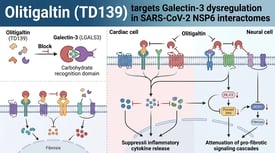
In oncology, galectins (especially Gal-1 and Gal-3) contribute to tumor progression by promoting angiogenesis, facilitating metastasis, and creating an immunosuppressive tumor microenvironment. For example, Gal-1 can induce the apoptosis of activated T cells, allowing tumors to evade the immune system. Galectins are also implicated in cardiovascular diseases, such as heart failure, where Gal-3 is used as a clinical biomarker for fibrosis and adverse remodeling. The progress of galectin inhibitors in clinical trials has been significant. Belapectin (GR-MD-02), a complex carbohydrate polymer derived from pectin, has been extensively studied in Phase II trials for NASH cirrhosis. Another leading candidate is TD139 (GB0139), a potent, inhaled small-molecule inhibitor of Gal-3 being evaluated for idiopathic pulmonary fibrosis (IPF).
Other inhibitors, such as those targeting Gal-1 (e.g., OTX008), are in early-stage development for cancer. Despite these advances, no galectin inhibitor has yet received regulatory approval. Classifications of galectin inhibitors include carbohydrate-based compounds, such as modified pectins and synthetic galactosides (e.g., thiodigalactosides), and non-carbohydrate small molecules or peptides. Achieving selectivity between the different galectin family members is a major challenge due to the high structural similarity of their CRDs. Furthermore, the relatively low affinity of natural carbohydrates for galectins necessitates the design of high-affinity mimetics. Another challenge is the multi-functional nature of galectins, as inhibiting their extracellular lattice-forming activity might have different consequences than inhibiting their intracellular signaling roles.
Future research is focused on developing more selective, high-affinity small molecules and exploring combination therapies, particularly with immune checkpoint inhibitors, to overcome galectin-mediated resistance in cancer.