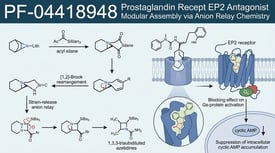
Prostaglandin Receptor Inhibitors
Prostaglandins are bioactive lipid mediators derived from arachidonic acid through the action of cyclooxygenase (COX) enzymes. They exert their biological effects by binding to a family of eight distinct G protein-coupled receptors (GPCRs): the prostaglandin E receptors (EP1, EP2, EP3, and EP4), the prostaglandin D receptor (DP), the prostaglandin F receptor (FP), the prostacyclin receptor (IP), and the thromboxane receptor (TP). These receptors are coupled to various intracellular signaling pathways, including the activation of adenylate cyclase (increasing cAMP) or the activation of phospholipase C (increasing intracellular calcium). Prostaglandin signaling is a cornerstone of the inflammatory response, pain sensitization, and various homeostatic processes such as gastric mucosal protection and renal blood flow regulation. Inhibitors of prostaglandin receptors are being extensively researched for their potential in treating chronic inflammation, autoimmune diseases, and cancer. While traditional NSAIDs and COX-2 inhibitors block the production of all prostaglandins, they often cause gastrointestinal and cardiovascular side effects.
Targeting specific receptors downstream of the COX enzymes offers a more refined approach. For instance, EP4 receptor antagonists have gained significant attention in immuno-oncology. EP4 signaling in the tumor microenvironment promotes immune evasion by suppressing the activity of T cells, natural killer cells, and dendritic cells while promoting the expansion of myeloid-derived suppressor cells (MDSCs). Current research progress includes several EP4-selective antagonists in clinical trials. Grapiprant is already approved for managing pain and inflammation in veterinary medicine (dogs), while compounds like E7046, BMS-986218, and TPST-1495 are being evaluated in human clinical trials for advanced solid tumors, often in combination with immune checkpoint inhibitors like PD-1 blockers. TP receptor antagonists, such as ifetroban, are being investigated for fibrotic diseases and cardiovascular conditions.
DP1 and DP2 (also known as CRTH2) antagonists have been explored for allergic rhinitis and asthma, although some, like fevipiprant, failed to meet primary endpoints in late-stage trials. Classifications of these inhibitors are primarily based on their receptor selectivity. They can be categorized as selective antagonists (e.g., EP4-specific), dual antagonists (e.g., EP2/EP4), or pan-receptor modulators. Structurally, they are mostly small molecules designed to compete with the endogenous prostaglandin ligands for the binding pocket. A major challenge in the field is the functional redundancy and the divergent roles of different receptors; for example, while EP4 is often pro-tumorigenic, other prostaglandin receptors might have anti-inflammatory or protective roles depending on the tissue context. Furthermore, the high degree of homology between the four EP receptor subtypes makes achieving high selectivity difficult.
Future directions involve the development of biased ligands that can selectively modulate specific signaling pathways downstream of a single receptor, potentially maximizing therapeutic efficacy while minimizing off-target effects.