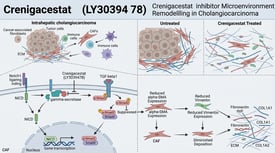
Gamma-secretase Inhibitors
Gamma-secretase is a multi-subunit intramembrane-cleaving protease (I-CLiP) complex that plays a critical role in the processing of numerous transmembrane proteins, most notably the Amyloid Precursor Protein (APP) and the Notch receptor. The complex is composed of four essential subunits: Presenilin (the catalytic core, either PS1 or PS2), Nicastrin, Anterior Pharynx-Defective 1 (APH-1), and Presenilin Enhancer 2 (PEN-2). The cleavage of APP by Gamma-secretase, following an initial cleavage by beta-secretase, produces amyloid-beta (A-beta) peptides of varying lengths, including the neurotoxic A-beta-42 isoform, which aggregates into plaques in Alzheimer's disease (AD). Consequently, gamma-secretase inhibitors (GSIs) were initially developed as a primary therapeutic strategy for AD to reduce A-beta production. However, gamma-secretase also cleaves the Notch receptor, releasing the Notch Intracellular Domain (NICD), which translocates to the nucleus to regulate genes involved in cell fate and immune function.
This dual role has been the central challenge in the clinical development of GSIs. Early GSIs like Semagacestat and Avagacestat failed in large-scale AD clinical trials because they caused significant cognitive worsening and increased the risk of skin cancer, likely due to the non-selective inhibition of Notch signaling. These failures led to a shift in research toward Gamma-Secretase Modulators (GSMs), which shift the cleavage profile of APP to produce shorter, non-toxic A-beta fragments without interfering with Notch processing. In oncology, however, the inhibition of Notch is often the goal, as aberrant Notch signaling drives the growth of several cancers, including T-cell acute lymphoblastic leukemia (T-ALL) and various solid tumors. Nirogacestat is a notable success, recently becoming the first GSI approved for the treatment of progressing desmoid tumors.
GSIs are generally classified into transition-state analogs and non-transition-state inhibitors. Common challenges include gastrointestinal toxicity (due to Notch inhibition in the gut) and the complexity of the enzyme's processivity. Current research progress involves the development of 'Notch-sparing' GSIs and the use of GSIs in combination with other therapies, such as B-cell maturation antigen (BCMA)-targeted therapies in multiple myeloma, where GSIs can prevent the shedding of BCMA from the cell surface. Tool compounds like DAPT and L-685,458 are widely used in laboratory settings to study intramembrane proteolysis. While the 'Amyloid Hypothesis' for AD has faced setbacks, the refinement of gamma-secretase targeting—either through modulation for neurodegeneration or selective inhibition for oncology—remains a vital area of pharmacological investigation, highlighting the importance of substrate selectivity in protease inhibition.