HCV Protease Inhibitors
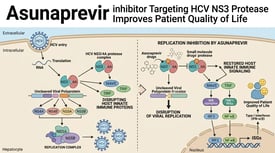
Hepatitis C Virus (HCV) protease inhibitors are a cornerstone of modern Direct-Acting Antiviral (DAA) therapy, specifically targeting the NS3/4A serine protease. This enzyme is essential for the viral life cycle, as it is responsible for the proteolytic cleavage of the HCV polyprotein into functional non-structural proteins (NS4A, NS4B, NS5A, and NS5B) required for viral replication. Furthermore, the NS3/4A protease plays a role in evading the host immune response by cleaving host proteins involved in interferon signaling, such as MAVS and TRIF. The development of these inhibitors has transformed HCV from a chronic, difficult-to-treat infection into a curable condition for the vast majority of patients. The first generation of protease inhibitors, including Telaprevir and Boceprevir, were linear peptidomimetics that required complex dosing schedules and were associated with significant side effects and a low barrier to resistance.
These were quickly superseded by second-generation and 'next-generation' inhibitors, which are characterized by improved potency, better side-effect profiles, and pangenotypic activity. Notable examples include Simeprevir, Grazoprevir, Paritaprevir, and the highly potent Glecaprevir and Voxilaprevir. These modern agents are often macrocyclic in structure, providing a more rigid conformation that fits tightly into the enzyme's active site. Protease inhibitors are typically classified by their chemical structure (linear vs. macrocyclic) and their generation or 'wave' of development.
A major challenge in HCV therapy was the high mutation rate of the virus, which led to the rapid emergence of resistance-associated substitutions (RASs) when inhibitors were used as monotherapy. To address this, current treatment protocols utilize combination therapies that pair a protease inhibitor with an NS5A inhibitor (like Pibrentasvir) and sometimes an NS5B polymerase inhibitor (like Sofosbuvir). These combinations provide a high genetic barrier to resistance and allow for shorter treatment durations, often as little as 8 to 12 weeks, with cure rates (sustained virologic response) exceeding 95%. While generally well-tolerated, protease inhibitors are contraindicated in patients with severe hepatic impairment (Child-Pugh B or C) due to the risk of drug-induced liver injury. Research continues to focus on optimizing these regimens for 'difficult-to-treat' populations, such as those who have failed prior DAA therapy or those with complex comorbidities.
The success of HCV Protease inhibitors serves as a paradigm for antiviral drug development, demonstrating how targeting a critical viral enzyme with highly selective small molecules can lead to the global elimination of a major public health threat. Ongoing efforts are now directed toward ensuring global access to these life-saving medications and monitoring for any long-term resistance patterns in the population.