FABP Inhibitors
Fatty Acid Binding Proteins (FABPs) are a family of highly conserved cytoplasmic chaperones that facilitate the transport of long-chain fatty acids and other lipophilic ligands to various intracellular compartments, including the nucleus, endoplasmic reticulum, and mitochondria. By coordinating lipid trafficking, FABPs play a central role in regulating metabolic and inflammatory pathways. Among the various isoforms, FABP4 (adipocyte FABP) and FABP5 (epidermal FABP) have emerged as significant therapeutic targets due to their involvement in the development of metabolic syndrome, type 2 diabetes, and atherosclerosis. FABP4, primarily expressed in adipocytes and macrophages, modulates insulin sensitivity and inflammatory responses through its interaction with the peroxisome proliferator-activated receptor (PPAR) gamma and the toll-like receptor (TLR) pathways. Elevated levels of FABP4 are associated with obesity-related complications, making its inhibition a promising strategy for treating metabolic disorders.
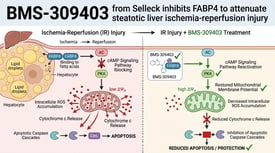
Similarly, FABP5 is implicated in fatty acid-driven tumor progression and skin disorders, and its dual inhibition with FABP4 has shown synergistic effects in preclinical models of metabolic disease. The development of FABP inhibitors has progressed significantly, with several small-molecule inhibitors currently in the preclinical stage. One of the most well-characterized inhibitors is BMS-309403, a potent and selective FABP4 inhibitor that has demonstrated efficacy in improving glucose tolerance and reducing atherosclerotic plaque formation in animal models. Other compounds, such as SBFI-26, target FABP5 and are being explored for their potential in treating chronic pain and certain cancers, such as prostate and breast cancer, where FABP5 facilitates the nuclear transport of lipids that activate pro-survival signaling. Inhibitors are generally classified based on their selectivity for specific isoforms or their ability to target multiple FABPs simultaneously.
The high structural homology between FABP isoforms presents a major challenge in medicinal chemistry, as achieving high selectivity is necessary to avoid off-target effects and ensure safety. Despite these challenges, the clinical potential of FABP inhibitors is substantial, particularly in the context of "diabesity" and its associated cardiovascular risks. Current research is also focusing on the role of FABPs in the central nervous system, where they may influence neurogenesis and cognitive function, suggesting broader applications for these inhibitors in neurological health. Furthermore, combination therapies involving FABP inhibitors and standard metabolic drugs, such as metformin or statins, are being investigated to enhance therapeutic outcomes. As our understanding of the lipid-chaperone network expands, the refinement of FABP inhibitors will likely lead to novel interventions for a wide range of metabolic, inflammatory, and oncological conditions, addressing a significant unmet medical need in modern healthcare.
The transition from bench to bedside will require rigorous validation of these inhibitors in human subjects to confirm their safety and efficacy profiles.