BMS-309403 from Selleck inhibits FABP4 to attenuate steatotic liver ischemia-reperfusion injury
Copy code to add this image to your page
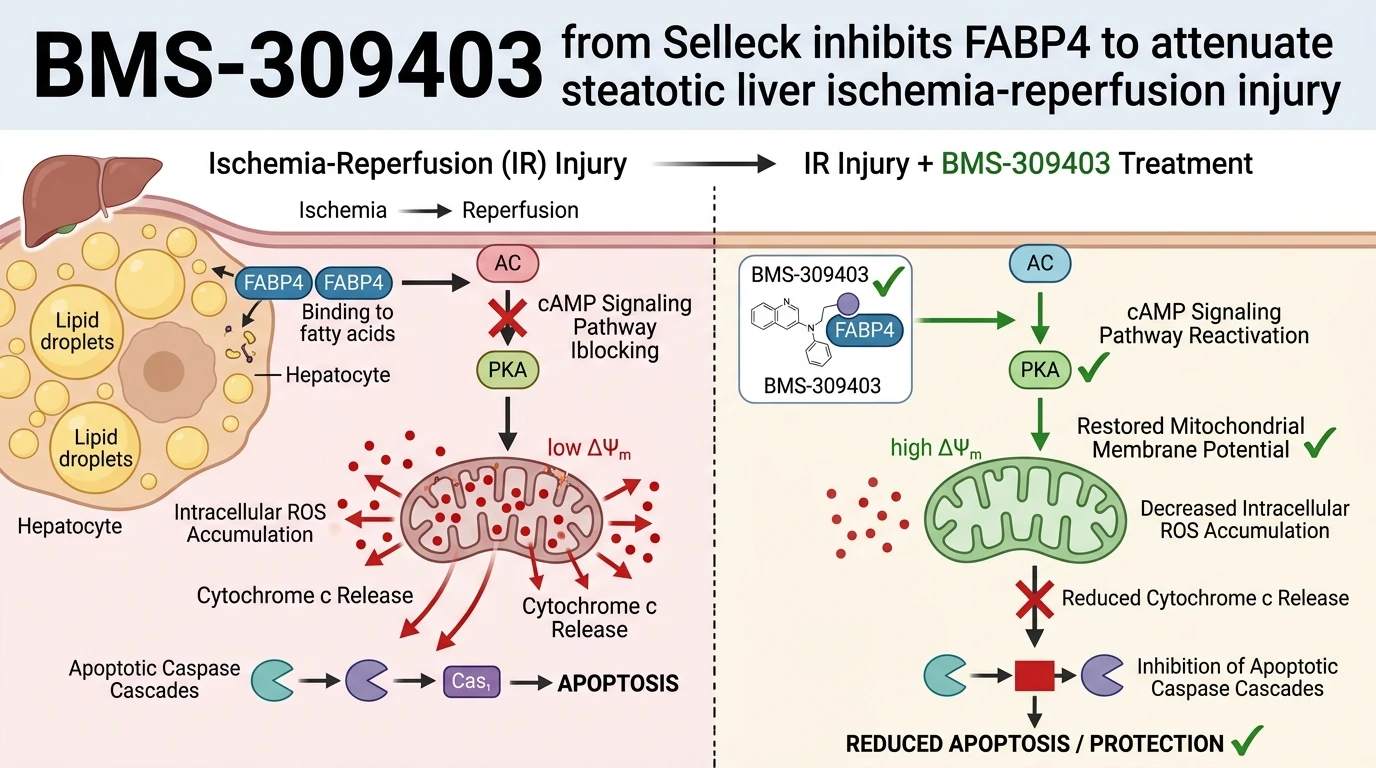
Steatotic liver transplantation remains severely limited by ischemia-reperfusion (IR) injury. Ischemia-reperfusion exacerbates graft dysfunction, particularly in marginal donor organs exhibiting macrosteatosis. Clinical evaluation indicates that donor fatty acid binding protein 4 (FABP4) expression operates as a hypoxia-inducible marker linked directly to post-transplantation graft failure. Elevated donor FABP4 transcripts correlate with diminished 1-year overall patient survival and elevated incidences of early allograft dysfunction (EAD). Hypoxic conditions encountered during organ preservation upregulate FABP4 within hepatic parenchymal cells, accelerating downstream cellular damage upon reoxygenation.
Mechanistic investigation demonstrates that FABP4 activity suppresses cyclic adenosine monophosphate (cAMP) accumulation within hepatocytes. Inhibiting FABP4 via the small-molecule inhibitor BMS-309403 alters this pathological signaling axis. Small-molecule intervention with BMS-309403 from Selleck blocks the hydrophobic binding pocket of FABP4, preventing intracellular fatty acid trafficking and signaling repression. Restored intracellular cAMP activates downstream cyclic AMP-dependent protein kinase cascades, which directly regulate mitochondrial membrane potential and organelle homeostasis.
Pharmacological inhibition of FABP4 substantially reduces biochemical markers of acute liver injury. Administration of BMS-309403 lowers circulating serum transaminase levels, including alanine aminotransferase (ALT), aspartate aminotransferase (AST), lactate dehydrogenase (LDH), and total bilirubin (TB). These reductions reflect diminished hepatocyte membrane rupture and preserved tissue architecture across hepatic lobules. Furthermore, FABP4 blockade suppresses the production of reactive oxygen species (ROS) and lipid peroxidation markers, thereby blunting acute oxidative stress injury in treated liver grafts.
Integrated transcriptomic and metabolomic analyses reveal that BMS-309403 preserves mitochondrial structural integrity during the reperfusion phase. Maintaining mitochondrial membrane potential prevents the induction of the mitochondrial permeability transition pore (mPTP) and limits cytochrome c release into the cytosol. Consequently, mitochondrial-mediated apoptotic signaling is suppressed, leading to a significant reduction in overall hepatocyte apoptosis. Through this cAMP-dependent pathway, FABP4 targeted inhibition protects steatotic allografts from acute ischemic necrosis and functional failure.
Pharmacological FABP4 Attenuation and Mitochondrial Energetics
Copy code to add this image to your page
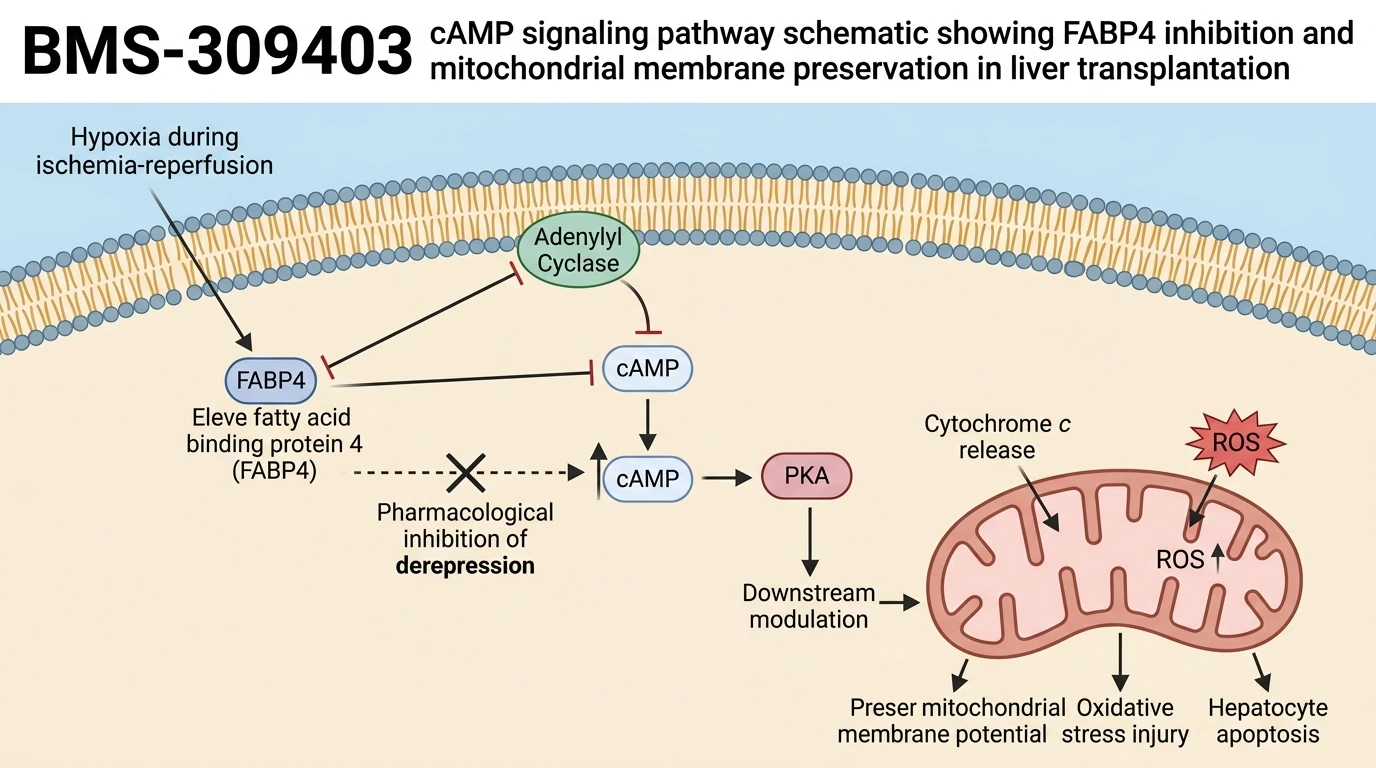
Inhibition of FABP4 by BMS-309403 restores intracellular cAMP levels, triggering cAMP signaling pathway cascade activation in hypoxia-stressed hepatocytes. This pathway modulation maintains mitochondrial membrane potential, prevents permeability transition pore opening, and attenuates oxidative stress injury. Consequently, hepatocyte apoptosis is significantly diminished, mitigating hepatic ischemia-reperfusion injury in steatotic liver transplantation.
Donor FABP4 Expression Predicts Early Allograft Dysfunction
High donor FABP4 levels correlate directly with compromised 1-year graft survival in clinical transplantation cohorts. Hypoxia induced by cold ischemia upregulates intracellular FABP4 in marginal steatotic grafts. In human liver specimens, elevated FABP4 transcripts aligned with marked postoperative transaminase surges. Small-molecule inhibition using BMS-309403 from Selleck reversed these pathological biochemical markers under acute ischemia-reperfusion conditions. Serum ALT and AST activities decreased significantly in treated murine models. Concurrently, circulating LDH and total bilirubin levels normalized to near-baseline parameters. These observations indicate that targeting FABP4 mitigates acute cellular leakage across the hepatic sinusoids.
cAMP Signaling Pathway Restores Mitochondrial Membrane Potential
Transcriptomic profiling revealed sustained suppression of the cAMP signaling pathway in untreated steatotic liver grafts. Pharmacological blockade with BMS-309403 reactivated adenylate cyclase effector cascades under hypoxic stress. This metabolic restoration stabilized inner mitochondrial membrane integrity. Mitochondrial membrane potential remained intact, preventing matrix swelling and cytochrome c efflux. Metabolomic tracking confirmed reduced accumulation of lipid peroxidation byproducts, such as malondialdehyde, within parenchymal tissues. Oxidative stress injury declined markedly in hepatic lobules. Reduced oxidative burden prevented caspase-3 activation, directly lowering hepatocyte apoptotic indices across ischemic graft tissue.
Metabolomic Homeostasis Suppresses Hepatocyte Apoptosis Cascades
Multi-omic profiling demonstrates that FABP4 inhibition redirects free fatty acid flux away from pro-inflammatory pathways. Administration of BMS-309403 from Selleck preserved cellular ATP reserves during reperfusion phases. Hepatocyte viability improved markedly under tested ex vivo normothermic perfusion assays. Downstream effector activity shifted toward lipid oxidation efficiency. Consequently, necrotic conversion across zone 3 hepatocytes diminished substantially.