Dorsomorphin (Compound C) reveals AMPK dependency in Atractylenolide III attenuation of NAFLD
Copy code to add this image to your page
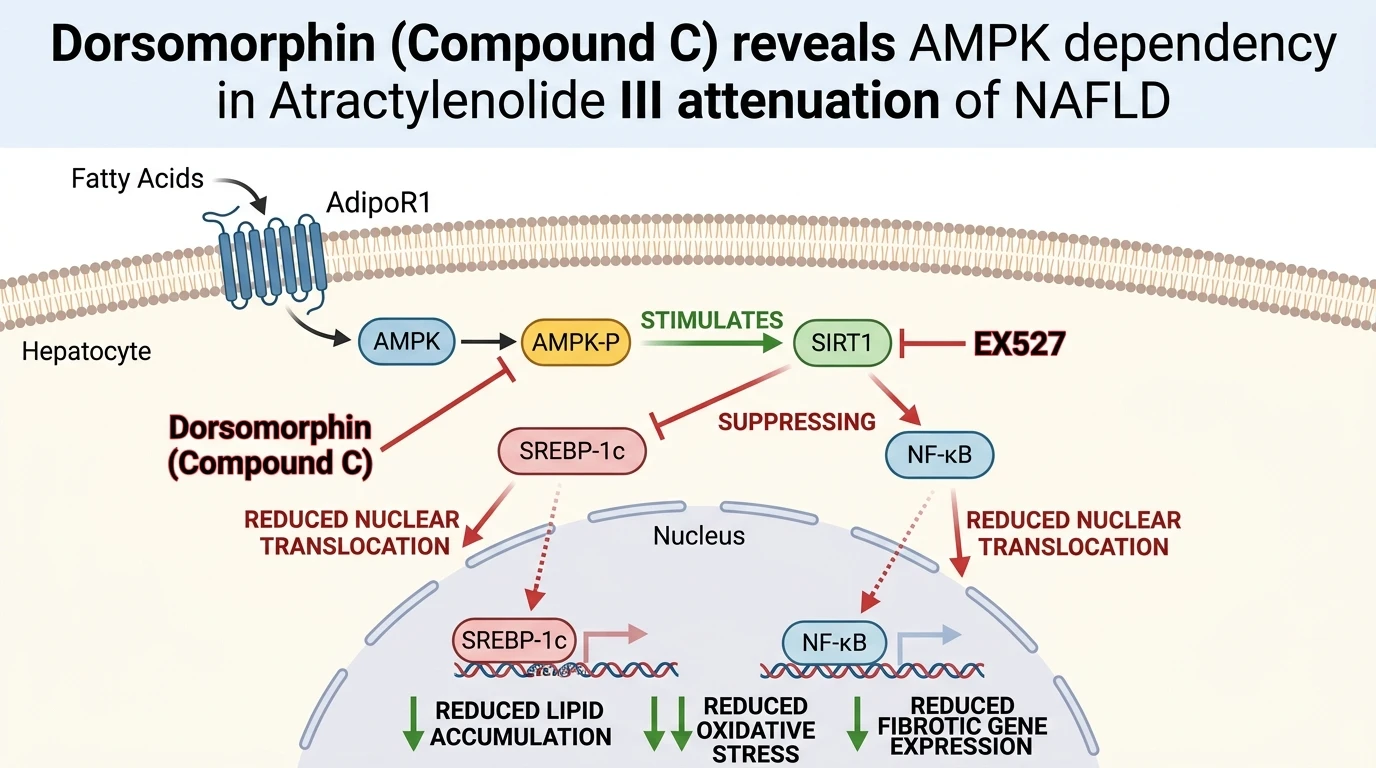
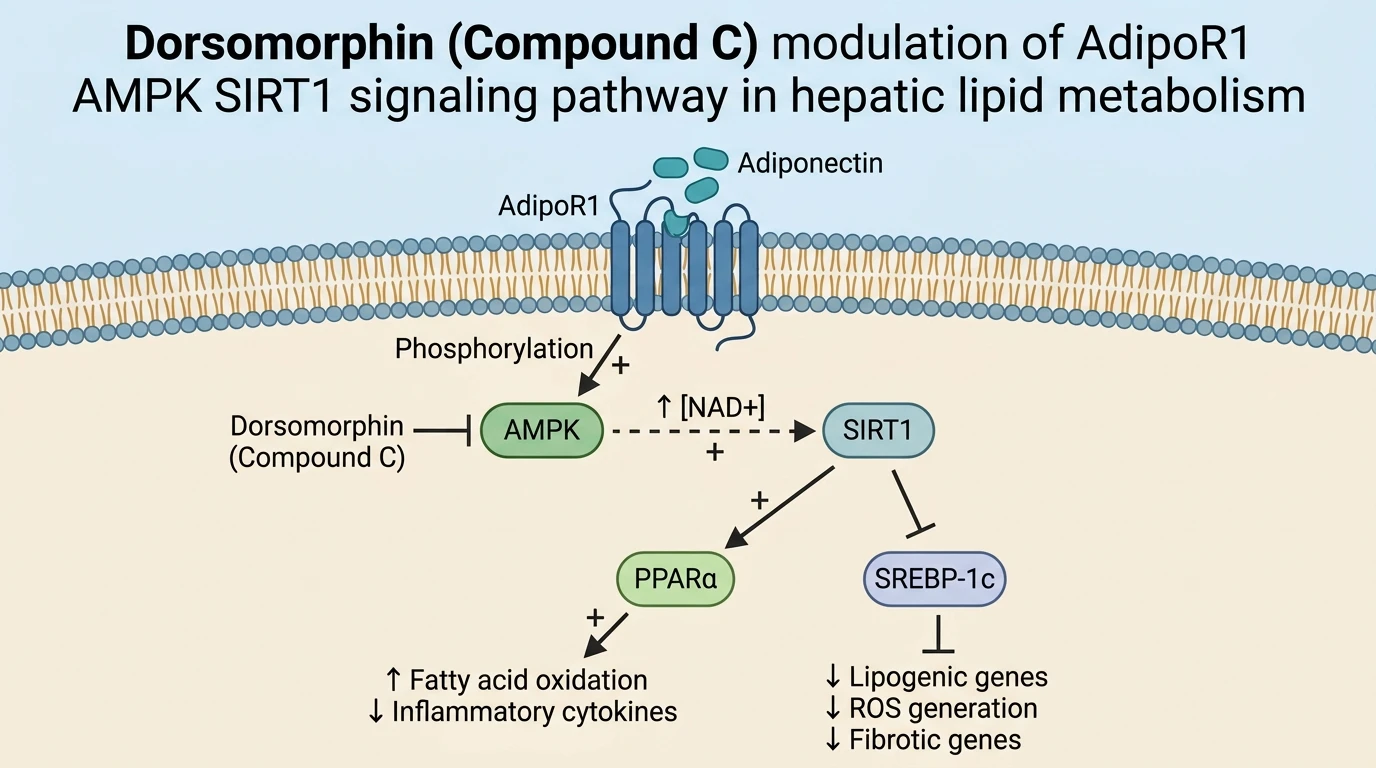
Non-alcoholic fatty liver disease (NAFLD) represents a metabolic continuum initiated by aberrant hepatic lipid accumulation, progressing to oxidative injury, sustained inflammatory signaling, and fibrotic tissue remodeling. Central to hepatic metabolic regulation is AMP-activated protein kinase (AMPK), a heterotrimeric serine/threonine kinase that senses cellular energy status and regulates downstream metabolic effectors. Activation of adiponectin receptor 1 (AdipoR1) triggers AMPK phosphorylation, establishing an axis with the NAD+-dependent deacetylase sirtuin 1 (SIRT1). This AdipoR1/AMPK/SIRT1 cascade functions as a primary regulator of fatty acid oxidation and lipogenesis in parenchymal liver cells.
In high-fat diet (HFD)-fed murine models and free fatty acid (FFA)-stimulated HepG2 hepatocyte cultures, Atractylenolide III (ATL III)—a bioactive sesquiterpene lactone—demonstrates significant therapeutic activity. Direct engagement of AdipoR1 by ATL III enhances receptor expression and stimulates downstream AMPK phosphorylation at Thr172. Activated AMPK increases the intracellular NAD+/NADH ratio, driving deacetylase activity of SIRT1. Consequently, SIRT1 deacetylates key transcriptional regulators, including peroxisome proliferator-activated receptor gamma coactivator 1-alpha (PGC-1α) and sterol regulatory element-binding protein 1c (SREBP-1c). Deacetylation represses de novo lipogenic transcription—specifically fatty acid synthase (FAS) and acetyl-CoA carboxylase (ACC)—while stimulating fatty acid beta-oxidation via peroxisome proliferator-activated receptor alpha (PPARα).
To establish target specificity and establish whether AMPK activation is an absolute requirement for ATL III-mediated hepatoprotection, researchers utilized the ATP-competitive AMPK inhibitor Dorsomorphin (Compound C). Pharmacological inhibition of AMPK using Dorsomorphin (Compound C) abolished the therapeutic attenuation of intracellular lipid droplets observed during ATL III treatment. In FFA-exposed HepG2 cells, co-treatment with Dorsomorphin (Compound C) blocked the phosphorylation of AMPK at Thr172, preventing subsequent activation of SIRT1. This pharmacological disruption restored lipogenic flux, as evidenced by elevated triglyceride content and upregulated SREBP-1c expression despite the presence of ATL III.
Beyond lipogenesis, the AdipoR1/AMPK/SIRT1 axis directly counteracts hepatic oxidative stress and inflammatory signaling cascades. In HFD-fed mice, ATL III administration reduced intracellular malondialdehyde (MDA) levels and boosted endogenous antioxidant capacity, increasing superoxide dismutase (SOD) and glutathione peroxidase (GSH-Px) enzymatic activities. Concurrently, activation of this axis suppressed nuclear factor kappa B (NF-κB) nuclear translocation, resulting in reduced transcription of pro-inflammatory cytokines, including tumor necrosis factor-alpha (TNF-α), interleukin-6 (IL-6), and interleukin-1 beta (IL-1β). When cells or animal cohorts were exposed to Dorsomorphin (Compound C), these antioxidant and anti-inflammatory outcomes were abolished. AMPK suppression restored NF-κB nuclear translocation and elevated reactive oxygen species (ROS) accumulation, demonstrating that AMPK signaling is required to prevent inflammatory liver injury.
Furthermore, the fibrotic progression of NAFLD was evaluated in long-term HFD feeding models. Treatment with ATL III reduced collagen deposition and suppressed expression markers of hepatic stellate cell activation, such as alpha-smooth muscle actin (α-SMA) and transforming growth factor-beta 1 (TGF-β1). Co-administration of Dorsomorphin (Compound C) or the selective SIRT1 inhibitor EX527, as well as genetic silencing of AdipoR1 using small interfering RNA (siRNA), fully abrogated the anti-fibrotic activity of ATL III. These combined genetic and pharmacological loss-of-function experiments confirm that the functional integrity of the upstream AdipoR1 receptor, interceding AMPK activity, and downstream SIRT1 deacetylase engagement is required for therapeutic efficacy. Blocking AMPK with Dorsomorphin (Compound C) prevents the hepatoprotective signaling cascade, positioning the AdipoR1/AMPK/SIRT1 pathway as a primary metabolic driver in NAFLD pathogenesis.
Pharmacological Evaluation of Hepatic AdipoR1 AMPK SIRT1 Signaling
Copy code to add this image to your page
Dorsomorphin (Compound C) acts as an ATP-competitive inhibitor of AMP-activated protein kinase (AMPK). By blocking AMPK phosphorylation at Thr172, it prevents downstream activation of SIRT1 deacetylase. This pharmacological blockade suppresses PGC-1α deacetylation and restores SREBP-1c transcription, promoting de novo lipogenesis, lipid accumulation, oxidative stress, and pro-inflammatory signaling in hepatocytes. Consequently, Dorsomorphin (Compound C) serves as a key tool compound to establish AMPK dependency in metabolic research.
Atractylenolide III Suppresses Hepatocyte Lipid Accumulation and Stress
In free fatty acid-stimulated HepG2 hepatocytes, Atractylenolide III administration significantly reduced intracellular lipid accumulation. Triglyceride assays confirmed a dose-dependent reduction in cytosolic lipid droplets. Phosphorylation of AMPK at Thr172 increased within two hours of treatment. Downstream SIRT1 deacetylase activity rose proportionately. Concurrently, nuclear localization of lipogenic transcription factor SREBP-1c was markedly reduced. Lipid peroxidation markers decreased sharply. Superoxide dismutase activity increased by two-fold under physiological stress conditions. Anti-inflammatory cytokines were upregulated, while pro-inflammatory TNF-alpha transcription ceased. These observations indicate that direct activation of AdipoR1 initiates an immediate hepatoprotective signaling program.
Reversal of Hepatic Protective Cascades via Small Molecule Inhibitors
Co-incubation with the small molecule inhibitor Dorsomorphin (Compound C) entirely abrogated the beneficial metabolic effects of Atractylenolide III. AMPK phosphorylation was suppressed in the presence of Dorsomorphin (Compound C). Intracellular triglyceride levels rebounded to baseline levels observed in vehicle-treated control groups. Downstream SIRT1 deacetylation of PGC-1alpha was inhibited. In parallel experiments, AdipoR1 knockdown via siRNA completely abolished compound-induced signaling. Fibrotic marker expression, including alpha-SMA and collagen type I, remained elevated during AMPK blockade. These genetic and pharmacological loss-of-function findings confirm that Atractylenolide III functions specifically through the AdipoR1/AMPK/SIRT1 axis.