Ezetimibe (SCH-58235) from Selleck Suppresses Histological Disease Activity in NAFLD
Copy code to add this image to your page
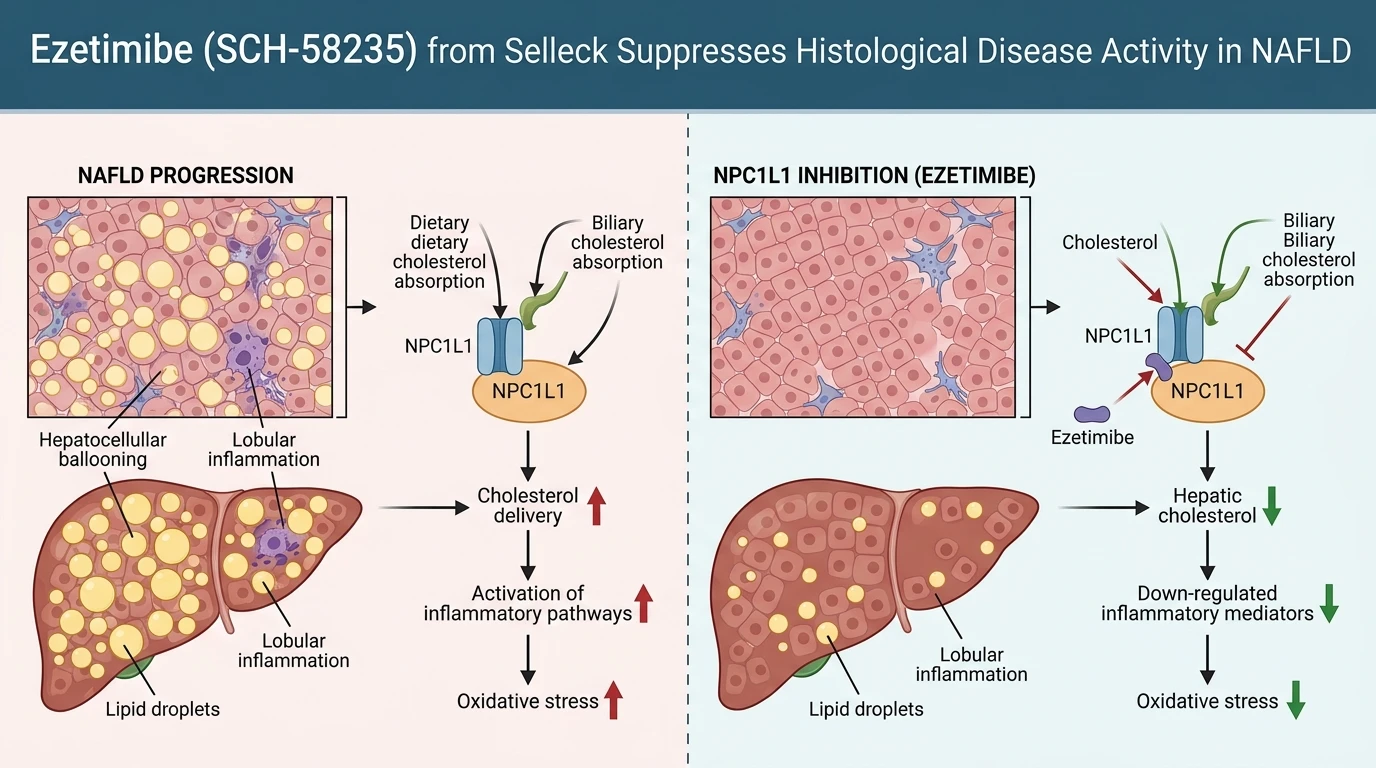
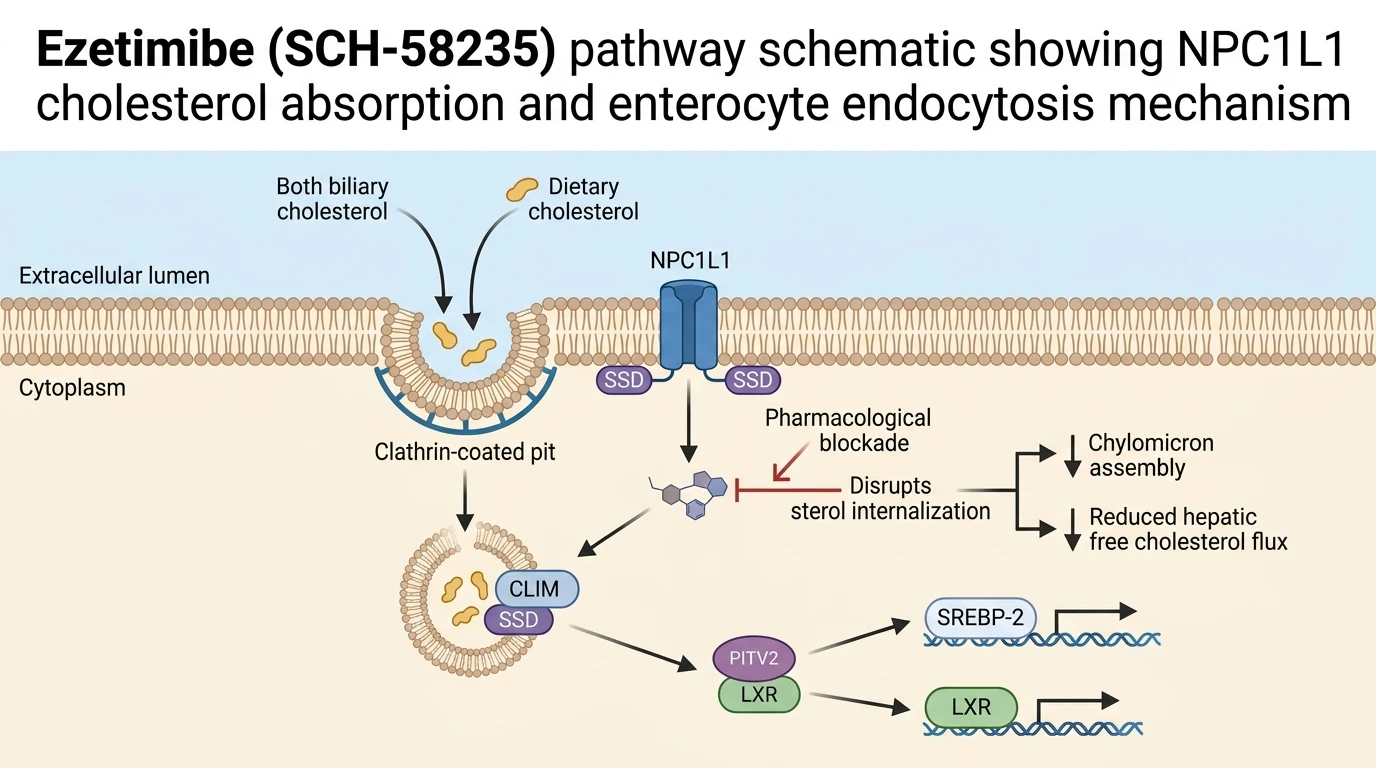
Niemann-Pick C1-Like 1 (NPC1L1) is a 13-transmembrane domain cell surface receptor critically involved in the intestinal absorption of dietary and biliary cholesterol. Located predominantly on the apical membrane of enterocytes and the canalicular membrane of human hepatocytes, NPC1L1 undergoes sterol-dependent endocytosis via clathrin-coated pits to shuttle sterols into intracellular compartment pools. Pharmacological targeting of this membrane protein provides a targeted mechanism for reducing systemic cholesterol burden and modulating hepatic lipid flux. The small molecule Ezetimibe (SCH-58235) binds directly to the extracellular loop C of NPC1L1, preventing receptor internalization and inhibiting cholesterol absorption without disrupting the absorption of fat-soluble vitamins, triglycerides, or bile acids.
In the context of nonalcoholic fatty liver disease (NAFLD), hepatic lipotoxicity arises not only from neutral triacylglycerol accumulation but also from the accumulation of free, unesterified cholesterol. Excess free cholesterol disrupts hepatocyte mitochondrial membrane fluidity, induces endoplasmic reticulum stress, and triggers Kupffer cell activation. These cellular events aggravate necroinflammation and accelerate progression toward nonalcoholic steatohepatitis (NASH). Quantitative molecular profiling available in the ChEMBL compound record for Ezetimibe highlights its affinity and specificity for NPC1L1, making it a key pharmacological agent for evaluating cholesterol-dependent liver injury pathways.
To establish the precise therapeutic efficacy and safety profile of NPC1L1 inhibition in NAFLD, a comprehensive meta-analysis of clinical data was conducted in patients with biopsy-proven disease. Biopsy evaluation remains the benchmark for assessing disease severity, distinguishing simple steatosis from active inflammation, hepatocyte ballooning, and pericentral fibrosis. The synthesis of randomized controlled trial data demonstrated that treatment with Ezetimibe (SCH-58235) produced a statistically significant reduction in the NAFLD Activity Score (NAS) compared to control arms, yielding a standardized mean difference (SMD) of -0.30 (95% CI, -0.57 to -0.03). This measurable drop in NAS reflects a mitigation of histological inflammation and cellular injury markers across treated cohorts.
Remarkably, the empirical analysis revealed a distinct mechanistic divergence between histological improvement and hepatic fat removal. Ezetimibe treatment did not result in a statistically significant reduction in overall hepatic steatosis, with an SMD of -0.10 (95% CI, -0.53 to 0.32). Magnetic resonance spectroscopy and histological grading confirmed that macrovesicular lipid storage remained largely constant. These clinical observations indicate that the therapeutic benefit of NPC1L1 inhibition stems primarily from modulating toxic lipid composition rather than clearing overall triglyceride mass. Free cholesterol loading in mitochondrial membranes diminishes, alleviating secondary reactive oxygen species generation and downstream inflammasome activation.
Safety assessments across the analyzed clinical trials confirmed favorable metabolic stability. Pharmacological blockade of NPC1L1 produced no significant alterations in fasting plasma glucose levels or glycated hemoglobin (HbA1c). Systemic glucose homeostasis remained stable throughout treatment durations. These clinical findings demonstrate that NPC1L1-directed therapy exerts its hepatoprotective effects via selective modulation of hepatic sterol dynamics rather than secondary alterations in carbohydrate metabolism or peripheral insulin sensitivity.
Histological and Metabolic Outcomes of NPC1L1 Inhibition
Copy code to add this image to your page
Ezetimibe selectively inhibits NPC1L1-mediated cholesterol absorption at the brush border of enterocytes. Reduced intestinal sterol uptake decreases hepatic free cholesterol delivery. In clinical trials of NAFLD, this target engagement attenuates histological injury scores without significantly reducing overall hepatic steatosis or compromising glycemic control.
Reduction of Inflammatory Disease Activity Across Clinical Trials
Meta-analytic evidence confirms that NPC1L1 inhibition attenuates histological liver injury in NAFLD patients. In randomized controlled trials, administration of Ezetimibe (SCH-58235) produced a statistically significant reduction in the NAFLD activity score (NAS) with a standardized mean difference of -0.30 (95% CI, -0.57 to -0.03). Hepatocyte ballooning scores declined consistently. This histological attenuation reflects reduced hepatic exposure to unesterified cholesterol species. Toxic free cholesterol induces lysosomal dysfunction and mitochondrial stress in hepatocytes. By interrupting intestinal sterol absorption, total toxic lipid flux into portal circulation decreases. Inflammation markers subsided across multiple patient cohorts.
Dissociation Between Hepatic Lipid Accumulation and Histological Injury
Total hepatic steatosis did not mirror the observed reductions in histological inflammation. Standardized mean difference for steatosis change remained at -0.10 (95% CI, -0.53 to 0.32), indicating no significant reduction in overall liver fat volume. Neutral lipid storage in macrovesicular droplets persists. High-purity reagents like Ezetimibe (SCH-58235) from Selleck selectively target sterol transport without upregulating hepatic fatty acid beta-oxidation. Consequently, triglyceride clearance rates remain unaltered. Hepatocyte death pathways are driven primarily by lipotoxic intermediate accumulation rather than inert triacylglycerol storage. Disconnecting triglyceride mass from necroinflammation explains this divergence.
Glycemic Neutrality and Long-Term Metabolic Safety Parameters
Metabolic safety profiles demonstrated strict glycemic neutrality during NPC1L1 targeting. Fasting plasma glucose levels exhibited no statistically significant changes across evaluated randomized cohorts. Glycated hemoglobin (HbA1c) values remained unaltered throughout treatment periods. Insulin sensitivity indices did not shift. Selective inhibition using Ezetimibe (SCH-58235) from Selleck does not impair pancreatic beta-cell function or skeletal muscle glucose uptake. These parameters confirm that therapeutic activity occurs independent of peripheral carbohydrate metabolism. Systematic safety tracking reinforces the targeted metabolic profile of NPC1L1 inhibition.