JPH203 (Nanvuranlat) suppresses LAT1 transport to inhibit glycolysis and sensitize chemoresistant TNBC
Copy code to add this image to your page
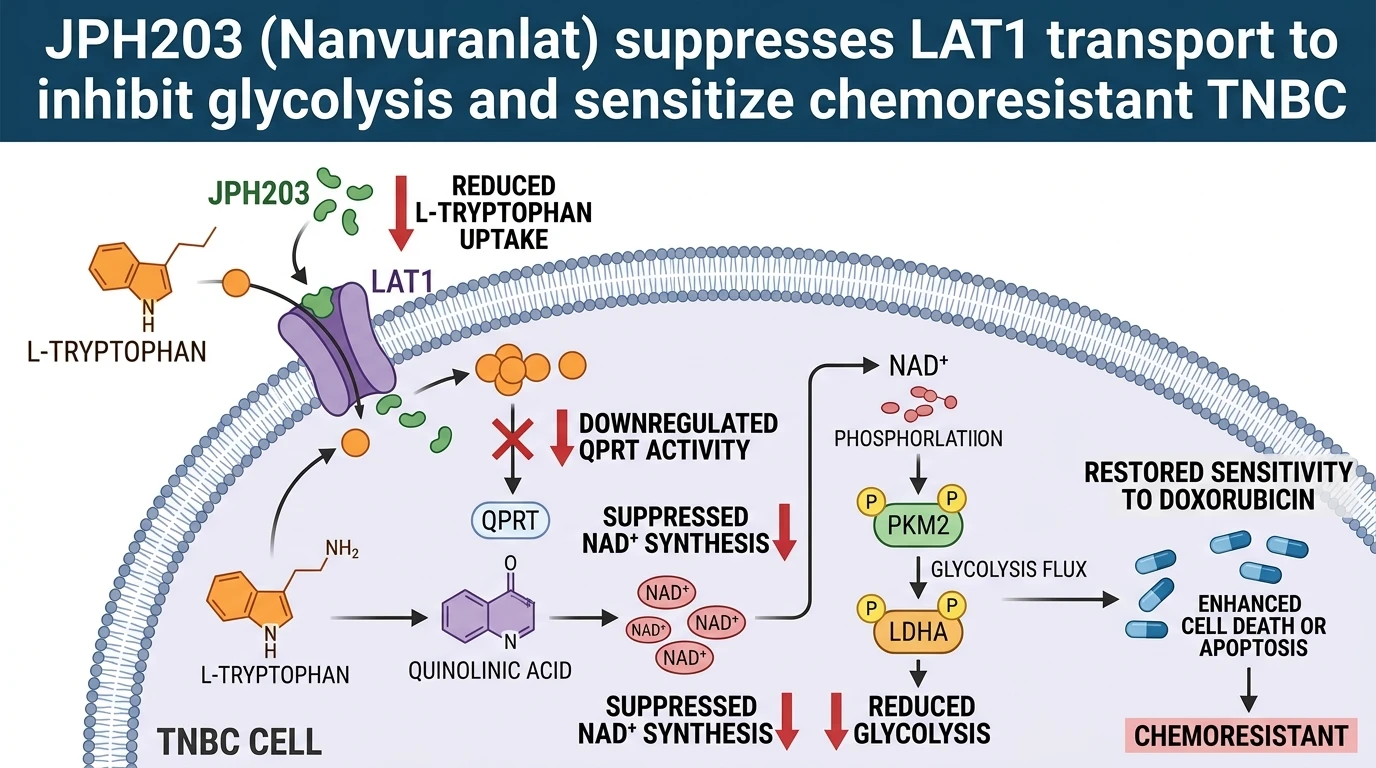
Triple-negative breast cancer (TNBC) exhibits profound metabolic reprogramming to sustain rapid proliferation and survive under therapeutic stress. Among these metabolic alterations, upregulation of L-type amino acid transporter 1 (LAT1/SLC7A5) serves as a primary driver of amino acid influx and intracellular signaling adaptation. LAT1 operates as a sodium-independent transporter specialized for neutral amino acids, particularly L-tryptophan. In TNBC cells, elevated LAT1 expression directly correlates with accelerated uptake of essential nutrients, establishing a high metabolic baseline required for cellular survival and metastatic dissemination.
Upon entering the cytosol, L-tryptophan serves as a crucial substrate for the kynurenine pathway, where quinolinate phosphoribosyltransferase (QPRT) functions as a rate-limiting enzyme in de novo nicotinamide adenine dinucleotide (NAD+) synthesis. Elevated QPRT expression in LAT1-overexpressing TNBC cells significantly amplifies the intracellular NAD+ pool. This elevation in NAD+ concentration is not merely a passive metabolic byproduct. Rather, high cytosolic NAD+ levels operate as a biochemical stimulus that triggers downstream post-translational modifications on critical glycolytic enzymes.
Specifically, elevated NAD+ facilitates the hyper-phosphorylation and enzymatic activation of pyruvate kinase M2 (PKM2) and lactate dehydrogenase A (LDHA). Phosphorylated PKM2 increases the conversion of phosphoenolpyruvate to pyruvate, while phosphorylated LDHA rapidly reduces pyruvate into lactate. This coordinated enzymatic hyperactivation severely amplifies the Warburg effect, fueling high glycolytic flux even under normoxic conditions. Lactate accumulation and rapid glucose consumption collectively reinforce chemoresistance and drive tumor cell invasion.
Pharmacological intervention using JPH203 (Nanvuranlat), a selective small-molecule LAT1 inhibitor, disrupts this metabolic loop. By competitively occupying the LAT1 substrate-binding pocket, JPH203 blocks L-tryptophan uptake. Consequently, QPRT-mediated de novo NAD+ biosynthesis drops substantially. Depleted cytosolic NAD+ pools lead to a marked reduction in PKM2 and LDHA tyrosine phosphorylation. Under tested in vitro conditions, LAT1 blockade by JPH203 or genetic siRNA silencing decreases extracellular acidification rates and decreases cellular ATP content.
Phenotypically, JPH203 treatment suppresses cell proliferation, migration, and invasive capacity across multiple human TNBC cell lines. In murine xenograft models, target engagement by JPH203 impairs primary tumor expansion without inducing significant weight loss or hematological toxicity. Crucially, metabolic suppression by JPH203 sensitizes chemoresistant TNBC models to conventional cytotoxic agents. When combined with doxorubicin, LAT1 inhibition restores drug sensitivity, triggering robust apoptosis and marked tumor regression in vivo. These findings demonstrate that LAT1-driven NAD+ synthesis represents a vulnerable metabolic node in refractory TNBC phenotypes.
Targeting LAT1 Transport and Glycolytic Signaling Pathways
Copy code to add this image to your page
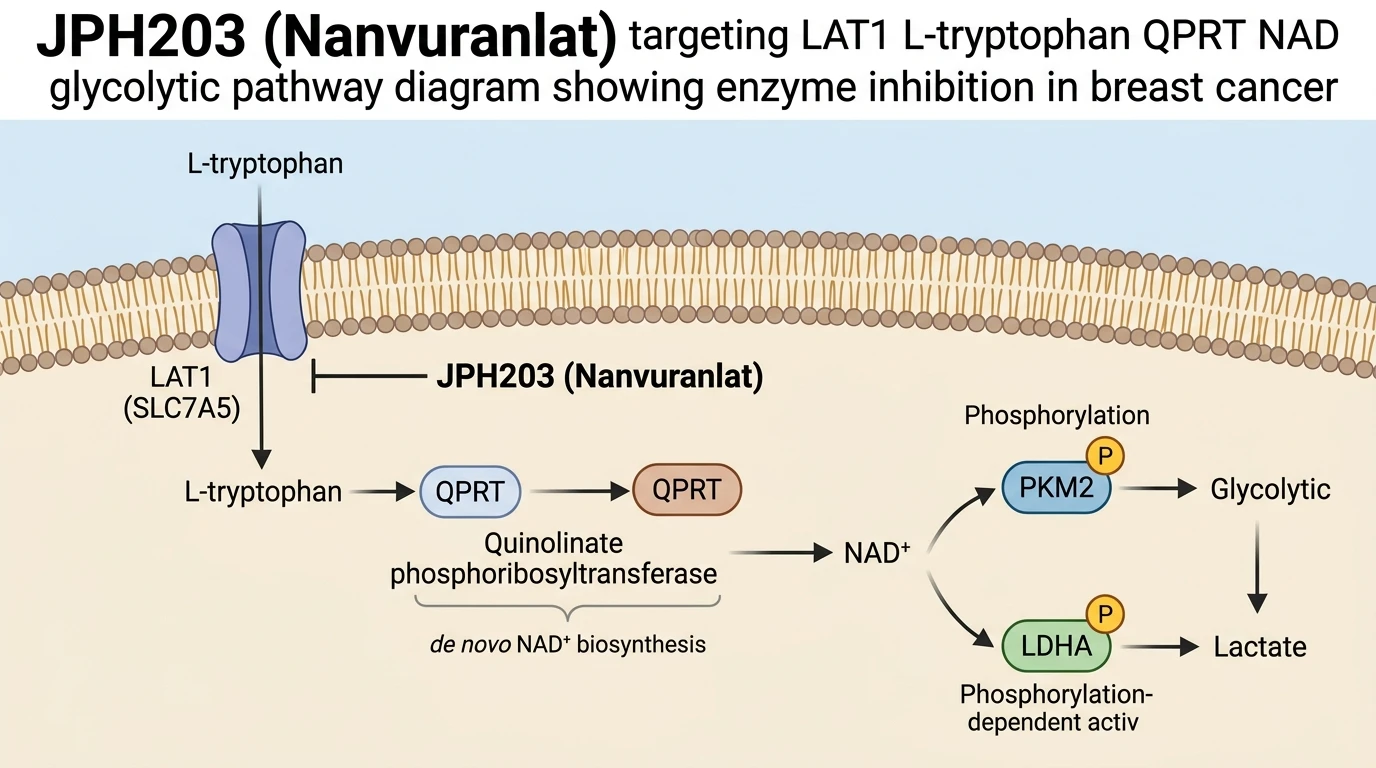
JPH203 selectively inhibits LAT1 (SLC7A5), blocking cellular L-tryptophan uptake and suppressing QPRT-driven de novo NAD+ synthesis. Reduced cytosolic NAD+ suppresses the phosphorylation and enzymatic activation of PKM2 and LDHA. This signaling breakdown halts glycolytic flux, impairs TNBC proliferation and invasion, and restores sensitivity to doxorubicin in chemoresistant tumors.
LAT1 Blockade Suppresses De Novo NAD Biosynthesis
LAT1-mediated import of L-tryptophan directly fuels the kynurenine metabolic branch governed by QPRT. Pharmacological intervention with JPH203 blocks this essential transport mechanism. Tryptophan uptake dropped rapidly following inhibitor exposure in cultured TNBC models. Consequently, de novo NAD+ biosynthesis suffered a severe downshift. Intracellular NAD+ concentrations fell by over fifty percent within hours of treatment. This metabolic deficit uncouples downstream signaling cascades dependent on high NAD+ availability.
PKM2 and LDHA Dephosphorylation Blunts Glycolytic Flux
High cytosolic NAD+ levels normally sustain the phosphorylated, highly active states of PKM2 and LDHA. Treatment with JPH203 abolished this regulatory phosphorylation event. Enzymatic conversion of pyruvate to lactate ceased to operate at elevated rates. Extracellular acidification rates decreased sharply upon treatment under tested in vitro conditions. Cellular ATP generation dropped accordingly. Consequently, TNBC cells exhibited impaired migration and invasion metrics.
LAT1 Targeted Therapy Restores Doxorubicin Sensitization In Vivo
Chemoresistant TNBC tumors frequently adapt by overexpressing LAT1 and elevating glycolytic capacity. Co-administration of JPH203 alongside doxorubicin blunted tumor growth in xenograft models far more effectively than single-agent controls. Synergistic apoptosis induction occurred without exacerbating systemic toxicity in animal cohorts. These observations indicate that targeting LAT1-dependent metabolic rewiring effectively overcomes anthracycline resistance in pre-clinical settings.