AZD6738 from Selleck Ceralasertib Target Engagement and Efflux Mediated Resistance Mechanisms
Copy code to add this image to your page
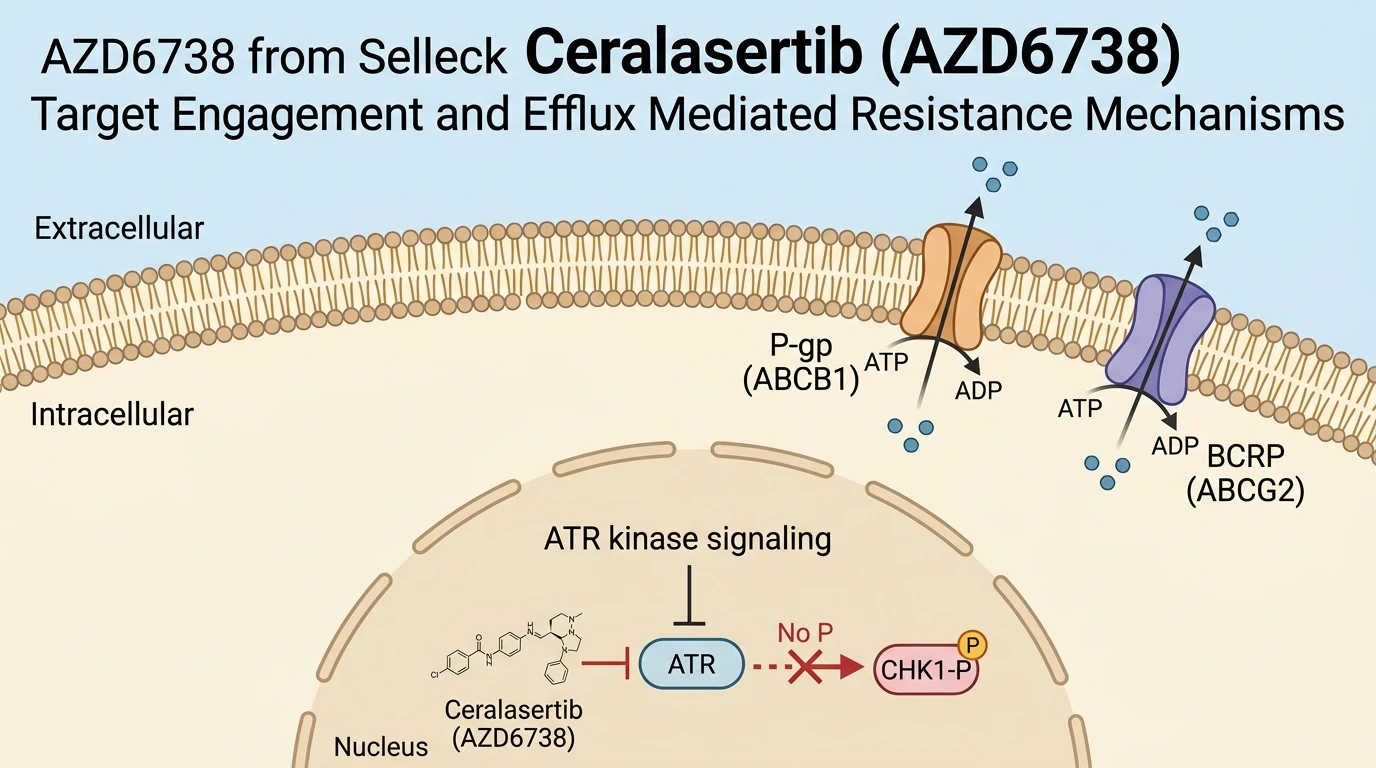
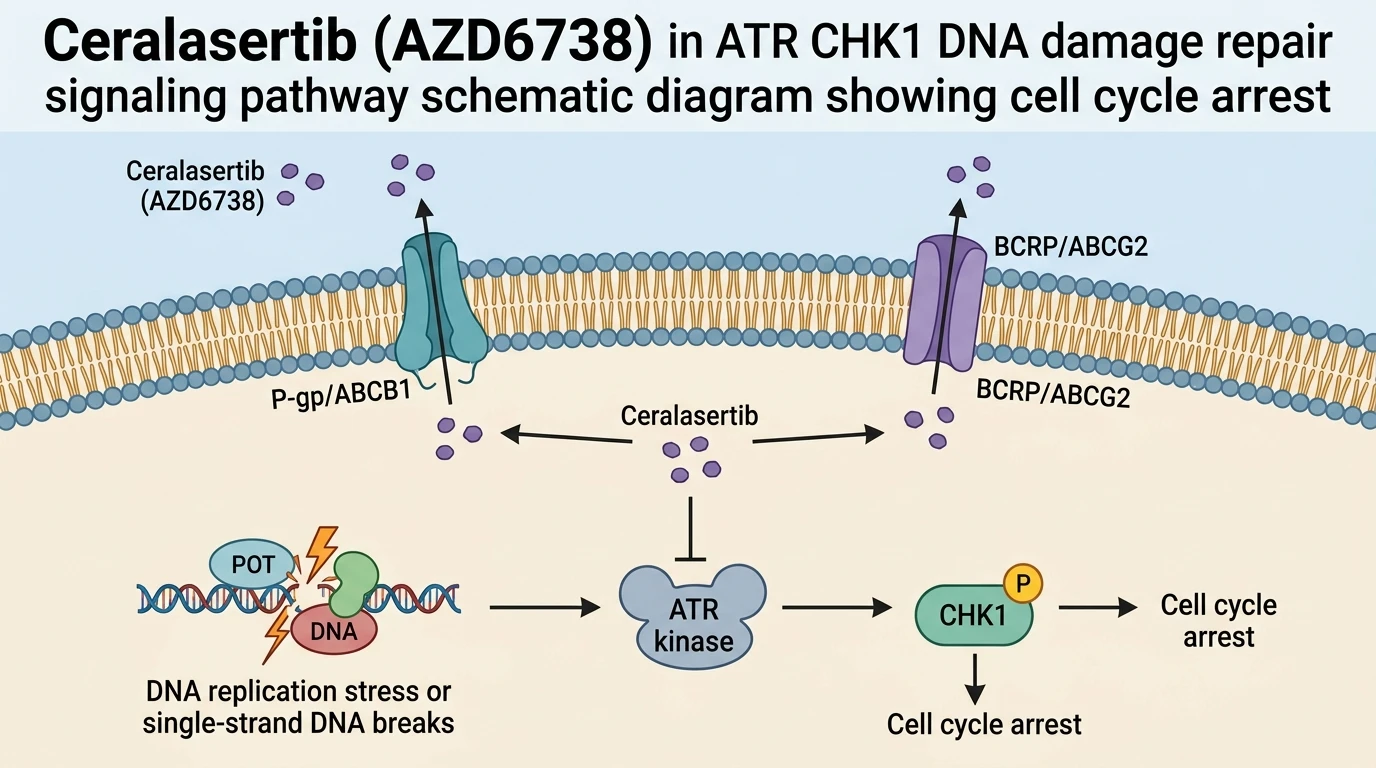
Targeting the DNA damage response (DDR) machinery has emerged as a therapeutic strategy in oncology, particularly for tumors exhibiting high baseline replication stress or loss of complementary repair pathways. Ataxia telangiectasia and Rad3-related (ATR) kinase functions as an apical sensor of single-stranded DNA breaks and stalled replication forks. Activated ATR phosphorylates downstream effector kinase CHK1, triggering intra-S and G2/M cell cycle checkpoints to permit DNA repair before mitotic entry. Ceralasertib (AZD6738) is an oral, highly selective small-molecule inhibitor of ATR kinase that disrupts this protective checkpoint. By preventing CHK1 phosphorylation, Ceralasertib (AZD6738) forces replication-stressed cancer cells into premature mitosis, accumulating lethal double-strand breaks and undergoing mitotic catastrophe. High-quality pharmacological tools such as AZD6738 from Selleck enable precise characterization of target engagement and off-target resistance liabilities across diverse cancer models. Under in vitro culture conditions, treatment with Ceralasertib (AZD6738) selectively sensitizes ATM-deficient or ERCC1-deficient cell lines to DNA-damaging agents. However, cell-autonomous transport mechanisms frequently limit intracellular drug bioaccumulation, diminishing target coverage at clinically tolerable doses. Recent pharmacological evaluations identify the ATP-binding cassette (ABC) efflux transporters P-glycoprotein (P-gp/ABCB1) and Breast Cancer Resistance Protein (BCRP/ABCG2) as major determinants of cellular sensitivity to ceralasertib. Cancer cell lines engineered to overexpress ABCB1 or ABCG2 exhibit marked shift in half-maximal inhibitory concentration (IC50) values compared to parental controls. This drug-resistant phenotype relies on ATP-dependent active transport, which continuously pumps ceralasertib out of the cytoplasm into the extracellular space. Biochemical assays measuring inorganic phosphate release demonstrate that ceralasertib directly stimulates both P-gp and BCRP ATPase activity in a concentration-dependent manner. This stimulation confirms that ceralasertib physically interacts with the active transport machinery as a direct substrate rather than acting purely as a neutral bystander or non-competitive inhibitor. Pharmacological co-treatment with established transporter inhibitors—such as tariquidar for P-gp or KO143 for BCRP—completely restores intracellular ceralasertib retention. Similarly, CRISPR-Cas9-mediated gene knockout of ABCB1 or ABCG2 re-sensitizes resistant cell lines to ceralasertib-induced apoptosis, validating the functional necessity of these transporters in conferring drug resistance. Interestingly, temporal protein analysis demonstrates that prolonged ceralasertib exposure downregulates P-gp expression levels in a time-dependent manner, whereas BCRP expression remains unaffected. Molecular docking simulations clarify the structural basis of these transporter interactions. Ceralasertib docks with high binding affinity inside the central hydrophobic substrate-binding cavities of both P-gp and BCRP, establishing key pi-pi stacking and hydrogen-bonding contacts with conserved transmembrane residue side chains. These molecular interactions explain why dual ABCB1/ABCG2 expression strongly impacts ceralasertib pharmacokinetics and tissue distribution in vivo, including brain parenchymal penetrance across the blood-brain barrier. Identifying these active efflux mechanisms provides a clear rationale for rational drug combination strategies and patient stratification based on transporter expression profiles.
Pharmacological Efflux Dynamics and Resistance Reversal Mechanisms
Copy code to add this image to your page
Ceralasertib (AZD6738) functions as a selective oral inhibitor of ATR kinase, suppressing DNA damage repair cascades. Intracellular concentrations are limited by ATP-binding cassette transporters, specifically P-gp (ABCB1) and BCRP (ABCG2). Ceralasertib engages high-affinity substrate-binding pockets within both efflux pumps, stimulating ATPase catalytic activity to drive active drug extrusion. Prolonged exposure to ceralasertib induces time-dependent downregulation of P-gp protein expression without affecting BCRP levels. Pharmacological inhibition or genetic deletion of these transporters restores intracellular drug retention, enabling effective ATR kinase blockade and sensitization of resistant cancer cells.
Active ABCB1 and ABCG2 Efflux Confers Resistance to Ceralasertib
Overexpression of ABC transporters markedly diminishes intracellular ceralasertib accumulation. In comparative proliferation assays using parental and transporter-overexpressing cancer lines, ABCB1-expressing cells showed a 15-fold increase in ceralasertib IC50 values. ABCG2-overexpressing lines displayed an 8-fold increase. AZD6738 from Selleck demonstrated attenuated target inhibition in these resistant lines, evidenced by persistent CHK1 Ser317 phosphorylation despite micromolar drug exposures. Cellular sensitivity was restored upon co-administration of specific transporter inhibitors or genomic disruption. Addition of elacridar lowered ceralasertib IC50 values back to baseline levels. Biochemical ATPase assays confirmed that ceralasertib stimulates ATP hydrolysis in isolated P-gp and BCRP membrane vesicles. Basal ATPase activity doubled at saturating drug concentrations, verifying direct substrate transport.
Time-Dependent P-gp Downregulation and Substrate-Binding Pocket Engagement
In silico molecular docking reveals favorable binding free energies for ceralasertib within the internal cavity of both transporters. Within the P-gp binding pocket, ceralasertib forms hydrophobic contacts with Tyr307 and Phe728. In BCRP, binding relies on aromatic stacking interactions with Val543 and Phe439. Despite sharing substrate status, the transporters exhibit divergent regulatory responses to chronic ceralasertib exposure. Western blot analysis across a 48-hour exposure timeline showed a selective decrease in P-gp protein levels. P-gp abundance declined by 60% after 36 hours. BCRP protein levels remained stable throughout the same treatment period. This selective downregulation of P-gp indicates distinct post-translational degradation pathways triggered by ceralasertib engagement.