ABT-199 Bcl-2 inhibitor Regimens in Blast-Phase Myeloproliferative Neoplasms
Copy code to add this image to your page
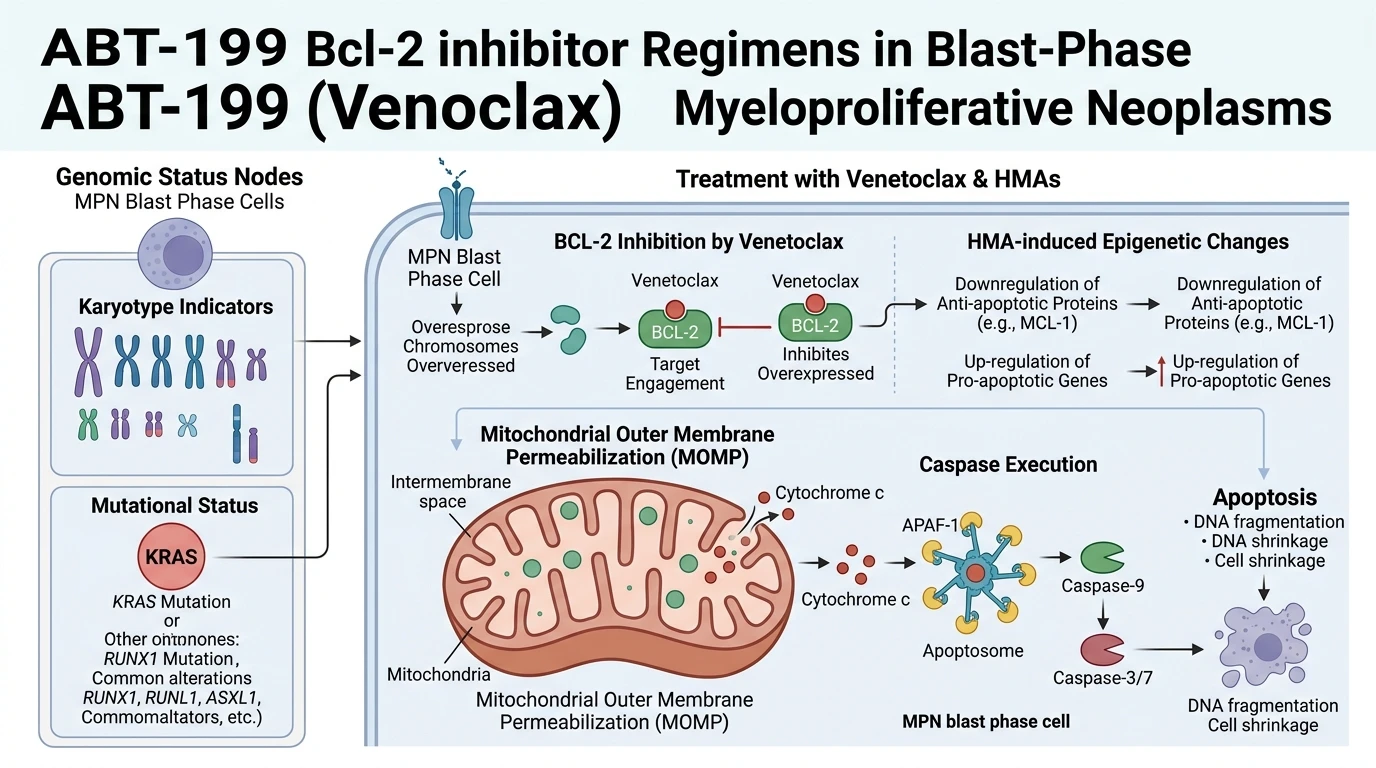
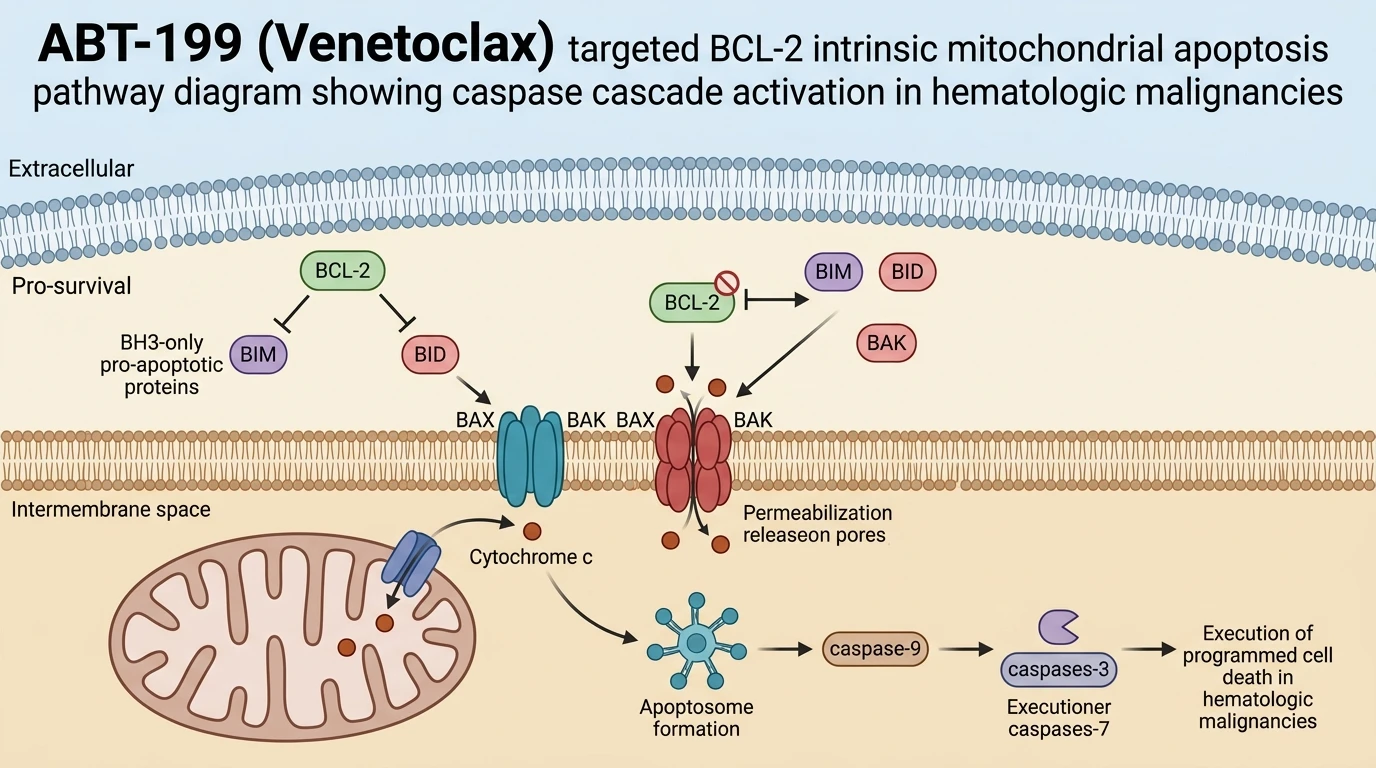
Blast-phase myeloproliferative neoplasm (MPN-BP) represents a recalcitrant hematologic state characterized by rapid myeloid proliferation and severe chemoresistance. Primary management strategies historically relied on monotherapy with hypomethylating agents (HMAs), such as azacitidine or decitabine, yielding complete response with or without complete hematologic recovery (CR/CRi) rates of merely 4%. Target engagement of B-cell lymphoma 2 (BCL-2)—an integral pro-survival protein localized to the outer mitochondrial membrane—provides a pharmacodynamic mechanism to bypass apoptotic blockade in these malignant clones. Small-molecule inhibition via the ABT-199 Bcl-2 inhibitor selectively occupies the hydrophobic BH3-binding groove of BCL-2, disrupting its interaction with pro-apoptotic BH3-only proteins including BIM and PUMA. Upon competitive displacement, unleashed BIM directly activates the multidomain executioners BAX and BAK, triggering mitochondrial outer membrane permeabilization (MOMP), cytosolic release of cytochrome c, apoptosome assembly, and sequential activation of caspases-9, -3, and -7.
In a clinical evaluation involving 32 patients diagnosed with MPN-BP, co-administration of ABT-199 (Venetoclax) alongside HMA backbones yielded an overall CR/CRi rate of 44%. This functional synergy stems from dual biochemical mechanisms: HMAs downregulate pro-survival proteins such as MCL-1 through epigenetic gene repression, thereby eliminating primary mechanisms of resistance to direct BCL-2 blockade. Molecular and cytogenetic subgroup analyses revealed pronounced variations in response based on baseline genetic features. Specifically, the absence of complex karyotypic abnormalities and the lack of activating mutations in N/KRAS significantly correlated with higher CR/CRi attainment. Ras pathway hyperactivation promotes alternative survival signaling through downstream MEK/ERK cascades, upregulated MCL-1 expression, and phosphorylated BAD, rendering malignant blasts less reliant on BCL-2 activity.
Achieving CR/CRi with venetoclax plus HMA enabled 43% of responding patients to successfully bridge to allogeneic hematopoietic stem cell transplantation (AHSCT). This consolidation strategy represents a primary curative opportunity in eligible cohorts. However, despite marked improvements in initial response rates relative to single-agent HMAs, median overall survival (OS) did not exhibit a statistically significant extension in the overall population. Comparative analysis indicated that intensive induction chemotherapy regimens sustained superior long-term survival outcomes in transplant-eligible candidates, likely reflecting deeper eradication of subclonal hematopoiesis. These clinical findings highlight the utility of ABT-199 (Venetoclax) as an effective cytoreductive induction tool, particularly in patients harboring favorable molecular profiles without complex cytogenetics or RAS-mediated secondary resistance. Similar targeted interventions, such as PI3K inhibitors such as idelalisib in B-cell malignancies, reinforce the importance of pharmacogenomic biomarker selection in managing complex hematologic neoplasms.
Clinical Efficacy and Pharmacogenomic Biomarkers in MPN-BP
Copy code to add this image to your page
ABT-199 (Venetoclax) selectively inhibits the anti-apoptotic BCL-2 protein by binding its BH3-binding groove. This action neutralizes BCL-2 and releases pro-apoptotic factors BIM and PUMA. Free BIM activates BAX and BAK, triggering mitochondrial outer membrane permeabilization, cytochrome c release, and caspase cascade activation. In blast-phase myeloproliferative neoplasms, combining venetoclax with hypomethylating agents synergistically enhances apoptosis induction, overcoming baseline resistance mechanisms.
Hypomethylating Agent Synergism Yields Enhanced Remission Rates
Blast-phase myeloproliferative neoplasms present severe therapeutic challenges. Combining the ABT-199 Bcl-2 inhibitor with hypomethylating agents—either azacitidine or decitabine—demonstrated a marked elevation in complete remission rates (CR/CRi of 44%) compared to historic monotherapy baselines (4%). Mitochondrial outer membrane permeabilization proceeded rapidly. This synergistic interaction stems from demethylation-induced downregulation of anti-apoptotic proteins alongside direct BCL-2 displacement by the ABT-199 Bcl-2 inhibitor. Target engagement was verified empirically. Consequently, forty-three percent of responding patients successfully bridged to allogeneic hematopoietic stem cell transplantation, offering a viable consolidation vector in fit individuals.
Mutational Profiles Predict Response and Long-Term Survival Outcomes
Genomic stratification governed clinical treatment response. Patients lacking complex karyotypic abnormalities or RAS pathway mutations (N/KRAS) achieved significantly higher CR/CRi rates following combination therapy. RAS signaling restored pro-survival pathways. Despite initial response gains over single-agent hypomethylating therapies, overall survival did not differ significantly between cohorts; intensive chemotherapy sustained superior long-term survival. Clonal heterogeneity limits persistent target suppression. These observations underscore the imperative to integrate mutational profiling into targeted therapeutic selection.