SF1670 from Selleck Reactivates PI3K/AKT Signaling by Targeted PTEN Inhibition in Hepatocellular Carcinoma
Copy code to add this image to your page
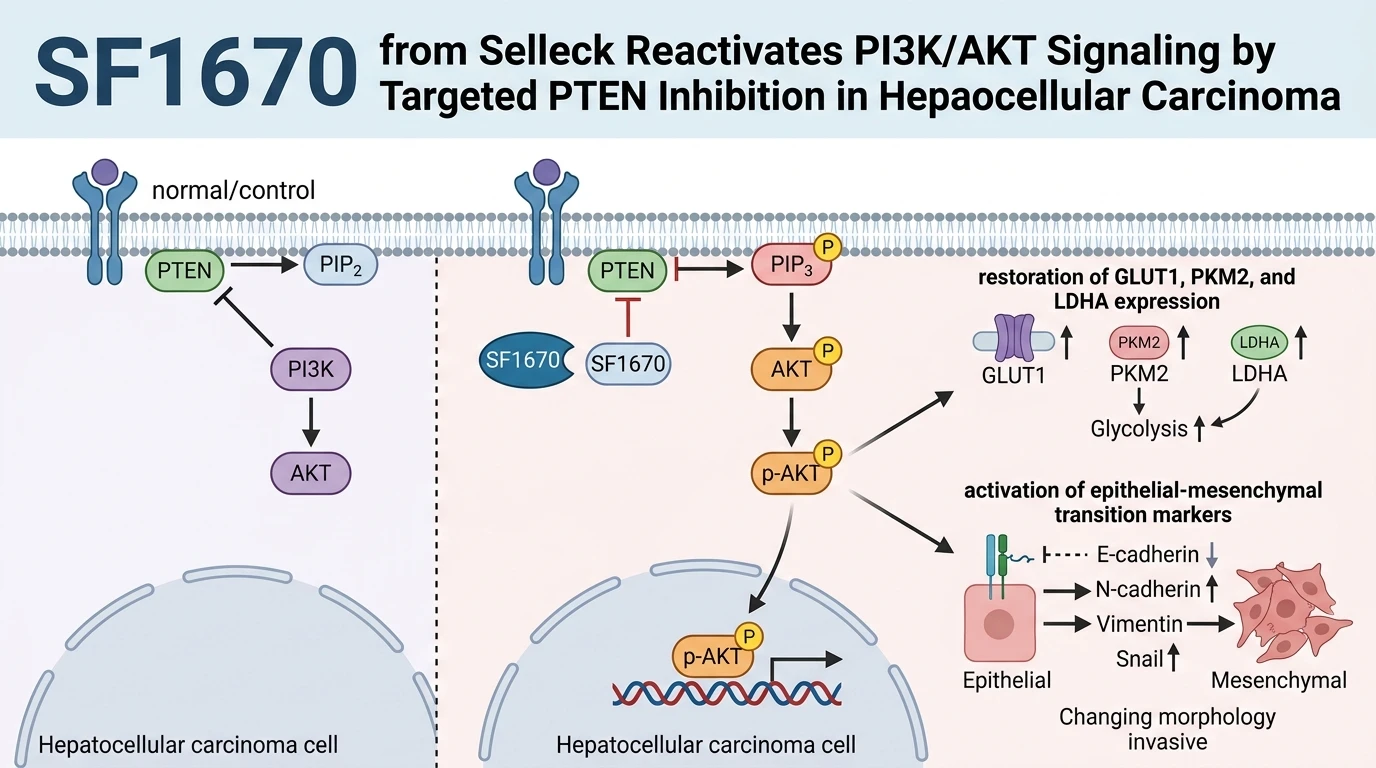
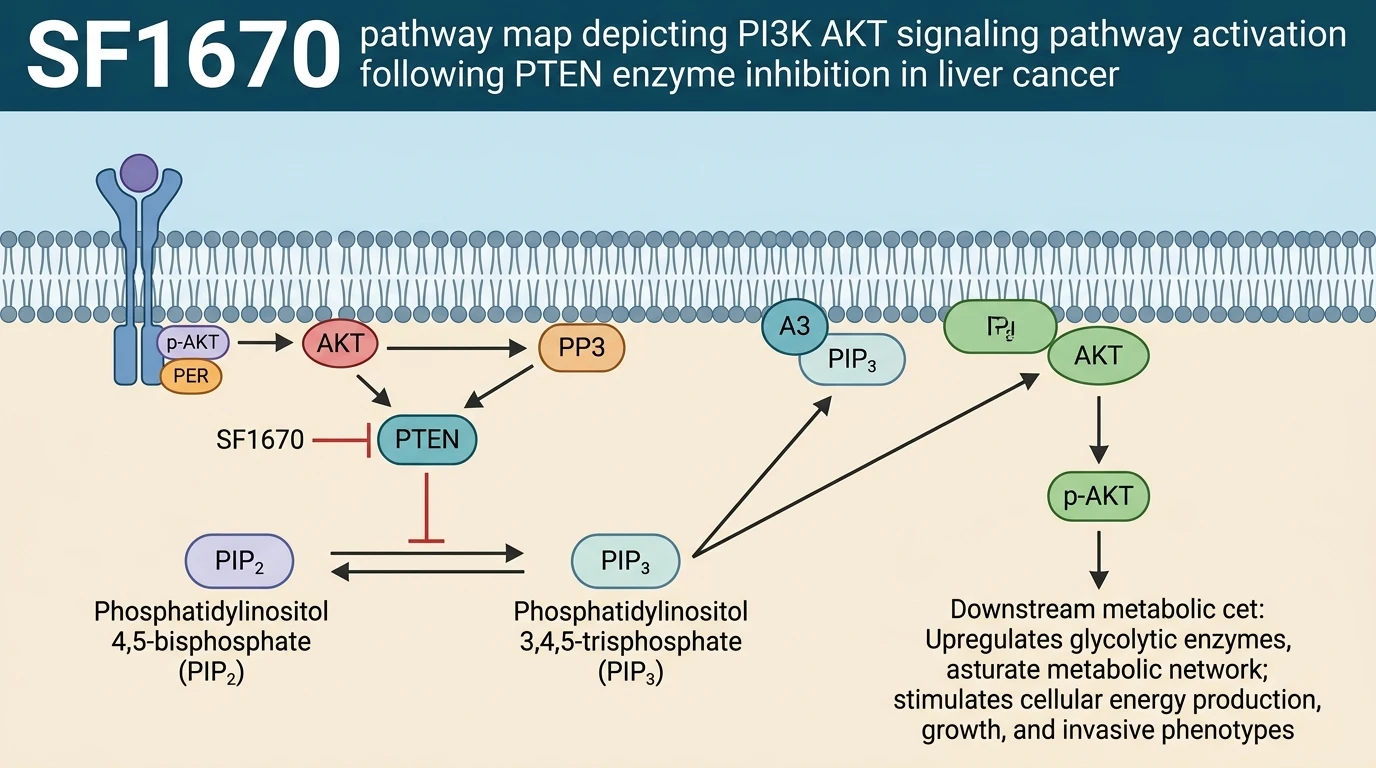
Phosphatase and tensin homolog (PTEN) functions as a central negative regulator of the phosphatidylinositol 3-kinase (PI3K)/AKT signaling network. As a dual-specificity lipid and protein phosphatase, PTEN dephosphorylates phosphatidylinositol 3,4,5-trisphosphate (PIP3) to yield phosphatidylinositol 4,5-bisphosphate (PIP2). This catalytic action removes the crucial membrane-docking phospholipid required for pleckstrin homology domain-containing proteins. Consequently, PTEN activity suppresses downstream activation of AKT (protein kinase B) and its vast array of metabolic and survival effectors.
In hepatocellular carcinoma (HCC), malignant cells undergo extensive metabolic reprogramming to satisfy the energetic demands of rapid proliferation. Enhanced aerobic glycolysis represents a hallmark of this transformed state. Gamma-glutamylcyclotransferase (GGCT) plays a role in maintaining cellular glutathione homeostasis and supporting glycolytic flux within HCC cell populations. Genetic depletion or silencing of GGCT impairs these cellular energetics. In experimental models, GGCT knockdown suppresses basal glucose uptake and curtails lactic acid secretion. Mechanistically, this metabolic collapse correlates with marked downregulation of key rate-limiting glycolytic enzymes: glucose transporter 1 (GLUT1), pyruvate kinase M2 (PKM2), and lactate dehydrogenase A (LDHA).
Beyond metabolic disruption, GGCT depletion triggers phenotypic changes characteristic of suppressed oncogenicity. Cellular viability drops significantly in GGCT-silenced HuH-7 cultures. Proliferation slows, and the proportion of cells undergoing programmed cell death elevates substantially. Furthermore, cellular motility, directional migration, and invasive capacity through extracellular matrix barriers diminish following GGCT depletion. These changes coincide with a reversal of epithelial-mesenchymal transition (EMT) markers, restricting the aggressive phenotype of HCC cells in vitro.
Targeted chemical intervention using specific small-molecule inhibitors enables precise mechanistic dissection of these signaling pathways. SF1670 functions as a cell-permeable, selective inhibitor of PTEN phosphatase activity. By binding directly to the active site of PTEN, SF1670 blocks the dephosphorylation of PIP3. This catalytic blockade leads to an immediate localized accumulation of PIP3 at the inner leaflet of the plasma membrane. Increased PIP3 density facilitates the recruitment and phosphorylation of AKT at residues Thr308 and Ser473, effectively reactivating the PI3K/AKT cascade in a controlled manner.
When administered to GGCT-deficient HuH-7 hepatoma cells, SF1670 directly overrides the metabolic and functional impairments induced by GGCT silencing. Treatment with SF1670 restores intracellular glucose uptake and normalizes lactic acid production. Immunoblotting analyses reveal that SF1670 treatment re-establishes normal protein expression levels of GLUT1, PKM2, and LDHA. This enzymatic recovery demonstrates that reactivation of PI3K/AKT signaling downstream of PTEN inhibition bypasses the metabolic blockade imposed by GGCT knockdown.
Phenotypically, SF1670 administration completely reverses the anti-cancer effects observed in GGCT-silenced cells. Cell viability and proliferative index recover within 24 to 48 hours of compound treatment. Flow cytometric assays confirm a corresponding reduction in apoptotic cell populations. Additionally, SF1670 restores cellular migration and invasion rates while re-inducing EMT phenotypes, characterized by altered expression of epithelial and mesenchymal protein markers.
To contextualize compound utility in molecular pharmacology, selective small molecules like SF1670 serve as crucial mechanistic probes alongside established therapeutic reference compounds, including small-molecule kinase inhibitors used in signaling studies. Under tested in vitro assay conditions, SF1670 offers high target specificity, allowing pharmacologists to dissect PTEN-dependent PI3K/AKT reactivation without resorting to genetic overexpression strategies. These empirical findings demonstrate the direct functional link between PTEN regulation, glycolytic enzyme expression, and aggressive cell behavior in liver cancer models.
Pharmacological Modulation of PTEN in Glycolytic Reprogramming
Copy code to add this image to your page
SF1670 acts as a potent, specific inhibitor of PTEN phosphatase activity. In HuH-7 hepatocellular carcinoma cells, SF1670 suppresses PTEN to reactivate downstream PI3K/AKT signaling. This pathway activation completely reverses the anti-tumor and metabolic defects caused by GGCT depletion. SF1670 restores glucose uptake, lactic acid efflux, and key glycolytic enzyme expression (GLUT1, PKM2, and LDHA). Furthermore, it enhances cell viability, proliferation, migration, invasion, and epithelial-mesenchymal transition while reducing apoptotic cell death.
Reversal of GGCT Silencing in HuH-7 Models
GGCT depletion severely compromises glycolytic flux in hepatocellular carcinoma. Treatment with SF1670 from Selleck reverses these metabolic deficits in HuH-7 cell cultures. Within hours of exposure, glucose uptake recovers to physiological baseline levels. Lactic acid efflux increases proportionally. Protein analysis reveals robust re-expression of GLUT1, PKM2, and LDHA. These observations indicate that PTEN blockade bypasses upstream GGCT knockdown. The compound restores crucial glycolytic machinery required for sustained cellular energy production.
Reactivation of AKT Phosphorylation and EMT Phenotypes
PTEN inhibition directly reactivates downstream PI3K/AKT signaling in GGCT-deficient cells. Applying SF1670 from Selleck elevates phosphorylated AKT levels at residues Thr308 and Ser473. Consequently, cellular viability and proliferation rates rise sharply. Apoptotic markers decline significantly in flow cytometric evaluations. Furthermore, SF1670 from Selleck promotes migration, invasion, and epithelial-mesenchymal transition in vitro. These findings highlight how pharmacological PTEN suppression restores aggressive cellular phenotypes through precise target engagement.