G418 Sulfate (Geneticin) Ribosomal Inhibition Enables Transgenic Beauveria bassiana Virulence Enhancement
Copy code to add this image to your page
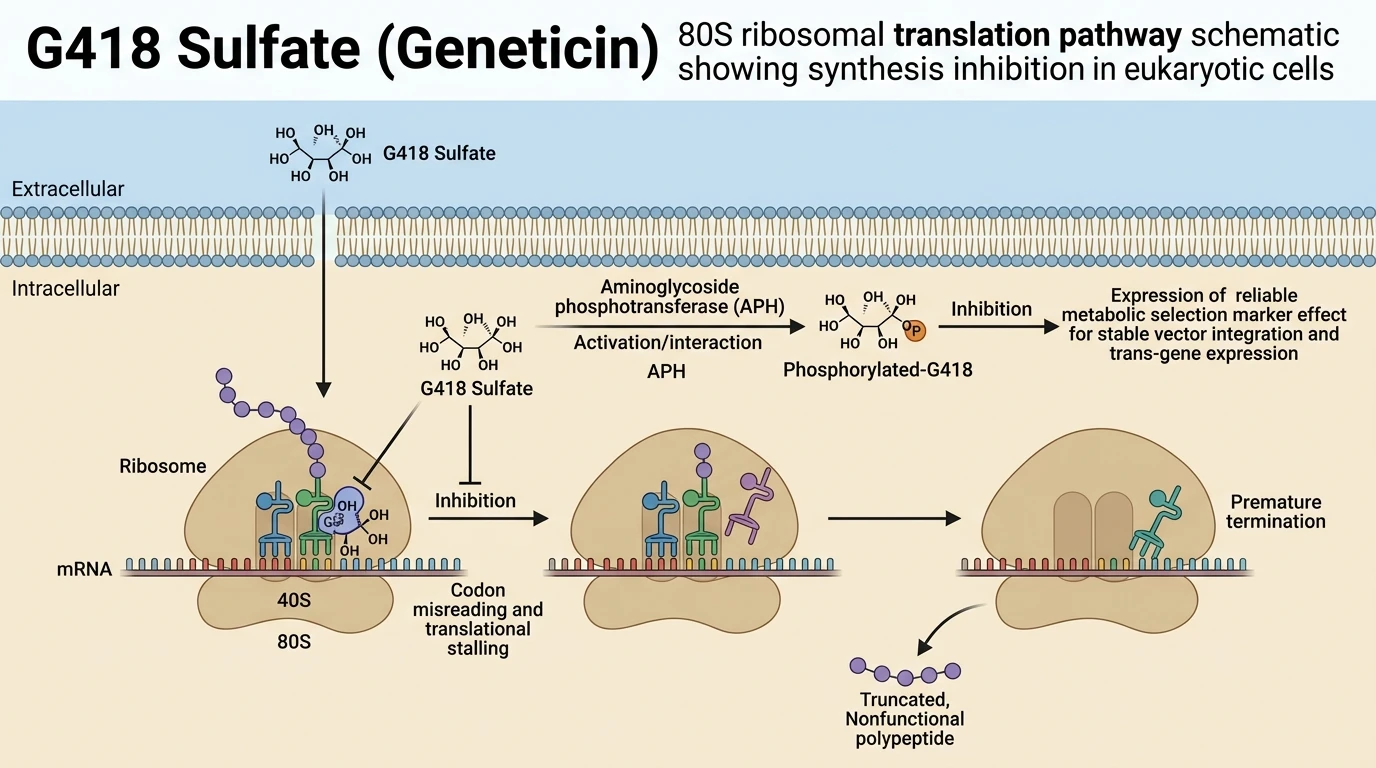
G418 sulfate, an aminoglycoside antibiotic structurally related to gentamicin, targets the decoding center of the eukaryotic 80S ribosome. By binding with high affinity to the small 40S ribosomal subunit near the aminoacyl-tRNA site (A-site), the molecule alters ribosomal conformation, decreasing fidelity during translation elongation. This structural modification forces the incorporation of non-cognate amino acids into growing polypeptide chains, generating misfolded or truncated proteins that disrupt essential cellular activity. In non-resistant eukaryotic microorganisms, including entomopathogenic fungi, polypeptide chain elongation ceases, resulting in cellular metabolic arrest and rapid cell death.
Genetic engineering of the entomopathogenic fungus Beauveria bassiana relies on stringent selectable markers to distinguish transformed protoplasts from non-transformed background cells. Baseline susceptibility assays demonstrated that treatment with 500 µg/mL G418 Sulfate achieved complete growth inhibition of wild-type B. bassiana within 4 days on selective agar media under standard laboratory culture conditions. The presence of the aminoglycoside phosphotransferase resistance gene on vector constructs allows transformed cells to enzymatically phosphorylate the antibiotic, disabling its interaction with the 80S ribosome. This absolute baseline growth suppression provides a clean selection window during protoplast regeneration, ensuring high-fidelity isolation of stable transformants carrying co-expressed constructs.
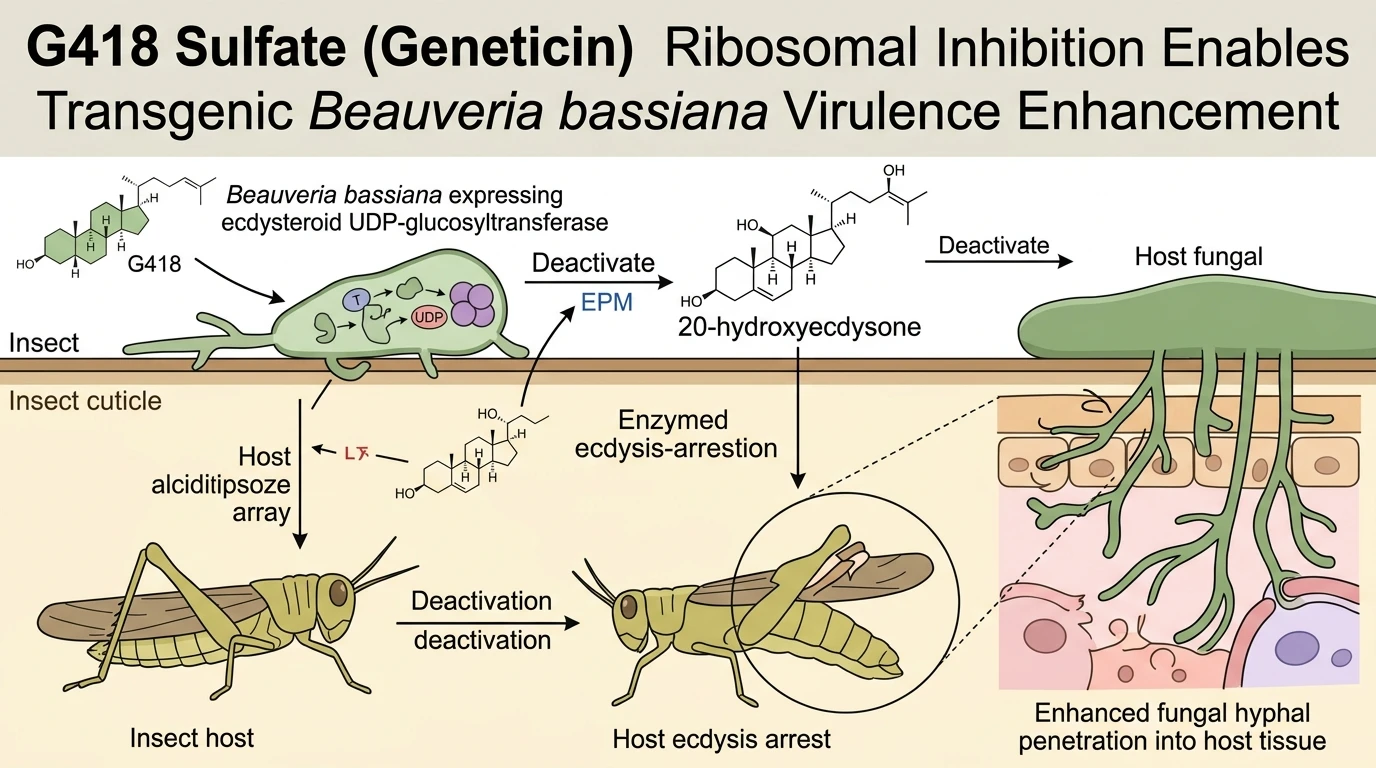
Beyond marker selection, the expression vector integrated into B. bassiana contained the gene encoding baculovirus-derived ecdysteroid UDP-glucosyltransferase (EGT). EGT plays a physiological role in modulating host insect endocrine dynamics. In insect physiology, 20-hydroxyecdysone (20E) serves as the primary steroid hormone driving ecdysis, cuticle shedding, and developmental progression between larval instars. EGT catalyzes the transfer of glucose from UDP-glucose to 20E, generating an inactive sugar conjugate. Enzymatic deactivation of 20E prevents host larvae from initiating molting cascades during fungal colonization.
When entomopathogenic fungi infect insect hosts, host molting serves as an active physical defense mechanism. Larvae frequently shed their outer cuticle during early instars, effectively discarding attached or penetrating fungal appressoria before hyphae breach the hemocoel. By expressing EGT in B. bassiana, the recombinant fungal strain depletes circulating 20E titers in infected larvae. Consequently, infected host insects fail to undergo ecdysis. Retention of the infected cuticle allows continuous fungal appressorial penetration, preventing physical shedding of the pathogen and accelerating systemic colonization within the hemolymph.
Experimental bioassays using early-instar silkworm larvae (Bombyx mori) confirmed the enhanced lethality of the transgenic strain. Compared to wild-type B. bassiana, the EGT-expressing transformant selected using G418 Sulfate shortened the median lethal time (LT50) by 20% to 26.4%. Additionally, mortality among pre-molting larvae increased threefold, confirming that disruption of host hormonal signaling directly translates to heightened virulence. These quantitative findings demonstrate that targeted disruption of host developmental endocrinology—enabled by reliable transformation systems using G418 Sulfate—significantly improves the bioinsecticidal efficiency of fungal biocontrol agents against target insect populations.
Fungal Transformation Integrity and Host Endocrine Disruption
Copy code to add this image to your page
G418 Sulfate binds the 80S eukaryotic ribosome, arresting translation elongation in wild-type Beauveria bassiana. Resistance marker co-expression neutralizes this toxicity, permitting specific selection of transgenic lines expressing ecdysteroid UDP-glucosyltransferase. Transgenic secretion of this enzyme inactivates host 20-hydroxyecdysone, preventing insect molting and cuticular shedding. Blocked host ecdysis allows uninterrupted fungal cuticle penetration, elevating pre-molting silkworm larval mortality threefold and reducing median lethal time by up to 26.4%.
Eukaryotic Translation Blockade and Fungal Selection Thresholds
Selective toxicity requires strict dosage optimization during protoplast recovery. Under baseline culture conditions, 500 µg/mL G418 Sulfate fully suppressed wild-type B. bassiana mycelial expansion within 96 hours. The ribosomal binding kinetics of G418 Sulfate ensure near-complete translational arrest in non-resistant fungal cells. Un-transformed protoplasts lacked translation capacity, failing to form visible colonies. Conversely, transformants harboring the resistance cassette successfully phosphorylated the antibiotic. Enzymatic modification abolished ribosomal affinity; target cells maintained active protein synthesis. This clear separation between resistant and sensitive phenotypes eliminated background colonies completely.
Ecdysteroid Inactivation and Larval Ecdysis Suppression
Hormonal modulation directly altered host insect survival kinetics. Transgenic B. bassiana secreted functional ecdysteroid UDP-glucosyltransferase during initial cuticular penetration. Enzymatic conjugation inactivated 20-hydroxyecdysone within the larval hemolymph. Cuticular shedding stopped entirely in early-instar Bombyx mori models. Without ecdysis, larvae retained the fungal inoculum across crucial developmental windows. Systemic hyphal invasion proceeded without physical shedding barriers. Consequently, pre-molting larval mortality increased threefold relative to wild-type fungal exposure. The median lethal time declined by 20% to 26.4% in controlled bioassays.
Bioinsecticidal Pathogenicity and Cuticular Penetration Dynamics
Disrupting host development offers a distinct mechanism for fungal biocontrol strategies. Physical cuticle shedding remains a primary defense mechanism against fungal entry. By locking host larvae in a pre-molting state, the transgenic strain sustained high local fungal pressure on the integument. Hyphal appressoria breached the host integument without interruption. Hemolymph proliferation accelerated rapidly. The application of G418 Sulfate enabled stable construct integration, yielding high-expressing fungal clones. Biological pest suppression increased substantially under lab conditions.