BMS-303141 Inhibits ATP Citrate Lyase to Suppress Hepatic Alanine-Driven Gluconeogenesis
Copy code to add this image to your page
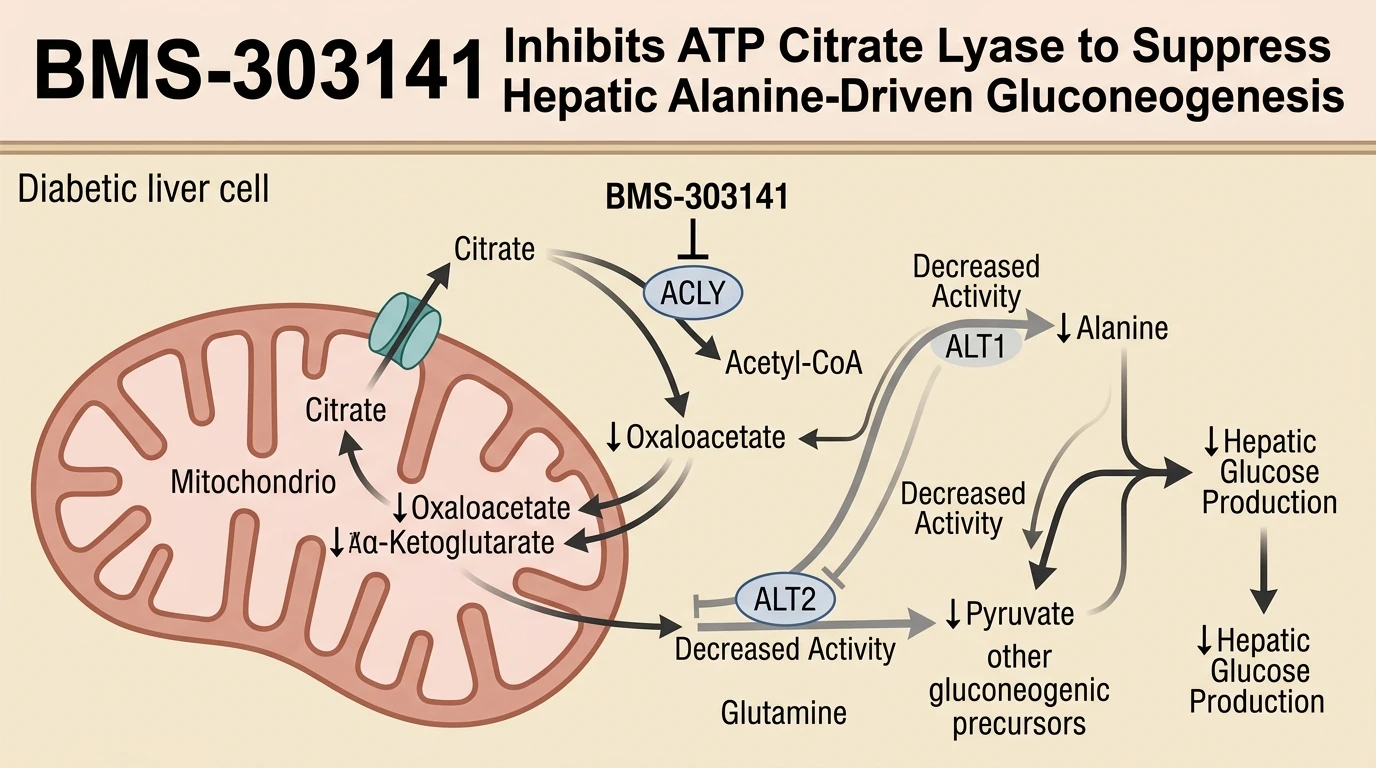
ATP citrate lyase (ACLY) coordinates critical metabolic nodes by catalyzing the cleavage of cytosolic citrate into oxaloacetate and acetyl-CoA. In diabetic liver tissue, aberrant activation of ACLY accelerates gluconeogenic flux driven by amino acids. Metabolic tracing using hyperpolarized [1-13C]pyruvate magnetic resonance spectroscopy (MRS) reveals a notable elevation in hepatic alanine flux within leptin receptor-deficient db/db mice compared to lean wild-type controls. This hyperactive metabolic state demonstrates a direct correlation between deregulated ACLY kinetics and excessive hepatic glucose output. Small-molecule inhibition using BMS-303141 rapidly suppresses this elevated hepatic flux within 2 to 4 hours post-administration in vivo, offering immediate biochemical stabilization of substrate dynamics. In diabetic rodent models subjected to acute metabolic challenges, administration of BMS-303141 significantly attenuates blood glucose spikes triggered by exogenous alanine and glutamine loading. Remarkably, this metabolic normalization occurs without altering transcription levels or basal protein abundance of alanine aminotransferase 1 or 2 (ALT1/ALT2), indicating that enzymatic activity rather than gene expression governs this rapid acute response. The underlying pathway mechanism involves an enzymatic coupling where ACLY activity facilitates ALT-mediated transamination. Specifically, ACLY regulates the availability of cytosolic oxaloacetate and malate, driving malate and alpha-ketoglutarate exchange across the mitochondrial membrane. This metabolic exchange maintains the intracellular pool of keto-acid acceptors required for continuous amino acid transamination. Targeting ATP citrate lyase enzymatic activity directly disrupts the cyclic transfer of intermediates between the cytosol and mitochondrial matrix. When ACLY activity is blunted by BMS-303141, cytosolic oxaloacetate depletion alters the mass-action equilibrium of ALT-catalyzed transamination. Consequently, alanine- and glutamine-derived carbon skeletons are prevented from efficiently converting into gluconeogenic precursors like oxaloacetate and phosphoenolpyruvate. This selective functional blockade limits gluconeogenic output while leaving basal liver aminotransferase gene expression intact, distinguishing it from conventional transcriptional regulators. In experimental models of non-alcoholic fatty liver disease (NAFLD) and type 2 diabetes mellitus, BMS-303141 serves as a highly targeted chemical probe to dissect substrate-level controls of hepatic glucose synthesis. Hyperpolarized 13C MRS data capture a sharp reduction in real-time [1-13C]alanine-to-[1-13C]lactate and [1-13C]pyruvate transformation ratios following acute exposure. The prompt pharmacodynamic response within a 2–4 hour window underscores the high sensitivity of amino acid transamination pathways to ACLY modulation. By uncoupling amino acid catabolism from hepatic glucose production, small-molecule ACLY inhibitors demonstrate therapeutic utility for correcting metabolic dysregulation in insulin-resistant conditions. Furthermore, metabolic flux analysis confirms that ACLY operates as an indispensable regulatory hub integrating lipid synthesis with amino acid oxidation. Beyond suppressing lipogenesis, inhibiting ACLY blunts excess oxaloacetate supply to gluconeogenesis during hyperaminoacidemic conditions. In isolated hepatocytes, treatment with BMS-303141 reduces glucose secretion driven by gluconeogenic substrates without inducing cytotoxic effects or mitochondrial membrane uncoupling. These findings confirm that modulating ACLY activity provides a double-barreled intervention strategy targeting both hepatic steatosis and elevated endogenous glucose production.
Pharmacological Evaluation of ACLY Inhibition in Hepatic Metabolism
Copy code to add this image to your page
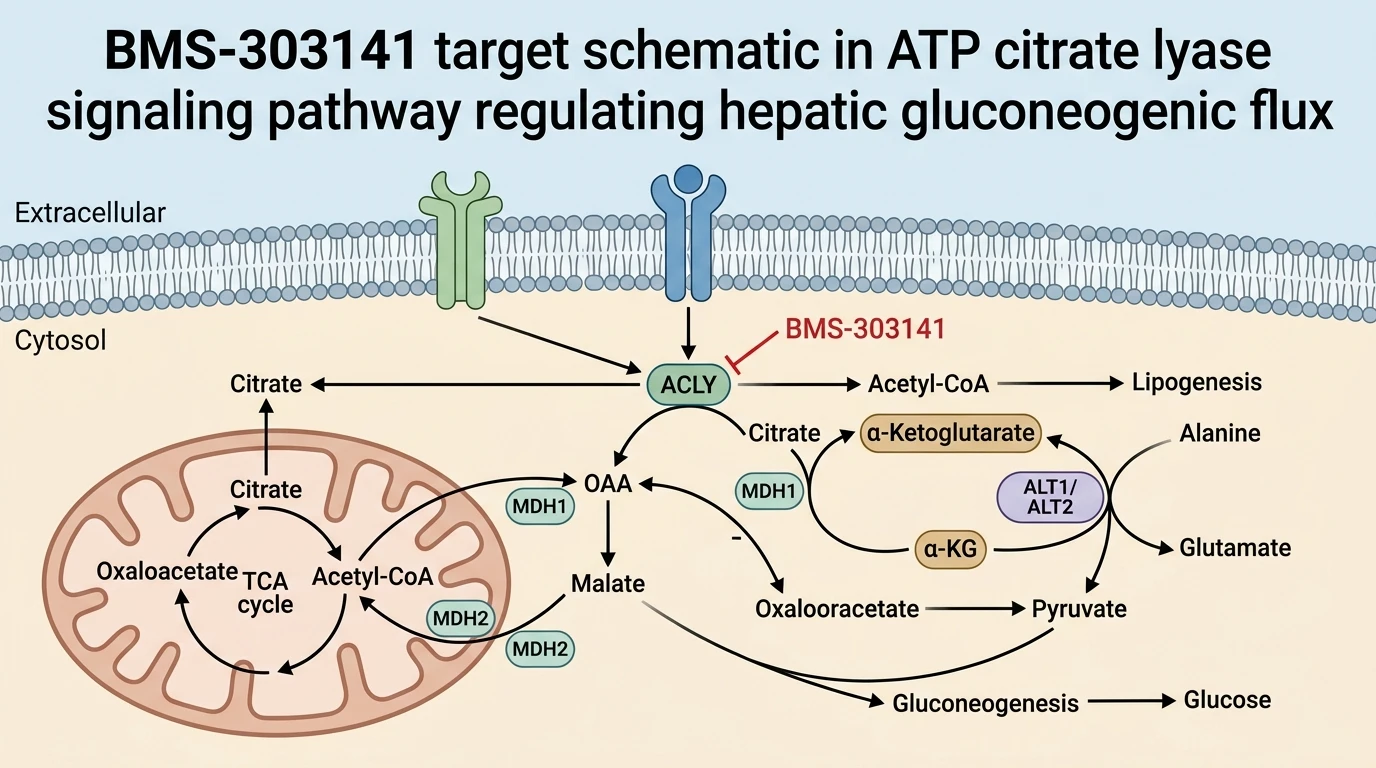
BMS-303141 directly inhibits ATP citrate lyase (ACLY), suppressing the cleavage of cytosolic citrate into oxaloacetate and acetyl-CoA. This reduction in oxaloacetate availability impairs malate/alpha-ketoglutarate exchange, depriving ALT1/ALT2 of the alpha-ketoglutarate co-substrate needed for alanine transamination. By uncoupling amino acid catabolism from hepatic gluconeogenesis, BMS-303141 rapidly attenuates alanine- and glutamine-induced hyperglycemia in diabetic models without altering aminotransferase gene expression.
Rapid Normalization of Hepatic Alanine Flux in Vivo
Hyperpolarized [1-13C]pyruvate MRS provided real-time quantification of hepatic metabolic conversion in db/db mice. Baseline measurements revealed heightened exchange between pyruvate, lactate, and alanine in diabetic animals. Intraperitoneal administration of BMS-303141 attenuated hepatic alanine flux within 2–4 hours. Hepatic transamination rates dropped to levels observed in normoglycemic controls. Phosphoenolpyruvate pool turnover slowed considerably during treatment. Crucially, transcript levels of ALT1, ALT2, and PEPCK remained unchanged throughout the acute treatment window. These kinetic measurements confirm direct pharmacodynamic target engagement without requiring transcriptional rewiring.
Suppression of Amino Acid–Driven Gluconeogenesis and Hyperglycemia
Exogenous challenge assays were conducted to evaluate glucose tolerance following alanine and glutamine administration. Diabetic mice pretreated with BMS-303141 exhibited significantly reduced glycemic excursions relative to vehicle controls. Mechanistically, ACLY inhibition restricts oxaloacetate generation, which limits the malate/alpha-ketoglutarate shuttle. Disruption of this mitochondrial shuttle reduces the regeneration of alpha-ketoglutarate needed for ALT-mediated transamination. Consequently, gluconeogenic carbon flux from circulating amino acids decreased substantially in treated animals. These biochemical alterations establish ACLY as an essential metabolic gatekeeper governing gluconeogenic substrate utilization in diabetic liver models.