Tiplaxtinin PAI-1 inhibitor Tiplaxtinin (PAI-039) regulates CHRNA1 expression in cholinergic sweat gland secretion
Copy code to add this image to your page
Primary focal hyperhidrosis (PFH) presents as idiopathic, excessive perspiration localized primarily to the palms, soles, and axillae. While peripheral autonomic dysfunction is implicated, the cell-autonomous molecular regulators governing eccrine sweat gland hyper-responsiveness remain incompletely defined. Target validation studies utilizing target prediction computational tools and differential transcriptomic profiling revealed a marked downregulation of plasminogen activator inhibitor-1 (PAI1, encoded by SERPINE1) in eccrine sweat gland tissues isolated from hyperhidrotic mouse models compared to normohidrotic controls.
PAI1 is conventionally recognized for its canonical role in inhibiting urokinase-type and tissue-type plasminogen activators (uPA and tPA). However, empirical observations demonstrate an uncharacterized regulatory connection between serine protease inhibitor activity and cholinergic sensitivity in cutaneous appendages. Genetic ablation in Pai1 knockout mouse models recapitulates the clinical hallmarks of hyperhidrosis, manifesting elevated basal sweat output and heightened responsiveness to local cholinergic stimuli.
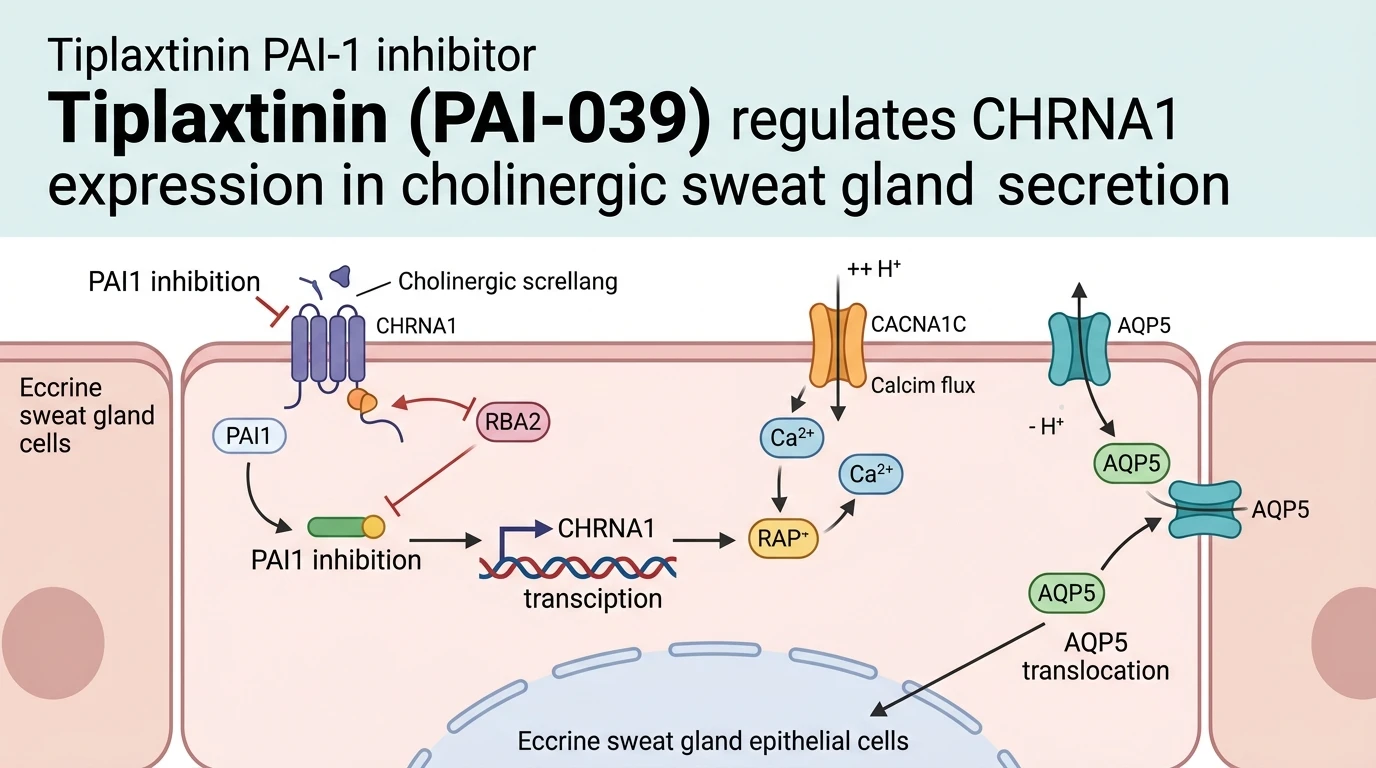
Mechanistic investigations establish that PAI1 functions as a transcriptomic suppressor of the nicotinic acetylcholine receptor subunit alpha 1 (CHRNA1) in eccrine secretory coil cells. Pharmacological intervention with the small-molecule inhibitor Tiplaxtinin (PAI-039) disrupts this suppressive axis. Direct engagement of PAI1 by Tiplaxtinin (PAI-039) attenuates its repressive effect on the CHRNA1 promoter, driving robust upregulation of functional nicotinic receptors. This elevated receptor density amplifies intracellular cholinergic cascades following acetylcholine binding.
Downstream signaling events downstream of CHRNA1 derepression include elevated expression of L-type voltage-gated calcium channel subunit alpha-1C (CACNA1C) and enhanced plasma membrane trafficking of aquaporin 5 (AQP5). The influx of extracellular calcium mediated by CACNA1C induces rapid cytoskeletal reorganization, facilitating AQP5 translocation to the apical membrane of secretory luminal cells. This membrane channel assembly accelerates transcellular water flux, resulting in hyper-secretion. Concurrently, systemic circulating levels of serum acetylcholine (ACH) are elevated following sustained PAI1 inhibition, indicating potential feedback regulation across peripheral neuro-glandular junctions.
To confirm causality within this pathway, transgenic mice overexpressing Pai1 were characterized. These transgenic models exhibited pronounced suppression of CHRNA1 transcript and protein expression, resulting in severely blunted sweat production upon pilocarpine challenge. Transfection of these Pai1-overexpressing eccrine glands with adeno-associated virus (AAV) vectors driving Chrna1 cDNA expression completely restored both biomarker density (CACNA1C and AQP5) and sweat output to wild-type levels. These genetic rescue experiments confirm that CHRNA1 serves as the crucial downstream effector through which PAI1 modulates sudoriferous activity.
Pharmacological Evaluation of PAI1 Mediated Sweat Secretion
Copy code to add this image to your page
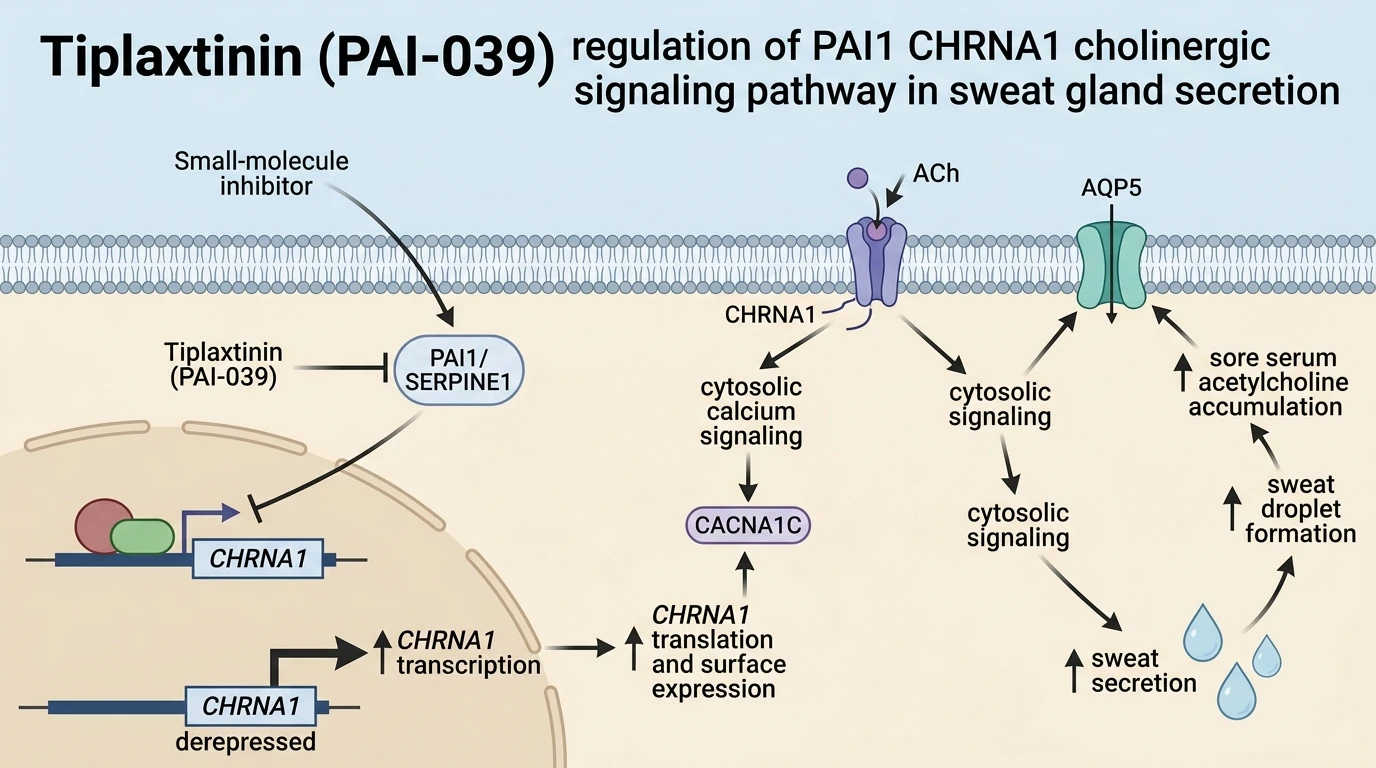
Inhibition of PAI1 by Tiplaxtinin (PAI-039) derepresses CHRNA1 gene expression in eccrine sweat gland cells. The resulting increase in CHRNA1 nicotinic receptor density enhances cholinergic responsiveness, triggering downstream elevations in calcium channel CACNA1C activity and membrane translocation of the water channel AQP5. Elevated serum acetylcholine levels accompany these cellular changes, collectively driving increased fluid transport and sweat secretion in primary focal hyperhidrosis models.
PAI1 Suppression Elevates CHRNA1 Expression and Sweat Volume
PAI1 acts as a physiological repressor. Under tested murine assay conditions, pharmacological inhibition using the Tiplaxtinin PAI-1 inhibitor significantly augmented CHRNA1 transcript levels within eccrine secretory coils, accompanied by elevated systemic acetylcholine concentrations. Glandular secretion rates rose markedly. Concurrently, Western blot analyses revealed upregulated membrane density of calcium channel subunit CACNA1C and water channel aquaporin 5 (AQP5), establishing a direct biochemical cascade linking serine protease inhibitor signaling to hyperhidrotic phenotype emergence.
Genetic Rescue Validates CHRNA1 Dependence in Vivo
Transgenic models clarified pathway directionality. Transgenic overexpression of Pai1 consistently attenuated Chrna1 messenger RNA accumulation, resulting in diminished cholinergic responsiveness and attenuated perspiration in experimental animals. AAV-mediated restoration bypassed this blockade. Delivery of Chrna1-expressing adeno-associated virus fully rescued gland secretion in Pai1-overexpressing cohorts, demonstrating that PAI1 functions as an upstream negative regulator rather than an essential structural constituent of sweat gland secretory machinery.