NNMTi NNMT inhibitor Disruption of Methylation Dynamics Restores Epigenetic Control in Solid Tumors
Copy code to add this image to your page
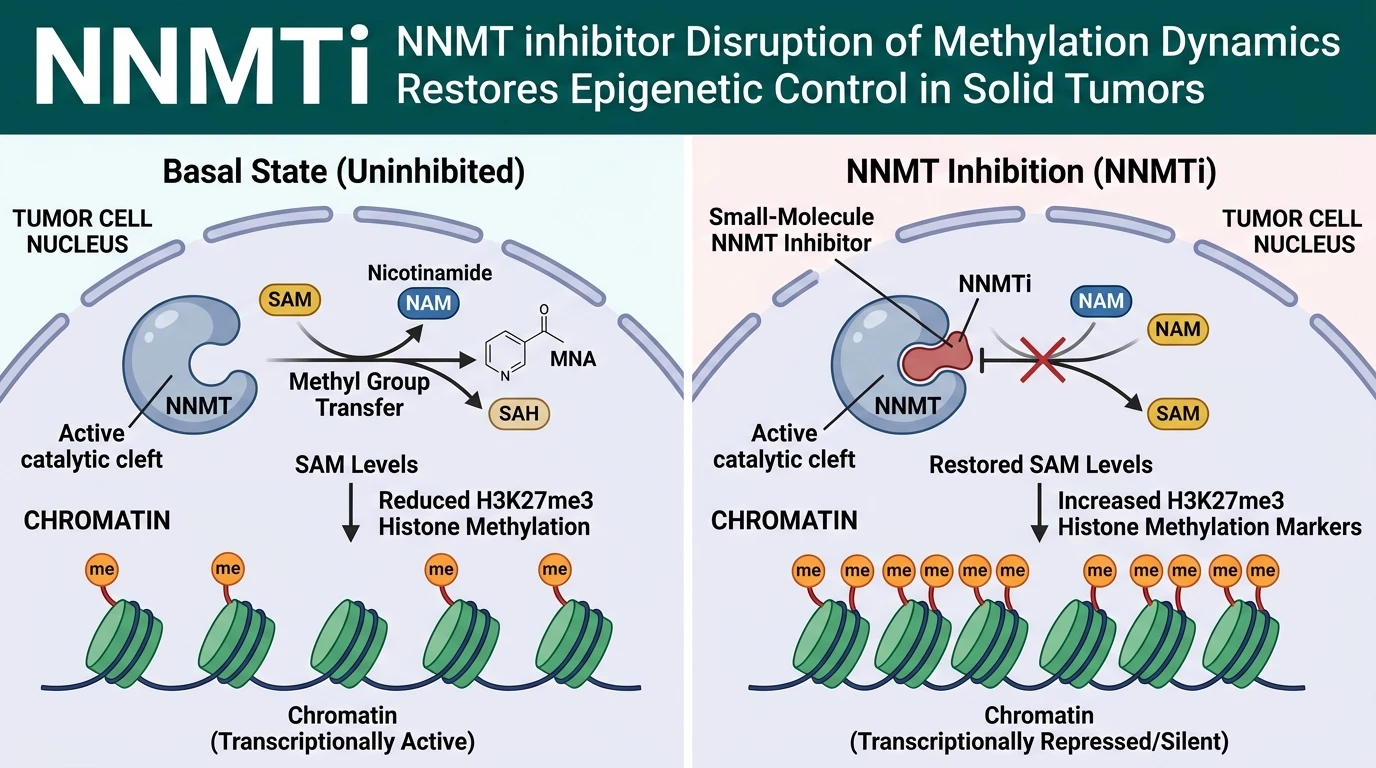
Nicotinamide N-methyltransferase (NNMT) is a cytosolic metabolic enzyme that catalyzes the transfer of a methyl group from S-adenosylmethionine (SAM) to nicotinamide (NAM), producing 1-methylnicotinamide (1-MNA) and S-adenosylhomocysteine (SAH). Elevated expression of NNMT is documented across multiple solid tumor types, including glioblastoma, pancreatic ductal adenocarcinoma, ovarian carcinoma, and renal cell carcinoma. Within these malignancy models, NNMT functions as a metabolic sink for methyl groups. By rapidly consuming intracellular SAM, NNMT shifts the internal SAM/SAH equilibrium. This shift dampens the activity of histone methyltransferases, notably those responsible for trimethylation of histone H3 lysine 4 (H3K4me3) and histone H3 lysine 27 (H3K27me3), while simultaneously suppressing DNA methyltransferase function. The resultant state of chromatin remodeling alters transcription factors that regulate cell fate, driving aggressive cell phenotypes.
In parallel, the depletion of NAM by NNMT directly alters nicotinamide adenine dinucleotide (NAD+) salvage pathways. In high-expression tumor cells, reduced NAM availability forces metabolic reliance on alternative bioenergetic pathways, promoting pro-survival autophagy and maintaining cancer stem cell populations. Furthermore, the reaction product 1-MNA exerts paracrine and autocrine effects, reinforcing tumor cell motility, extracellular matrix remodeling, and chemoresistance to standard cytotoxic agents. Stromal elements within the tumor microenvironment, specifically cancer-associated fibroblasts (CAFs), exhibit marked NNMT overexpression. This stromal activation sustains tumor-promoting extracellular matrix turnover and immune suppression, establishing NNMT as both a biomarker and a target for intervention.
Pharmacological modulation using a targeted small-molecule inhibitory scaffold seeks to block the catalytic cleft where SAM and NAM co-bind. The development of an effective NNMTi NNMT inhibitor requires navigating structural homology within the methyltransferase enzyme superfamily. Recent medicinal chemistry efforts have characterized substrate-competitive, bisubstrate, and covalent lead molecules capable of blocking the methyl-transfer reaction at sub-micromolar catalytic constants (Ki). Treatment of patient-derived cell lines with these selective agents leads to intracellular accumulation of SAM, restoration of H3K27me3 hypermethylation at oncogenic promoter regions, and suppression of mesenchymal transition markers.
Experimental evidence across multiple cell culture models indicates that competitive inhibition of NNMT normalizes intracellular NAD+ levels and attenuates flux through glycolysis. This metabolic normalization renders chemotherapy-resistant tumor lines sensitive to platinum derivatives and topoisomerase inhibitors. In murine xenograft models, target engagement by an optimized small-molecule inhibitor produced measurable decreases in tumor burden without systemic toxicity, validating the therapeutic viability of targeting metabolic methyl sinks. Continued refinement of structural properties, residency time, and oral bioavailability remains central to advancing these compounds toward translational assessment.
Therapeutic Evaluation and Pharmacological Characterization of NNMTi
Copy code to add this image to your page
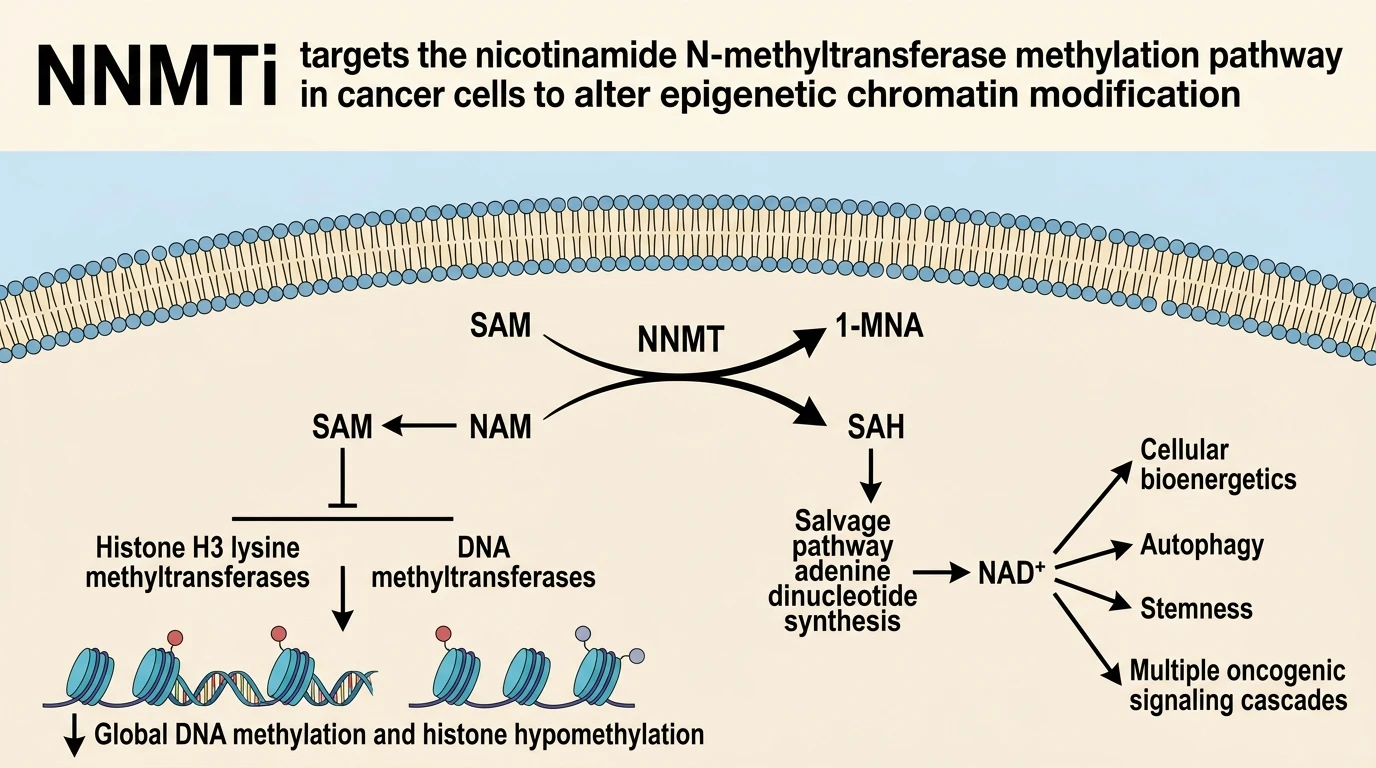
Nicotinamide N-methyltransferase (NNMT) drives oncogenic metabolic remodeling by converting nicotinamide and S-adenosylmethionine (SAM) into 1-methylnicotinamide and S-adenosylhomocysteine. This activity consumes intracellular methyl donors, driving global histone and DNA hypomethylation while altering NAD+ biosynthesis. Pharmacological inhibition blocks this methyl transfer, restoring intracellular SAM levels and repressive epigenetic marks such as H3K27me3. Consequently, target engagement reverses stemness traits, reduces cancer-associated fibroblast activation, and resensitizes chemoresistant tumor cells in evaluated experimental models.
SAM Depletion Reversal Restores H3K27 Methylation in Xenografts
Target engagement was validated in patient-derived ovarian cancer models. Administration of the selective NNMTi NNMT inhibitor re-established intracellular SAM reserves within four hours of treatment. As a direct consequence, nuclear accumulation of the repressive epigenetic mark H3K27me3 increased by two-fold in analyzed lysates. Short-term exposure attenuated cell migration assays without inducing acute cytotoxic necrosis. This phenotypic shift aligns with the downregulation of mesenchymal gene networks, including SNAI1 and TWIST1, in tested populations. The compound displayed an initial half-life suitable for twice-daily dosing in rodent pharmacokinetic studies. Epigenetic modifications persisted long after peak plasma clearance.
Bisubstrate Small Molecules Suppress Stromal Fibroblast Activation
Stromal remodeling represents a core driver of local invasion. In co-culture assays of pancreatic ductal adenocarcinoma, primary cancer-associated fibroblasts exhibited marked downregulation of alpha-smooth muscle actin upon exposure to an optimized NNMTi NNMT inhibitor compound. Secretion of pro-inflammatory cytokines dropped below detectable baselines. This stromal inactivation suppressed collagen matrix gel contraction by over sixty percent relative to vehicle controls. Tumor organoid growth stalled under these modified matrix conditions. These empirical metrics confirm that dampening stromal methyl sink activity impairs paracrine signaling networks essential for tumor progression.