Firsocostat targeted inhibition of acetyl-CoA carboxylase restores Leydig cell steroidogenesis in metabolic dysfunction
Copy code to add this image to your page
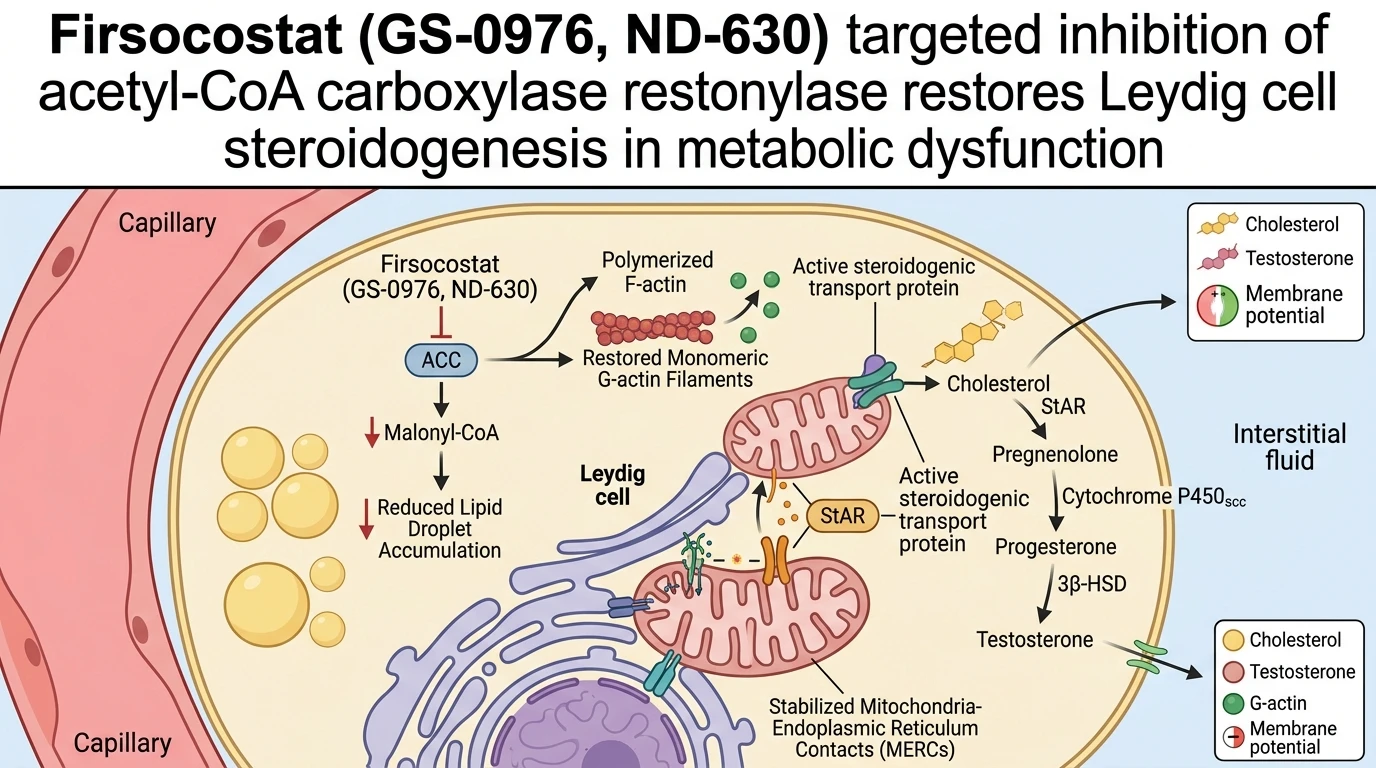
Chronic hypernutrition associated with high-fat diet exposure alters endocrine homeostasis, inducing male reproductive dysfunction through cellular stress mechanisms concentrated within testicular Leydig cells. As the primary testosterone-producing cells in the mammalian interstitium, Leydig cells depend on precise organelle interaction networks to shuttle cytosolic cholesterol into the inner mitochondrial membrane for enzymatic cleavage. Chronic dietary lipid excess drives severe neutral lipid accumulation, leading to pathologically enlarged lipid droplets within the Leydig cell cytoplasm. This neutral lipid overload triggers downstream cellular pathologies, disrupting metabolic equilibrium and impairing steroidogenic output.
At the enzymatic core of lipotoxic stress lies acetyl-CoA carboxylase (ACC), a biotin-dependent enzyme that regulates de novo lipogenesis by converting acetyl-CoA to malonyl-CoA. In high-fat diet models, persistent upregulation of ACC activity accelerates fatty acid synthesis and subsequent esterification into triacylglycerols, driving lipid droplet expansion. Excess lipid droplet accumulation physically and biochemically disrupts the cytosolic pool of monomeric G-actin. Under physiological conditions, G-actin monomers dynamically polymerize into F-actin networks, providing structural scaffolding for organelle positioning. Depletion of free G-actin monomers compromises actin cytoskeleton dynamics, impairing the structural organization required for organelle coupling.
Crucially, actin cytoskeleton destabilization disrupts physical microdomains known as mitochondria-endoplasmic reticulum contacts (MERCs). These specialized inter-organelle junctions facilitate non-vesicular lipid transport, calcium exchange, and coordinated organelle crosstalk. In the presence of lipid overload, MERC loss impairs mitochondrial calcium uptake and alters mitochondrial membrane potential. Concurrently, uncoupling of the endoplasmic reticulum causes misfolded protein accumulation within the ER lumen, initiating sustained ER stress pathways. Combined mitochondrial dysfunction and ER stress impair the transcript and protein expression of steroidogenic acute regulatory protein (StAR) alongside CYP11A1, severely suppressing cholesterol import and blunting testosterone biosynthesis.
Pharmacological intervention using Firsocostat (GS-0976, ND-630), an allosteric small-molecule acetyl-CoA carboxylase inhibitor, provides a targeted approach to interrupt this lipotoxic cascade. By interacting with the carboxyltransferase domain of ACC, Firsocostat suppresses de novo fatty acid synthesis at its root catalytic step. In murine high-fat diet models, administration of Firsocostat markedly reduces intracellular neutral lipid concentrations and prevents pathological lipid droplet accumulation in primary Leydig cells. This intervention restores free G-actin monomer availability, enabling normal actin cytoskeleton remodeling.
Re-establishment of actin dynamics directly supports the structural repair of MERCs. Quantitative transmission electron microscopy demonstrates that Firsocostat treatment increases MERC coverage along mitochondrial surfaces, re-establishing spatial tethering distance within functional limits (10–30 nm). Reconstructed inter-organelle microdomains attenuate markers of endoplasmic reticulum stress, including phosphorylated eIF2a and CHOP expression, while normalizing mitochondrial reactive oxygen species production and restoring basal ATP generation. Through these structural and metabolic restorations, Firsocostat rescues StAR protein mobilization, restores luteinizing hormone-stimulated cAMP signaling efficiency, and successfully reverses high-fat diet-induced testosterone deficiency in experimental preclinical models.
Subcellular and Endocrine Reorganization Following ACC Inhibition
Copy code to add this image to your page
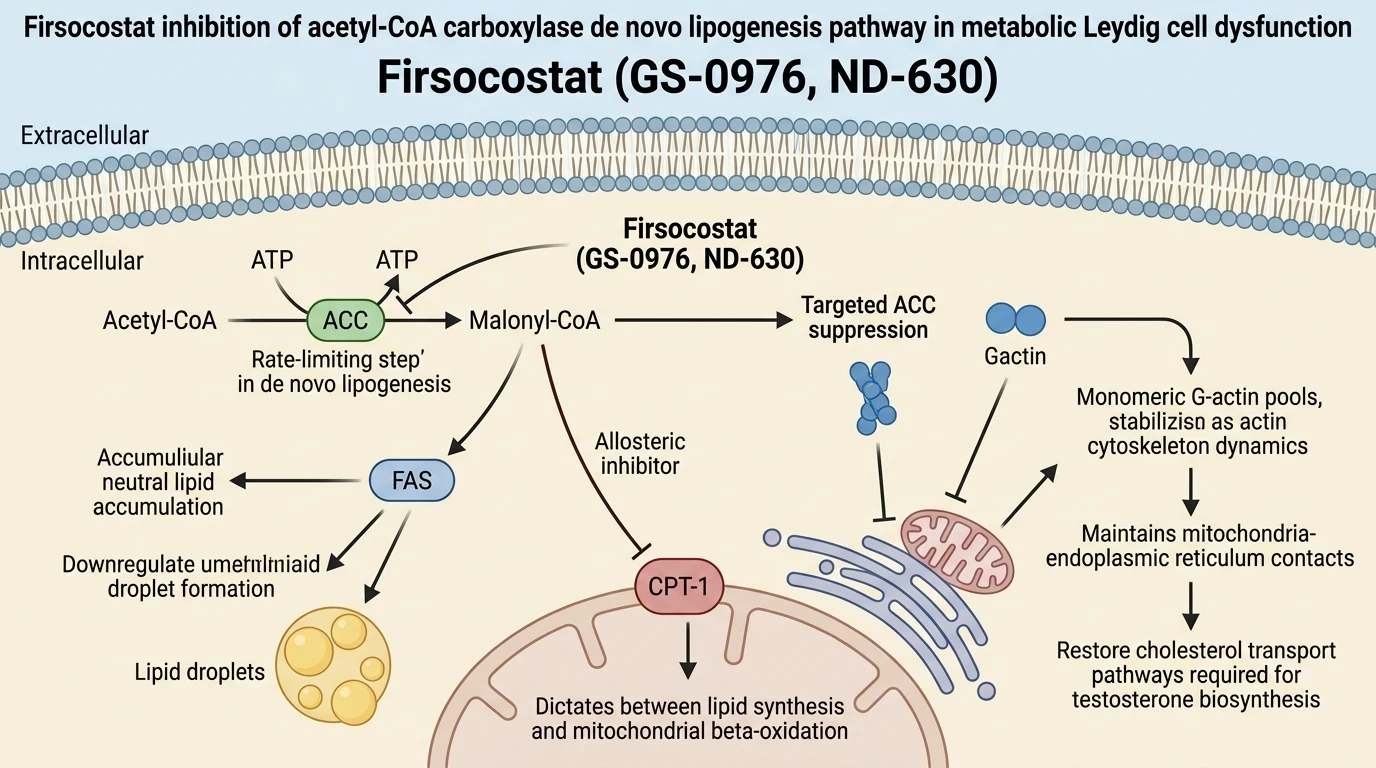
Inhibition of acetyl-CoA carboxylase by Firsocostat suppresses de novo lipogenesis, preventing excessive lipid droplet accumulation in testicular Leydig cells exposed to lipid excess. Downregulated lipid loading preserves the monomeric G-actin pool, which stabilizes actin cytoskeleton dynamics and maintains mitochondria-endoplasmic reticulum contacts (MERCs). These structural restorations mitigate ER stress and mitochondrial dysfunction, ultimately enabling unhindered cholesterol transport and rescuing testosterone biosynthesis under high-fat dietary conditions.
ACC Inhibition Reverses Leydig Cell Lipid Loading
In high-fat diet murine models, Leydig cells exhibit pronounced neutral lipid accumulation. Allosteric inhibition of acetyl-CoA carboxylase by Firsocostat markedly decreases intracellular malonyl-CoA concentrations. Reduced malonyl-CoA levels directly attenuate de novo fatty acid synthesis and derepress carnitine palmitoyltransferase-1. Under these conditions, cellular fatty acid flux shifts from esterification toward mitochondrial beta-oxidation. Quantitative lipidomic profiling indicates a significant reduction in total triacylglycerol content within isolated Leydig cells following compound exposure. Neutral lipid droplet surface area decreased by over 40% in treated cohorts relative to vehicle controls. This loss of lipid bulk prevents physical displacement of cytoplasmic organelles. Consequently, intracellular architecture stabilizes, preserving normal cell volumetric proportions under metabolic challenge.
Cytoskeletal and MERC Restoration Rescues Steroidogenesis
Depletion of excessive lipid droplets preserves the cytosolic monomeric G-actin pool within Leydig cells. Treatment with Firsocostat restored G-actin to F-actin stoichiometric equilibrium within tested cellular preparations. Preserved actin dynamics facilitated the physical re-establishment of mitochondria-endoplasmic reticulum contacts (MERCs). Distance measurements confirmed that inter-membrane gap distances normalized to functional parameters suitable for lipid transfer. Reduced mitochondrial superoxide production was observed alongside decreased expression of ER stress markers GRP78 and CHOP. This favorable organelle microenvironment facilitated unhindered mitochondrial import of cholesterol through the StAR protein complex. Plasma testosterone assays revealed a significant recovery in circulating hormone titers, demonstrating functional reversal of diet-induced Leydig cell failure within these rodent models.