Vorapaxar and PAR-1 Inhibition for Long-Term Prevention of Atherothrombotic Events
Copy code to add this image to your page
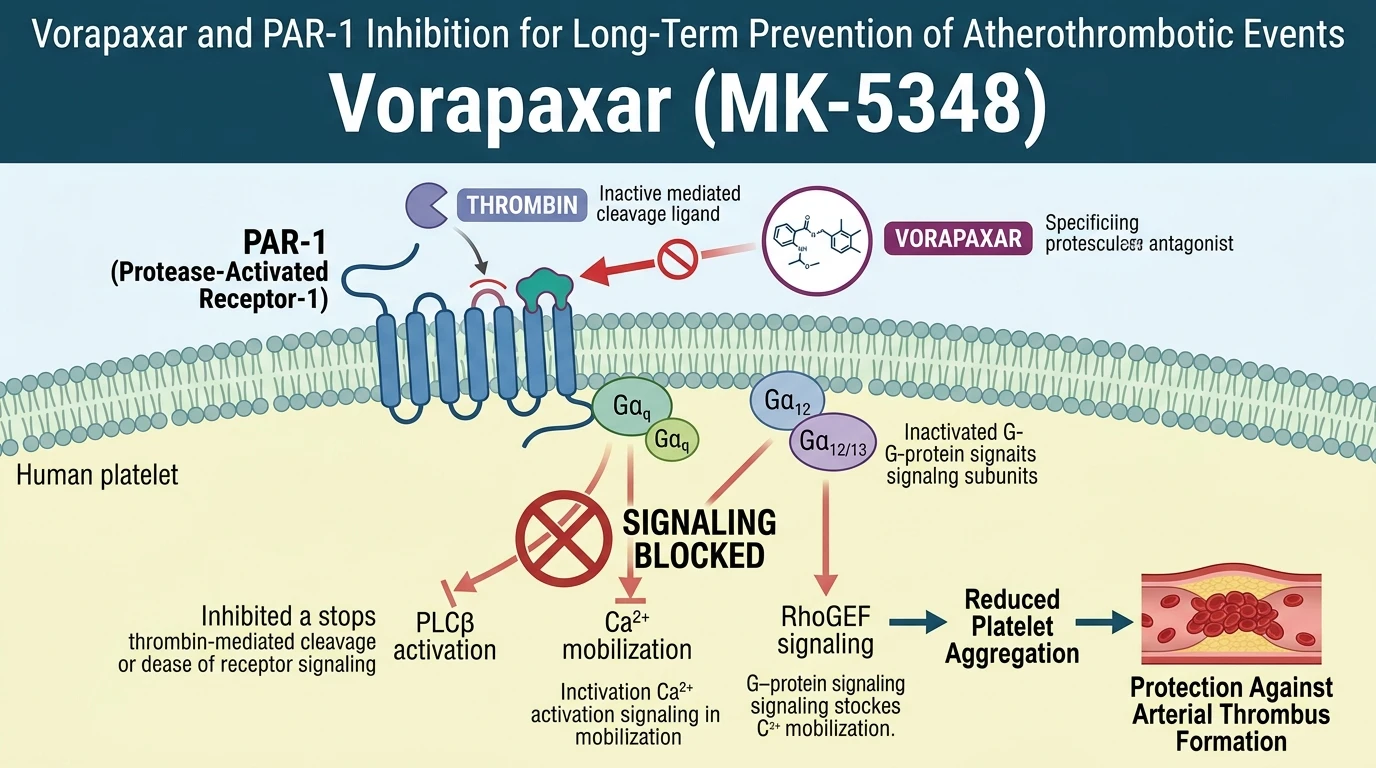
Thrombin represents the most potent physiological activator of human platelets, operating primarily through Protease-activated receptor 1 (PAR-1). The clinical development of Vorapaxar (MK-5348), a first-in-class, orally active, non-peptide competitive antagonist of PAR-1, aimed to address the residual risk of ischemic events in patients with established stable atherosclerosis. Traditional antiplatelet regimens target aspirin-sensitive cyclooxygenase-1 (COX-1) and ADP-sensitive P2Y12 purinergic receptors. However, thrombin generation remains a distinct driver of intravascular thrombosis through independent signaling cascades. Through selective target engagement, Vorapaxar inhibits thrombin-mediated platelet activation without compromising thrombin's fundamental role in fibrin formation or interfering with alternative receptor pathways.
To characterize the clinical efficacy profile across heterogeneous myocardial infarction (MI) subtypes, a prespecified sub-analysis was conducted within the randomized, double-blind TRA 2°P-TIMI 50 trial. This study evaluated 20,770 patients presenting with stable atherosclerotic vascular disease across multi-organ vascular beds. Incident MI events were systematically adjudicated according to the Universal Definition of Myocardial Infarction into spontaneous MI (Type 1), secondary MI due to ischemic imbalance (Type 2), and procedural MI associated with percutaneous coronary intervention (Type 4). Within this prospective cohort, spontaneous Type 1 MI constituted the vast majority of incident clinical events, representing 77.0% of total recorded infarctions. Secondary Type 2 MIs accounted for 9.8%, whereas procedural Type 4 MIs comprised 13.0%.
Quantitative analysis revealed that long-term therapeutic administration of Vorapaxar elicited consistent risk reductions across all major mechanistic categories of myocardial infarction. In patients receiving active treatment on top of standard-of-care secondary prevention therapies, the primary hazard ratio for Type 1 MI was 0.84 (95% CI, 0.74–0.95), reflecting sustained suppression of spontaneous plaque rupture and acute intracoronary thrombosis. For secondary Type 2 MIs—events driven by myocardial oxygen supply-demand mismatched states in the setting of severe underlying coronary artery disease—treatment resulted in a hazard ratio of 0.74 (95% CI, 0.57–0.96). This reduction indicates that dampening systemic thrombin signaling attenuates microvascular ischemic insult even in non-plaque rupture events where systemic stressors compromise cardiac perfusion.
Beyond subtype classification, the therapeutic impact was further evaluated across infarction size gradations, measured by peak cardiac biomarker elevation relative to the upper reference limit (URL). Detailed evidence regarding pharmacological inhibition of PAR-1 signaling demonstrates profound protection against severe, extensive myocardial tissue necrosis. Large spontaneous MIs defined by peak troponin or CK-MB levels equal to or exceeding ten times the upper reference limit (≥10× URL) were significantly attenuated, yielding a hazard ratio of 0.81 (95% CI, 0.70–0.94). Furthermore, the incidence of fatal MIs was reduced by 34% (HR 0.66; 95% CI, 0.44–0.98), demonstrating that high-intensity thrombin receptor block translates directly to a reduction in lethal ischemic injury across extended clinical follow-up.
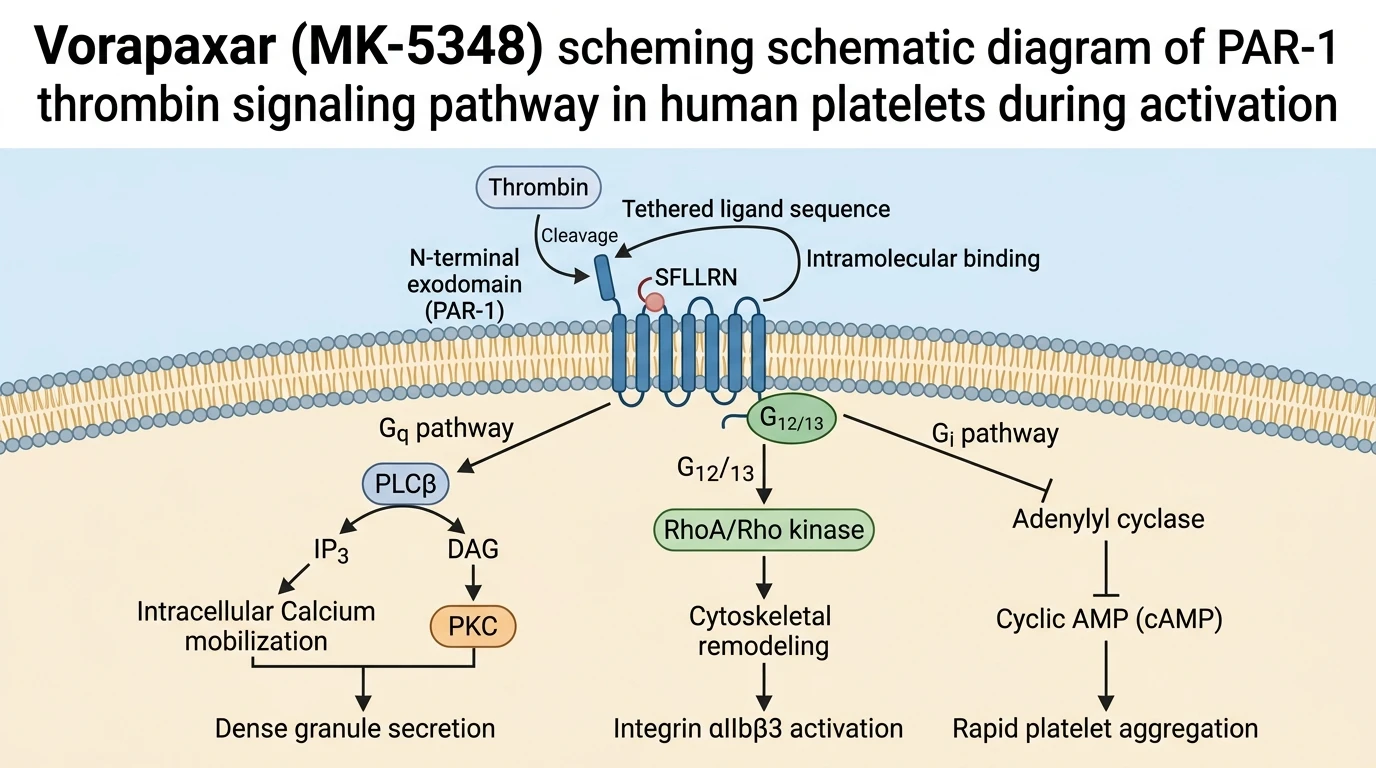
Mechanistically, these findings clarify the persistent pathological role of thrombin in secondary ischemic events. While dual antiplatelet therapy with aspirin and P2Y12 inhibitors effectively suppresses thromboxane and ADP signaling pathways, thrombin continues to cleave PAR-1 and drive platelet hyperreactivity. By selective competitive binding at the PAR-1 exodomain, the antagonist blocks tethered-ligand interaction without inhibiting catalytic fibrin cleavage. This targeted action preserves essential plasma coagulation while shutting down a major amplifier of arterial thrombosis. Consequently, long-term clinical data from stable atherosclerosis cohorts validate PAR-1 target engagement as a durable, disease-modifying strategy in secondary atherothrombotic prevention.
Clinical Pharmacodynamics and Subtype Specific Ischemic Attenuation
Copy code to add this image to your page
Vorapaxar (MK-5348) acts as a high-affinity, selective, competitive antagonist of protease-activated receptor 1 (PAR-1), the primary human platelet receptor for thrombin. By binding reversibly to the PAR-1 exodomain, it blocks tethered-ligand interaction without inhibiting thrombin catalytic cleavage of fibrinogen. This mechanism prevents G-protein-mediated signaling cascades, effectively blunting thrombin-induced platelet aggregation. Crucially, Vorapaxar inhibits secondary platelet activation while leaving adenosine diphosphate (ADP) and thromboxane A2 pathways intact, maintaining baseline hemostasis while significantly blunting secondary atherothrombotic event rates in patients with established vascular disease.
Attenuation of Spontaneous and Supply Mismatch Infarctions
The efficacy of PAR-1 blockade extended across divergent pathophysiological mechanisms of myocardial ischemia within the trial cohort. Spontaneous Type 1 MIs arise predominantly from atherothrombotic plaque rupture or erosion. Under stable clinical trial conditions, Vorapaxar administration significantly reduced these events, yielding a hazard ratio of 0.84. Platelet recruitment mediated by thrombin cleavage of PAR-1 was suppressed. Simultaneously, Type 2 MIs—triggered by myocardial supply-demand mismatch—showed a parallel hazard reduction to 0.74. This finding suggests that microvascular thrombus propagation contributes to secondary ischemia during hemodynamic stress.
Dose Dependent Prevention of Extensive Necrosis and Mortality
Infarct size correlates directly with adverse post-MI remodeling and long-term mortality. Within the evaluated patient population, high-grade tissue damage was systematically tracked using standardized cardiac biomarker elevations. Vorapaxar sustained a protective benefit against extensive necrotic injury. Large spontaneous infarctions exceeding ten times the upper reference limit were suppressed with a hazard ratio of 0.81. Fatal myocardial MIs declined markedly to a hazard ratio of 0.66. These observations demonstrate that PAR-1 antagonism blunts severe microvascular occlusion without totally abolishing baseline primary hemostatic capabilities.