WRW4 FPR antagonist attenuates formyl peptide receptor 2 signaling in stem cells
Copy code to add this image to your page
Formyl peptide receptor 2 (FPR2) is a pattern recognition G protein-coupled receptor involved in inflammatory regulation and intercellular communication. In murine bone marrow mesenchymal stem cells (mBMSCs), FPR2 activation coordinates downstream organelle dynamics and paracrine signaling cascades. Exogenous administration of the synthetic peptide agonist WKYMVm initiates selective signal transduction through FPR2, triggering transcriptional reprogramming of lysosomal machinery. Specifically, receptor activation leads to a marked suppression of interferon-stimulated gene 15 (ISG15) and transcription factor EB (TFEB) levels. TFEB serves as a master regulator of lysosomal biogenesis and autophagy-related gene expression. Decreased expression of ISG15 and TFEB directly impairs intracellular lysosomal degradative capacity within mBMSCs under tested in vitro conditions.
This lysosomal attenuation shifts cellular protein trafficking, shunting endosomal compartments toward multivesicular body fusion and exosomal export rather than lysosomal degradation. Consequently, WKYMVm-stimulated mBMSCs exhibit elevated exosome secretion rates. Characterization of these secreted vesicles indicates a selective enrichment of microRNA-146 (miRNA-146). Upon uptake by surrounding naive macrophages, miRNA-146 suppresses pro-inflammatory signaling pathways, thereby promoting polarization toward the M2 anti-inflammatory phenotype. M2 macrophages release pro-osteogenic and pro-angiogenic factors essential for tissue regeneration and bone defect repair within local microenvironments.
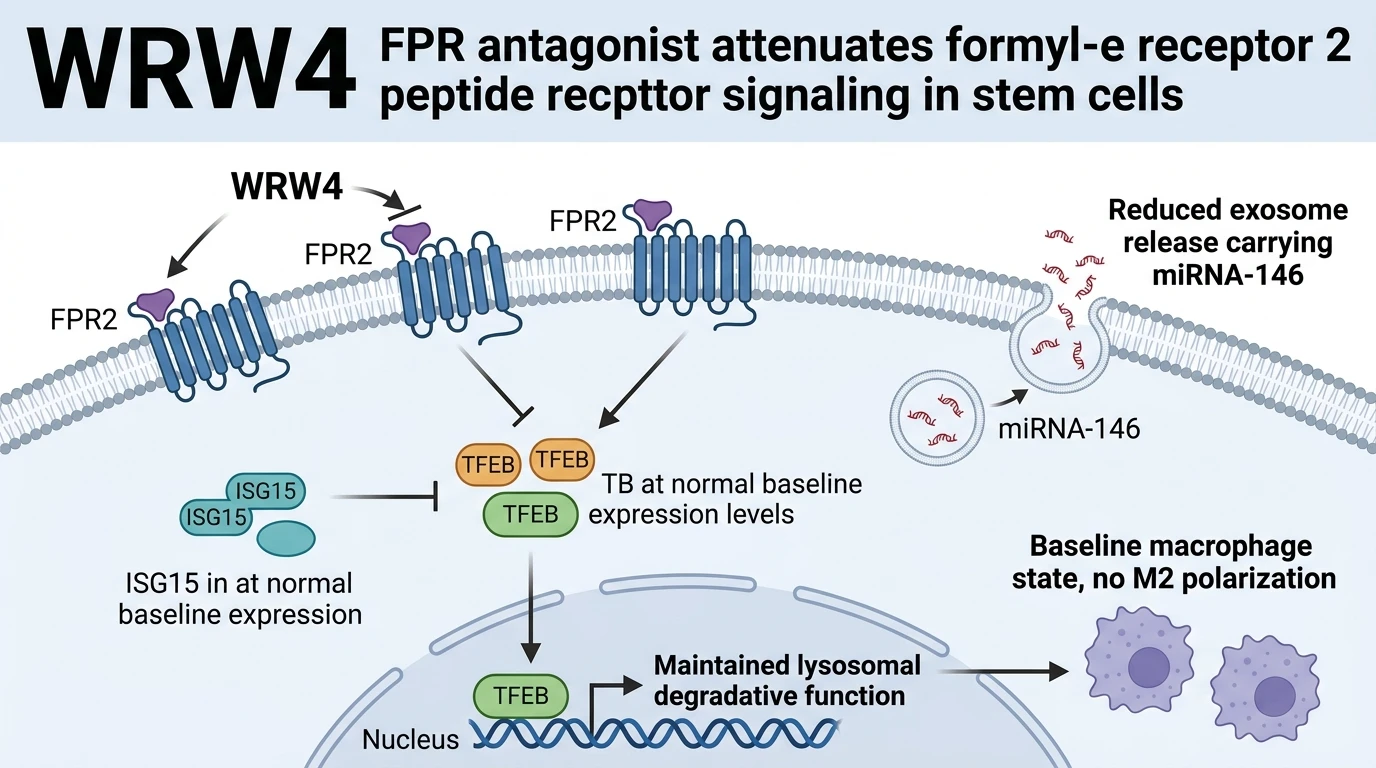
Pharmacological intervention using the selective ETH Zurich Department of Biology research model framework confirms that target engagement controls this axis. WRW4 is a synthetic hexapeptide engineered to block FPR2 function. Acting as a specific WRW4 FPR antagonist, the molecule competes directly with agonist binding at the extracellular loops of FPR2. Receptor occupation by WRW4 blocks G-protein coupling and inhibits agonist-mediated internal signaling. In vitro assays demonstrate that treatment with WRW4 blocks WKYMVm-induced downregulation of ISG15 and TFEB expression in a concentration-dependent manner.
Restoration of ISG15 and TFEB transcription normalizes intracellular lysosomal activity in mBMSCs. Functional lysosomes regain standard flux, restoring routine endosomal turnover and reducing the intracellular accumulation of multivesicular bodies destined for exocytosis. As a result, WRW4 administration reduces overall exosome secretion to basal control levels. The depletion of miRNA-146 export abrogates paracrine activation of neighboring macrophages, preventing their transition into the M2 repair phenotype under stimulated conditions.
Quantification of signaling parameters confirms that WRW4 acts as a potent tool to interrogate FPR2 signaling networks. The compound demonstrates high receptor selectivity over related formyl peptide receptor isoforms such as FPR1 and FPR3 at working concentrations. In primary cellular models, WRW4 provides precise operational control over receptor-dependent exosome biogenesis. By systematically modulating FPR2, researchers can isolate the exact contribution of stem cell-derived exosomal miRNA-146 during osteogenic regeneration.
Pharmacological Interruption of FPR2-Mediated Exosome Biogenesis
Copy code to add this image to your page
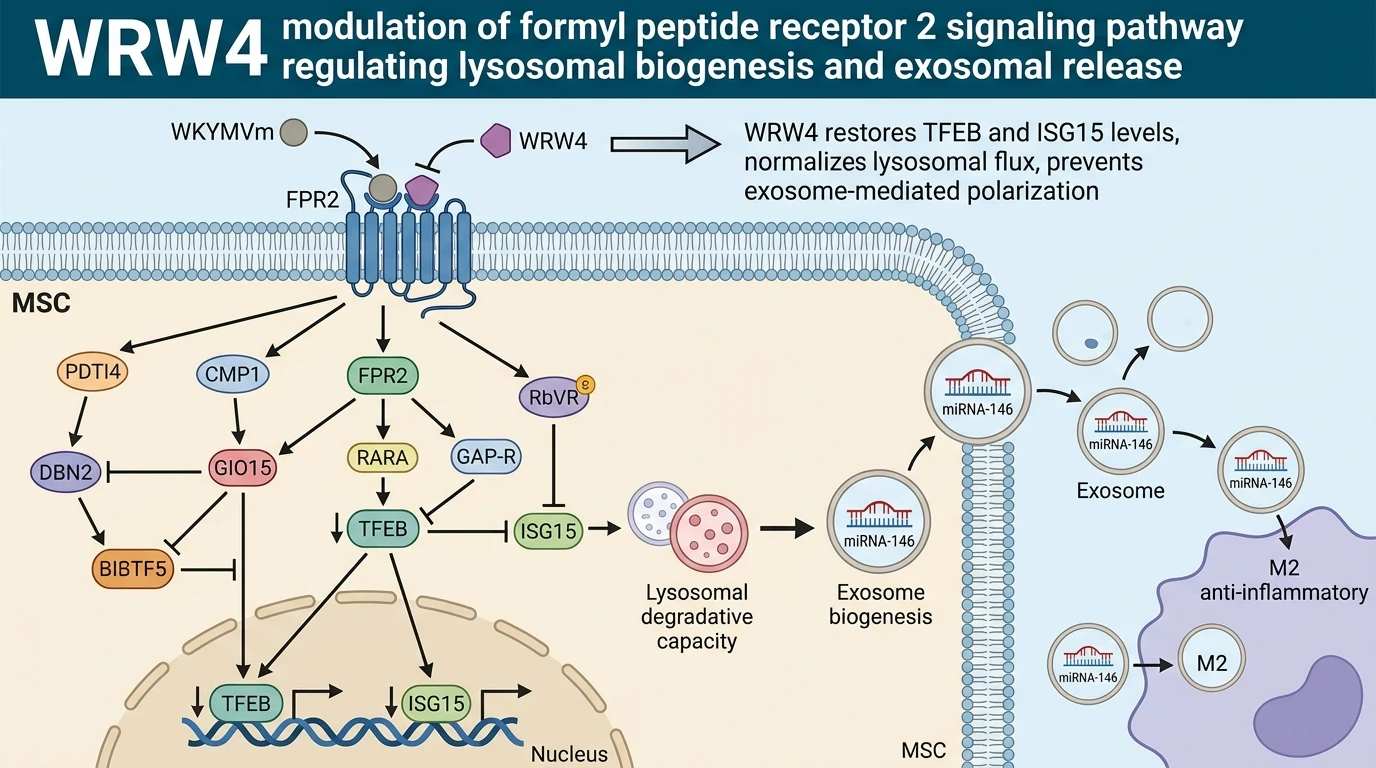
WRW4 functions as a selective FPR2 pathway inhibitor that blocks agonist-induced activation of formyl peptide receptor 2. Receptor antagonism restores ISG15 and TFEB expression in bone marrow mesenchymal stem cells, re-establishing normal lysosomal degradative flux. Normalized lysosomal activity reduces excess exosome production and attenuates the paracrine delivery of miRNA-146 to neighboring macrophages, thereby suppressing M2 macrophage polarization and downstream bone repair pathways.
WRW4 Rescues TFEB Expression and Lysosomal Flux
Selective antagonism of FPR2 by the WRW4 FPR antagonist directly alters downstream transcriptional control in mBMSCs. Exposure to agonist WKYMVm suppressed ISG15 and TFEB levels within 12 hours of exposure. Application of WRW4 at micromolar concentrations reversed this downregulation. TFEB mRNA levels returned to non-stimulated baseline values. Consequently, lysosomal enzyme activity recovered, as measured by fluorogenic substrate cleavage assays. Lysosomal degradation flux resumed normal processing of endosomal cargo. Multivesicular body accumulation declined significantly following antagonist co-treatment. These observations indicate that FPR2 signals through TFEB to regulate intracellular vesicular sorting pathways.
Inhibition of Exosomal miRNA-146 Depletes Paracrine M2 Polarization
Modulation of exosome secretion alters local intercellular communication between stem cells and immune compartments. In treated primary cell cultures, WKYMVm stimulation elevated extracellular vesicle yield by over two-fold. Analysis confirmed high concentrations of miRNA-146 within isolated exosomes. Co-administration of the WRW4 FPR antagonist abolished this secretory response. Exosome yields dropped to control levels within 24 hours. Subsequent exposure of naive bone marrow-derived macrophages to these conditioned exosomes failed to induce CD206 or Arg-1 marker expression. M2 macrophage polarization was completely prevented under these experimental conditions. Target engagement at FPR2 thus serves as a critical checkpoint controlling paracrine immune signaling during bone tissue repair models.